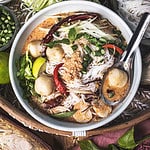
Description
Kanom Jeen Nam Ya Curry is a dream come true for Thai food fans, made with care using soft noodles, umami fish broth seasoned with aromatic herbs, and garnished with fresh ingredients. Get ready to be hooked!
Ingredients
Kanom Jeen Noodles Recommendations
Use the entire package for this recipe.
- Vietnamese vermicelli noodles. These are my favorite. They are the same noodles used in spring rolls. There are different sizes, so pick your favorite and cook to package and Cook to package instructions. See the image in the post for brands I love.
- Japanese soba noodles. Use the white Japanese soba noodles rolled up in a black wrapper the size of two fingers. Cook to package instructions.
- Buckwheat noodles can work, but they are not the best in texture. They are too thick and tend to take away from the flavors of Nam Ya Curry sauce.
- Use vegetables as noodles. Use shredded green papaya, nappa, or cabbage. This is an excellent option for a low-carb version. My favorite is shredded green papaya.
The Nam Ya Curry Paste
- 1/2 pound white fish. I used tilapia for this recipe. Any mild white fish will work. Snakehead, Cod, Snapper, Cod, Haddock, Pollock, Bass, and River Trout are great.
- 1-15 dried chilies. Use Thai spur chile and bird's eye chiles. Use more or less as needed for spice level tolerance. Read more about Thai spices here.
- 2 ounces krachai. These are a must for this recipe. These are also called finger roots, wild ginger, or Chinese keys. Find them in the frozen section at Asian grocery stores. See image in the main blog post for reference.
- 2 stalks, lemongrass. Chop them into small pieces before cooking.
- 4-quarter-sized sliced galangal. Galangal can be difficult to find. They can be found in the Asian market. Sliced the brown peel off and use only the white part. Ginger is not a good substitute. Omit if you can't find galangal.
- 3 kaffir lime leaves. More about Kaffir lime leaves here.
- 6 cloves garlic
- 2 ounces shallot
- 2 teaspoons salt
- 1 1/2 tablespoons shrimp paste. Read more about essential Thai ingredients here.
Nam Ya Sauce
- 1 can coconut milk (13.5 ounces). Make your own coconut milk here using these coconut-cracking methods.
- 6 cups water
- 1 pound fish balls, 2 cups. Leave them whole or sliced in halves.
- 2 tablespoons fish sauce
- 1 tablespoon lime juice
The Toppings & Garnishes
Using a variety of fresh vegetables is suggested below. Slice everything very thinly and in small pieces. Crunchy and leafy herbs are best for this recipe.
- Long beans. Any green beans are fine.
- Cabbage, napa, or regular white or purple cabbage. The crunchy vegetables!Shredded green papaya. Use shredded papaya instead of noodles if you want a lower-carb option.
- Pickled mustard greens. Adds a tangy and fermented leafy texture to the curry.
- Thinly sliced cucumbers. English, Persian, or pickling fresh cucumbers only.
- Bean sprouts for the extra crunch.
- Very thinly sliced banana blossoms. One of my favorite garnishes for Nam Ya! Blanched bitter melon/ goya. For a bold and bitter taste
- Water spinach (Pak Boung) is a mild and crunchy leafy green.
- Lemon basil and Thai basil will be fine too.
- Cilantro or culantro are excellent as fresh herbs garnish. Read more about fresh Thai herbs here.
- Crispy fried shallot or fried garlic, chili garlic oil, Prik Nam Som (Thai Pickled Chili Vinegar Sauce) and Thai chili flakes are great options for added heat.
Instructions
1. Prepare the dry noodles. In a medium pot, add water and a pinch of salt, bring water to a boil, and then cook the noodles according to package instructions. I also like to rinse all my noodles with cold water after cooking them to help remove excess starch.
2. Make the herbal broth. In a separate medium pot of water, add the aromatics and salt. Bring to a boil and simmer for 15 minutes. Remove the aromatics from hot water using a slotted spoon or wire mesh strainer. Set aside.
3. Make the fish broth. Add the fish to the pot. Cook for 3-4 minutes. You are essentially making a quick fish stock doing this. Remove the fish and set aside.
4. Make the Nam Ya paste. In a medium food processor, add the fish and the boiled ingredients along with 1/3 cup of water. Blitz until you have a smooth paste.
5. Make the Nam Ya curry sauce. Add the paste back into the fish stock along with the coconut milk. Stir. Allow the sauce to boil softly, stirring a few times.
Please note. The more red peppers you use, the more orange/red your curry sauce will look. Using less red peppers means lighter curry sauce.
6. Seasoned to taste. Add the fish balls and cook for 2-3 more minutes—season the sauce with fish sauce, lime juice, and more salt. Add ground chilis or chili garlic oil if you would like more heat. Adjust seasoning to taste.
7. Putting it all together. In a large bowl, place the cooked noodles as the base, and add a generous amount of the curry sauce. Then go nuts with your favorite toppings using any of the recommended toppings and garnishes. (Check the above section).
Notes
- Leave some fish out in larger pieces to add to the curry sauce. The chunky meat adds a meaty texture.
- If using banana blossoms, found at Asian markets, sprinkle some lime juice over the sliced pieces to keep them from browning.
- Lemon basil pairs extremely well with Kanom Jean Namya. They are more difficult to find. I often make this dish around mid to late summer when lemon basil is more available.
- Prep Time: 20
- Cook Time: 20
- Category: curries
- Method: stovetop
- Cuisine: Thai