
Thai curry paste is what gives Thai curries their bold flavor, rich aroma, vibrant color, and layers of spice. From fiery green curry to rich Massaman curry, each paste brings something completely different to the table.
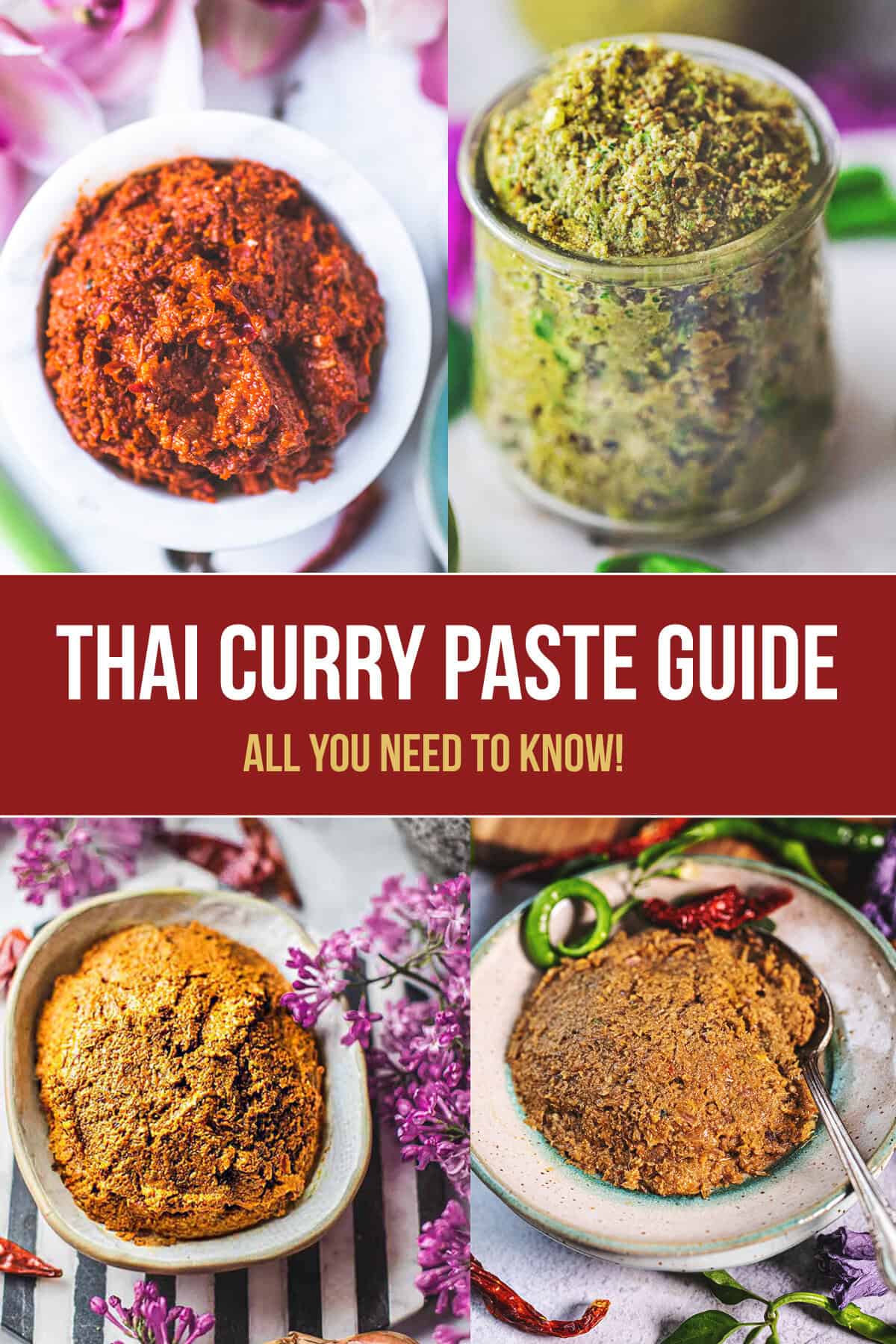
This guide breaks down the different types of Thai curry paste, how they taste, how spicy they are, and the best ways to cook with them at home.
If you are new to Thai ingredients, my fish sauce guide, soy sauce guide, coconut milk guide and my extensive section on Thai cooking tips are great places to start. My homemade curry paste recipes like green curry paste, red curry paste, Panang curry paste, and Massaman curry paste will also help you better understand the flavor differences between each curry.
Jump to:
- What Is Thai Curry Paste?
- Making Curry Pastes in Thailand
- Why Curry Paste Is Important in Thai Cooking
- Coconut-Based Curries vs Water-Based Curries
- How to Make Thai Curry Paste
- Different Types of Thai Curry Paste
- Red Curry Paste
- Green Curry Paste
- Yellow Curry Paste
- Panang Curry Paste
- Massaman Curry Paste
- Jungle Curry Paste
- Prik Khing Curry Paste
- Choo Chee Curry Paste
- Gaeng Som Curry Paste
- Thai Curry Powder
- Homemade vs Store Bought Curry Paste
- My Favorite Thai Curry Paste Brands
- How to Actually Use Thai Curry Paste
- Some Thai Curries Are Served With Rice, Others With Noodles
- How to Store Curry Paste
- Getting Comfortable with Thai Curries
- Different Thai Curries You'll Love
- Frequently Asked Questions
- Hi there, I’m Suwanee!
Most people think Thai curry paste is only used for curry, but that is just the beginning. In Thailand, curry paste also goes into stir fries, soups, noodle dishes, marinades, grilled meats, and dipping sauces.
What Is Thai Curry Paste?
Thai curry paste is a thick, concentrated blend of chilies, fresh herbs, and aromatics. Most versions include garlic, shallots, lemongrass, galangal, kaffir lime zest, coriander root, peppercorns, and shrimp paste. The combination and balance of those ingredients is what makes each paste taste completely different from the next.
Some pastes are all about fresh green chilies and herbs. Others get their depth from dried red chilies. Some have warm spices like cinnamon and cardamom in the mix. That is why Thai curries can taste so wildly different from each other even though they all start with paste.
One thing that quietly ties most Thai curry pastes together is shrimp paste. You would not necessarily pick it out, but you would absolutely notice if it were missing.
Making Curry Pastes in Thailand
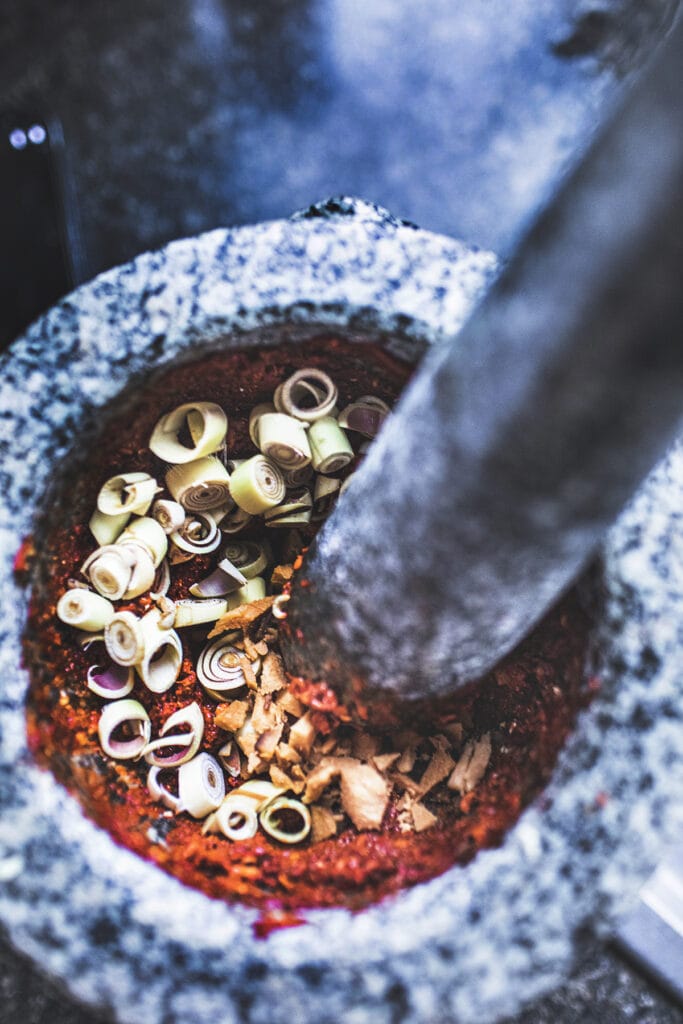
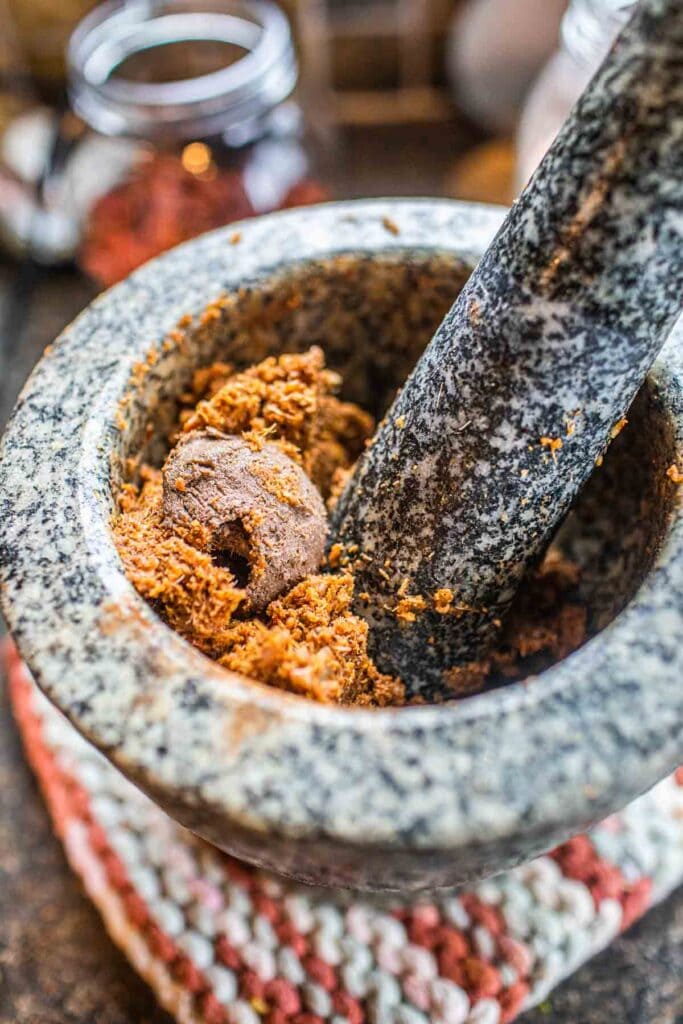
Growing up in Thailand, homemade curry paste was normal. Ingredients were pounded by hand using a mortar and pestle. The smell of chilies, lemongrass, galangal, garlic, and shrimp paste filling the kitchen is something many Thai people instantly recognize.
The loud pok pok pok sound from the mortar and pestle, followed by aggressive coughing and sneezing from the chilies, was usually a dead giveaway that curry paste was being made. As a kid you either ran from that chore as fast as possible or you accepted your fate and started pounding! There was no in between.
Today, many people use both homemade and store bought curry paste. Even in Thailand.
Why Curry Paste Is Important in Thai Cooking
Curry paste does a lot of heavy lifting in Thai cooking. In one ingredient you get heat, aroma, color, saltiness, and layers of flavor all at once. Different regions of Thailand also use curry paste differently, which is one reason Thai food can vary so much from north to south. If you want to learn more, check out my Thai Food by Region guide.
The most important thing to know, especially with coconut milk-based curries, is that you should fry curry paste first. You fry the paste in a hot pan with oil or thick coconut cream and let it cook for a few minutes before adding anything else. That step is what takes the paste from raw and sharp to deep, rich, and incredibly fragrant.
A lot of beginners skip this or rush through it. That is the number one mistake with Thai curry. The paste needs time in the pan. Cook it until it darkens a little and you can see the oil starting to separate around the edges. Then you are ready to build the rest of the dish.
That smell is classic Thai cooking. You may want to turn your fan on or open a window because frying curry paste can definitely make you cough and sneeze a little from the chilies and herbs!
Coconut-Based Curries vs Water-Based Curries
One thing many people do not realize is that not all Thai curries use coconut milk.
Central Thai curries like red curry, green curry, Panang curry, Massaman curry, and yellow curry are usually coconut based curries. Coconut milk gives these curries a richer, creamier, slightly sweeter sauce.
That is also why these curry pastes are often fried in coconut cream first. The oils from the coconut milk help bloom the spices and aromatics in the paste.
But some Thai curries are water based instead.
Jungle curry is one of the best known examples. It is typically made without coconut milk and has a much lighter, brothier texture with intense heat and bold herbal flavor.
Water based curries are especially common in rural Thailand where coconut milk was not always as available or practical. These curries often taste spicier, sharper, and more herb forward because there is no coconut milk to soften the heat. Papaya curry is another water based curry.
Once you understand the difference between coconut based curries and water based curries, the flavor differences between Thai curries start making much more sense.
How to Make Thai Curry Paste
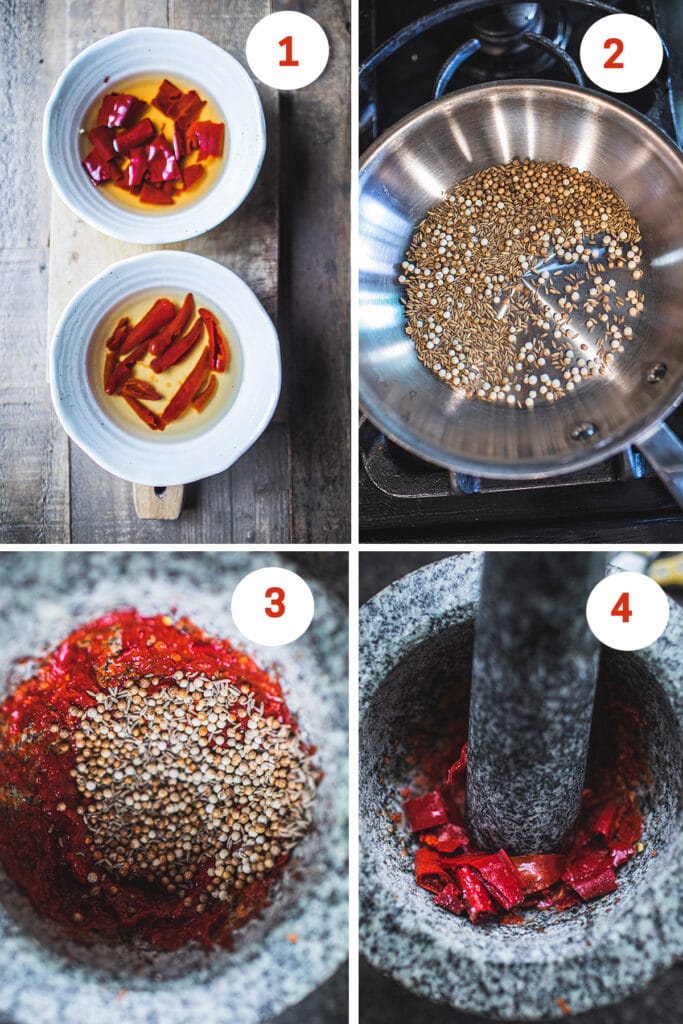
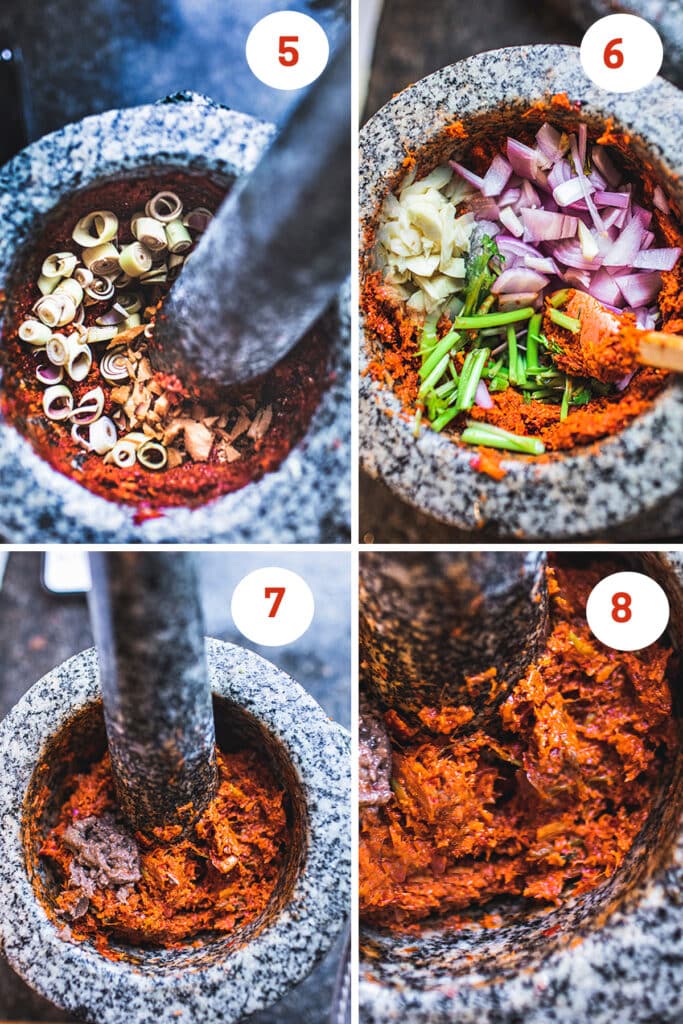
The traditional way to make Thai curry paste is with a granite mortar and pestle. You slowly pound the ingredients by hand, starting with the driest ingredients first and working toward the wettest. It takes time and your arm will definitely feel it, but many Thai cooks still swear by the texture and flavor.
For most home cooks though, a food processor is the more realistic option and it works really well. Just chop tougher ingredients like lemongrass and galangal into small pieces first so the paste blends more smoothly.
Use a spice grinder for dry spices, dried chilies, peppercorns, or seeds before adding them into the food processor. This helps create a finer texture and more even flavor.
Honestly, both methods make delicious curry paste. A mortar and pestle gives the most traditional texture and aroma, while a food processor makes homemade Thai cooking much more approachable for busy weeknight meals.
If you want to try making your own, my Homemade Thai Red Curry Paste recipe walks through the full process step by step.
Different Types of Thai Curry Paste
Thai curry is not just one flavor or one style of cooking. Some curry pastes are built for rich coconut curries while others are meant for dry stir fries, noodle dishes, or lighter brothy curries. Here are some of the most common Thai curry pastes and how they are traditionally used.
Red Curry Paste
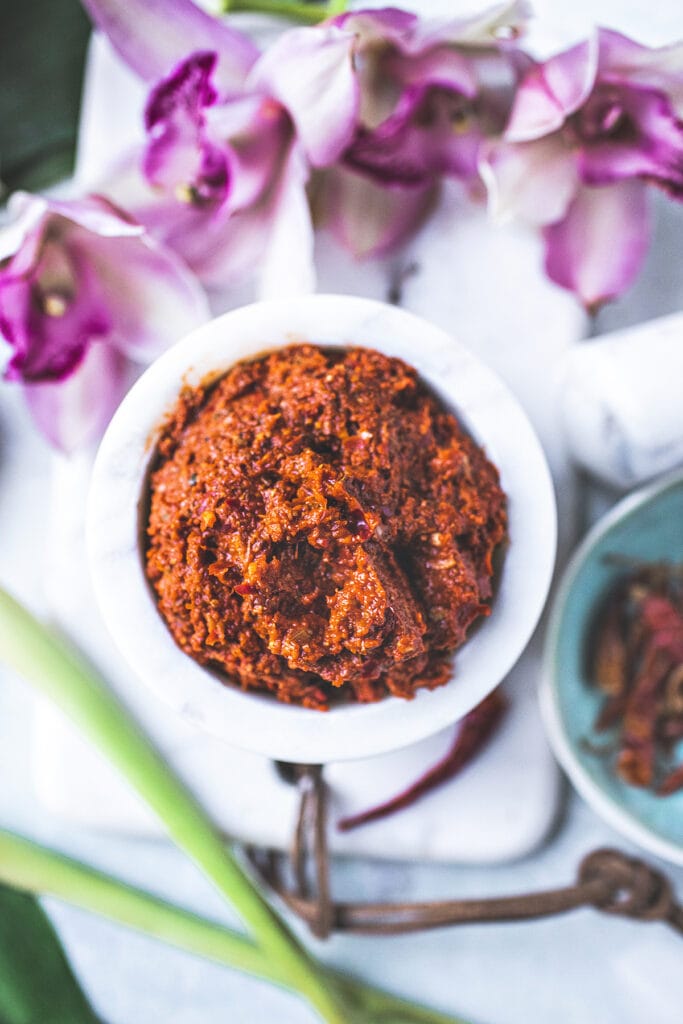
Red curry paste is probably the most widely used Thai curry paste. Dried red chilies give it the color and that slightly smoky, rich depth of flavor. You also get garlic, shallots, lemongrass, galangal, and shrimp paste in the mix.
The flavor is bold and savory with a medium heat level. It is a little smoother and less sharp tasting than green curry paste, which makes it easy to work with. Red curry paste plays well with pretty much everything.
It is the go to for Thai red curry, roasted duck curry, seafood dishes, and stir fries. If you are just getting started with Thai curry paste, red is a great place to begin.
- Spice level: Medium to hot
- Common uses: Thai red curry chicken, roasted duck curry, fish or seafood curry or stir fry dishes.
Green Curry Paste
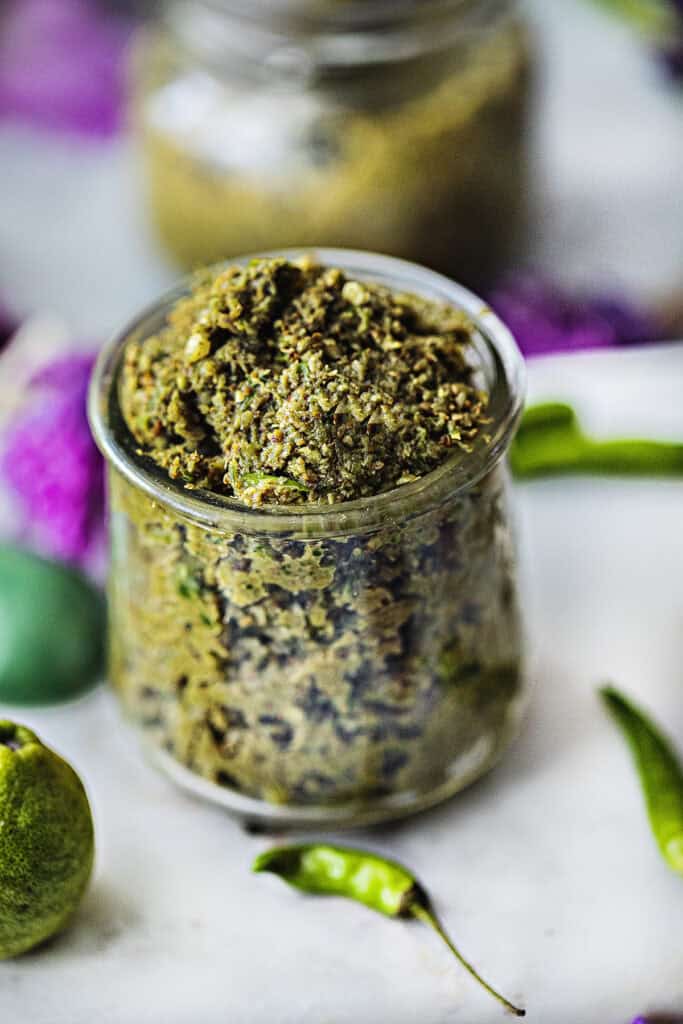
Green curry paste is made with fresh green chilies and loads of fresh herbs, and you can taste exactly that. It is bright, vibrant, and noticeably more herbal and fresh tasting than red curry paste.
Here is the thing people always get caught off guard by: green curry is usually the spiciest of the main Thai curries. The color makes people expect something milder. It is not. The heat from fresh green chilies is immediate and sharp. Coconut milk balances it beautifully but the spice is still there.
Green curry paste works great in green curry chicken, fish ball curry, seafood curries, and even Thai fried rice.
- Spice level: Medium high to hot
- Common uses: Green curry chicken, seafood curries, fish ball curry, green curry fried rice, stir fries
Yellow Curry Paste
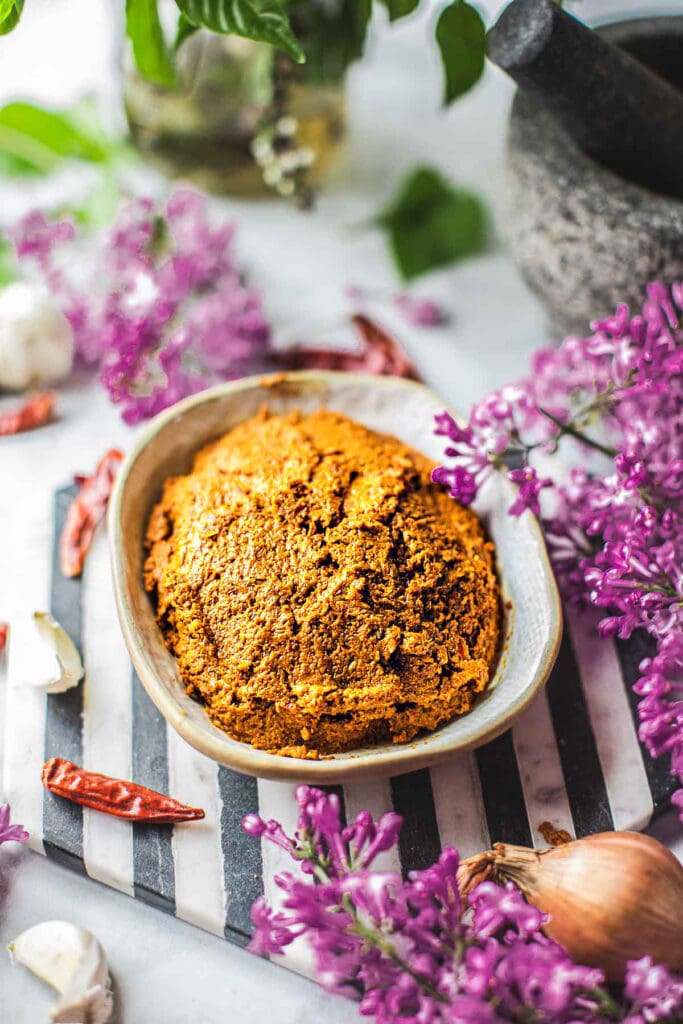
Yellow curry paste lands somewhere between Thai and Indian cooking. Turmeric gives it that golden color and warm spices like cumin and coriander round out the flavor in a way that feels a little different from other Thai pastes.
The flavor is mild, warm, and comforting. It is probably the most beginner friendly Thai curry because the heat is gentle and the flavor is the kind of thing almost everyone likes. Chicken, potatoes, onions, coconut milk. It is hard to go wrong.
If you are cooking for people who are not sure about spicy food, yellow curry is almost always a safe and crowd pleasing choice.
- Spice level: Mild
- Common uses: Yellow curry chicken, mango chicken curry, pork belly with yellow curry.
Panang Curry Paste
Panang is a close cousin of red curry paste but richer, thicker, and slightly sweeter. The paste often includes ground peanuts which gives the finished curry a subtle nuttiness and a really thick, almost sauce like consistency.
A Panang curry is not really a soup. It is more like a rich, glossy sauce that coats the meat. Creamy, indulgent, and just mild enough to eat a lot of. This is the curry that makes people quiet at the dinner table because they are too busy eating.
Beef and chicken both work great here. Lots of coconut milk and some fresh kaffir lime leaves on top to finish.
- Spice level: Mild to medium
- Common uses: Panang beef curry, great with poultry, pork and vegetarian versions too.
Massaman Curry Paste
Massaman reflects the Indian and Muslim cooking influences on southern Thai cuisine more than any other Thai curry paste. Cinnamon, cardamom, cloves, and cumin are all in there and you can absolutely taste them.
The flavor is mild, warm, rich, and gently sweet. It is one of the mildest Thai curries which makes it a consistent crowd favorite. The classic version is slow cooked beef or chicken with potatoes, peanuts, and coconut milk until everything is tender and the sauce is thick and deeply fragrant.
- Spice level: Mild
- Common uses: Massaman beef or chicken with potatoes and peanuts
Jungle Curry Paste
Jungle curry does not mess around. It is fiery, intensely herbal, and completely honest about how spicy it is. There is no coconut milk to take the edge off.
The broth is thin and light, made with water or stock, and the heat from the chilies comes through completely unfiltered. This is the kind of curry that clears your sinuses and makes you sweat a little. In the best way possible.
Jungle curry is especially common in rural Thailand where it was traditionally cooked with whatever protein and vegetables were around. If you have only ever had coconut based Thai curries, this one will surprise you.
- Spice level: Hot to very hot
- Common uses: Jungle curry or water based curries with vegetables, pork, or fish
Prik Khing Curry Paste
Prik Khing paste is made for dry stir fries, not soupy coconut curries. It gets fried directly in oil and tossed with protein and vegetables until everything is coated in a bold, slightly caramelized sauce.
The flavor is savory, aromatic, and has a solid kick. Pork and green beans is the classic combination. Shrimp works great too. No coconut milk, no broth. Just paste, protein, and vegetables in a screaming hot wok.
- Spice level: Medium to hot
- Common uses: Dry stir fries with pork, shrimp Prik Khing, Pad Prik Khing with pork belly.
Choo Chee Curry Paste
Choo Chee paste is rich and silky and it is almost always paired with seafood. Think of it like a more refined, restaurant style version of red curry paste.
The coconut milk gets reduced into a thick, glossy sauce that drapes over fish or shrimp. Finished with fresh kaffir lime leaves and sliced red chili. It looks impressive and tastes even better. This is the kind of dish that makes people ask for the recipe.
- Spice level: Mild to medium
- Common uses: Choo Chee Salmon or any seafood options.
Gaeng Som Curry Paste
Gaeng Som is one of those curries that does not get enough attention outside of Thailand, which is a shame because it is absolutely delicious. The name means sour curry, and that sourness is the whole point. Unlike creamy coconut curries, Gaeng Som is light, brothy, spicy, and sharply tangy from tamarind or sour fruits like green mango.
The paste is usually made with dried red chilies, shallots, garlic, and shrimp paste. The flavor is bold, sour, spicy, savory, and incredibly bright.
Gaeng Som is especially popular in central and southern Thailand and is commonly made with fish, shrimp, and vegetables like cabbage, green beans, or morning glory.
- Spice level: Medium to hot
- Common uses: Gaeng Som with fish and vegetables, shrimp versions, southern Thai style sour curry
Thai Curry Powder
Thai curry powder is different from Thai curry paste. Curry paste is wet, fresh, and bold while curry powder is dry, warm, and more subtle in flavor.
Curry powder is not as common in mainstream Thai cooking, but it does appear in dishes with Indian, Malaysian, and Muslim influence. Yellow curry powder is the type most often used in Thai cuisine.
- Spice level: Mild to medium
- Common uses: Satay recipes (tofu, pork, or chicken, crab curry stir fry, pineapple fried rice, curry puffs, Biryani chicken, and yellow rice dishes.
Curry powder is not a substitute for curry paste. They do different things. But having both in your pantry gives you a lot more flexibility when cooking Thai food at home.
Homemade vs Store Bought Curry Paste
Homemade curry paste made with fresh herbs and a mortar and pestle is genuinely wonderful. If you have access to lemongrass, galangal, and kaffir lime leaves, making your own at least once is worth doing just so you understand how all the flavors come together.
But store bought is not a compromise. Even professional Thai cooks use it. The key is knowing which brands to buy.
My Favorite Thai Curry Paste Brands
- Mae Ploy is one of the most popular Thai brands outside of Thailand. Bold flavor and on the spicier side. Great for restaurant style curries.
- Maesri comes in small cans and has a rich, well balanced flavor that works really well for home cooking. A lot of Thai home cooks swear by it.
- Aroy-D is milder and easy to find in regular grocery stores and Asian markets. Good for beginners or for cooking for a crowd with mixed spice tolerances.
No matter which brand you use, always adjust the amount to taste. Different brands have very different intensities of salt and spiciness and Thai cooking is traditionally done by feel, not exact measurements.
How to Actually Use Thai Curry Paste
Always fry the paste first. Hot pan, oil or thick coconut cream, a few minutes of stirring until it darkens and smells incredible. Then add your coconut milk or liquid and build from there. This step makes an enormous difference in the final flavor.
Beyond curry, here is where else curry paste shines:
- Stir fries: Fry it directly in oil with your protein and vegetables. Skip the coconut milk entirely.
- Marinades: Mix with a little coconut milk, fish sauce, and palm sugar and use it on grilled chicken, pork, or shrimp. So good.
- Soups: Even just a spoonful stirred into a plain broth instantly makes it taste like something.
- Noodle dishes: A small amount of curry paste can completely transform a simple noodle dish.
- Dipping sauces: Thin the paste with coconut milk, season with fish sauce and a squeeze of lime, and you have a quick sauce for vegetables or grilled meat.
Many Thai cooks adjust curry paste depending on the brand, spice tolerance, dish type, and family preference. Some households make curries mild while others make them extremely spicy.
Some Thai Curries Are Served With Rice, Others With Noodles
Most Thai curries are served with jasmine rice, especially coconut based curries like red curry, green curry, Panang curry, and Massaman curry.
But some curry dishes are traditionally served with noodles instead. Khao Soi is served with egg noodles, while Kanom Jeen Nam Ya is served with soft fermented rice noodles called kanom jeen.
This is one reason Thai curry can feel so varied. Some curries are rich and creamy while others are lighter, spicier, or built more like noodle dishes.
How to Store Curry Paste
Unopened store bought curry paste is fine in the pantry. Once opened, keep it sealed tight in the fridge. It will last several weeks.
Homemade paste keeps in the fridge for about two weeks. For longer storage, freeze it in small portions. An ice cube tray is perfect for this. You end up with individual tablespoon sized portions you can grab straight from the freezer whenever you need them.
Getting Comfortable with Thai Curries
The more you cook with Thai curry paste, the more you start to understand what makes Thai food so satisfying. Every curry has its own personality. Some are bright and fiery while others are rich, creamy, and gently warming.
Some curries simmer slowly in coconut milk while others get tossed into a screaming hot wok with barely any liquid at all.
The best way to learn is honestly just to start cooking. Pick a few curries that sound good to you, play around with the flavors, and see which ones you keep craving again and again.
Different Thai Curries You'll Love
Ready to start cooking with Thai curry paste? Here are some of my favorite Thai curry recipes to try at home. There are many more curries throughout the blog too, from rich coconut curries to spicy regional favorites.
- Thai Red Curry with Kabocha squash
- Vegan Thai Green Curry
- Vegan Yellow Curry
- Thai green curry fried rice
- Thai spicy cat fish stir fry with red curry
- Thai fish cakes
- Khao Soi curry
- Thai Kabocha Squash Curry
- Thai Eggplant Curry
- Kanom Jeen Nam Ya
Frequently Asked Questions
Green curry and jungle curry are usually the spiciest Thai curries.
Yellow curry and Massaman curry are often best for beginners because they are milder and slightly sweeter.
Yes. Thai curry paste works very well in stir fries, noodle dishes, and marinades.
Some brands are gluten free, but ingredients vary by brand so always check labels carefully.
Looking for more helpful kitchen tips like this? Try these cooking tips on the blog.

Hi there, I’m Suwanee!
I’m the person behind this Thai food blog. I spent the first thirteen years of my childhood in Thailand, where I fell in love with the flavors of Thai cooking. What started as sharing recipes from my kitchen has grown into a journey from home cook to restaurant chef — and now one of just eight contestants chosen nationwide for PBS’s The Great American Recipe, Season 4. You’re in the right place if you love to cook Thai food. Come by often, and let’s get cooking!
Leave a Reply