
Som Tum, also known as Thai green papaya salad, is one of the most iconic dishes in Thai cuisine. It is fresh, spicy, crunchy, salty, sour, and packed with bold flavor. Learn everything you need to know in this complete Som Tum Guide!
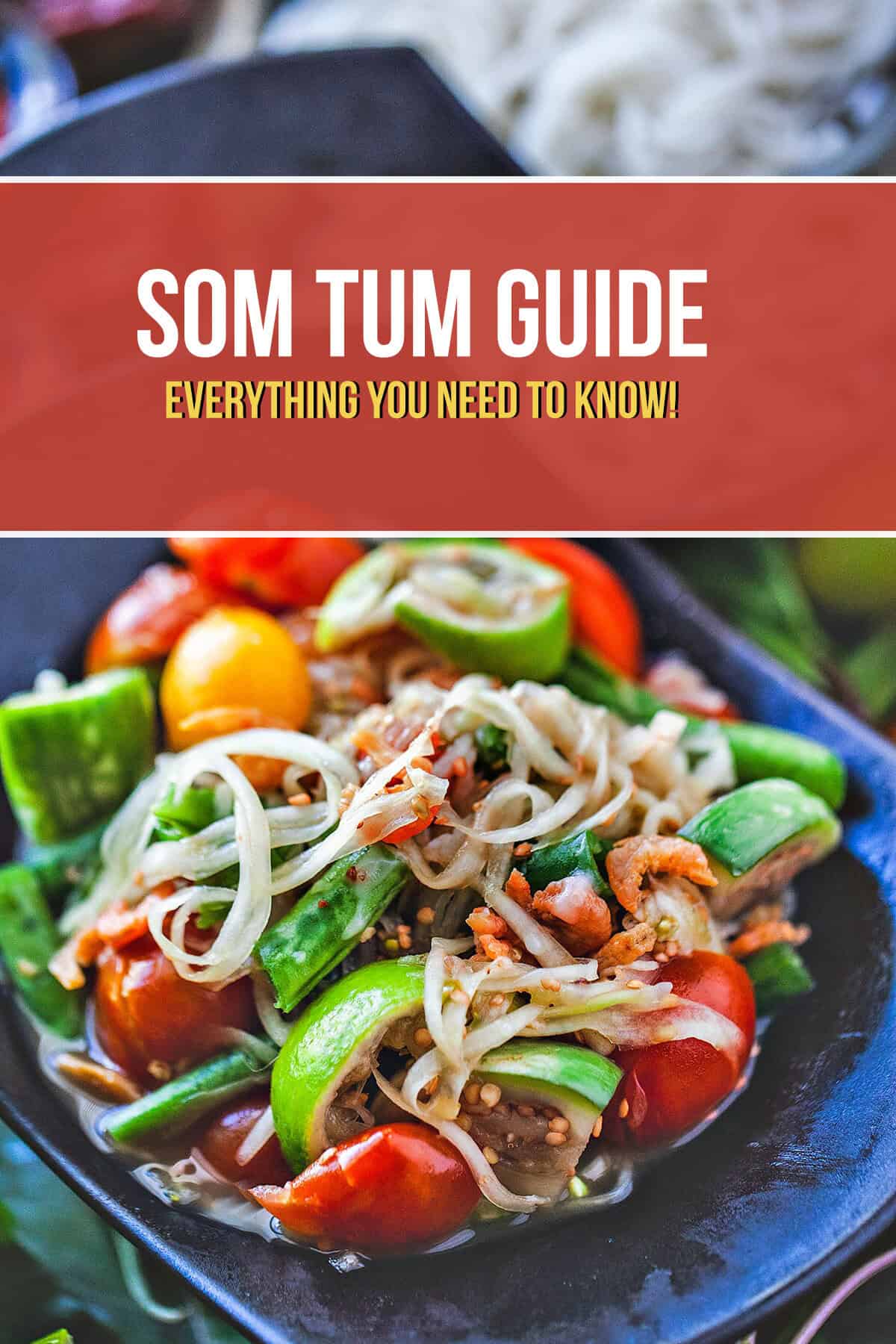
From classic Som Tum Thai to Som Tum Isaan, salted egg, fruit, and seafood variations, this guide breaks down the different types of Thai papaya salad found throughout Thailand.
If you are learning more about Thai and Isaan cooking, check out my guides on Pla Ra, Fish Sauce, MSG, Sticky Rice, Laab, Jeow Bong, and Isaan food. These ingredients and dishes help build the bold balanced flavors found in Som Tum.
Jump to:
- Som Tum and Isaan Food Culture
- Types of Som Tum in Thailand
- What Is Som Tum?
- Som Tum Isaan vs Som Tum Thai
- Essentials Ingredients for Authentic Som Tum
- Traditional Tools Used to Make Thai Green Papaya Salad
- Som Tum Sauce Basics
- Som Tum Tips for Parties and Large Batches
- How to Pick Green Papayas
- How to Cut Green Papaya
- How Som Tum Is Traditionally Made
- How to Make Thai Papaya Salad
- What to Serve with Som Tum
- Common Salad Additions and Variations
- How to Store Leftover
- Frequently Asked Questions
- Related and Pairing
- Hi there, I’m Suwanee!
Som Tum is one of my all time favorite Thai dishes. Whenever I visit Thailand, I end up eating it almost every single day and sometime 2-3x a day! (I love it that much!)
Somehow, it always finds its way onto the table, whether from a street vendor, local restaurant, family meal, or late night snack run
Som Tum and Isaan Food Culture
Som Tum is especially popular in Isaan, Northeastern Thailand, where spicy foods, grilled meats, sticky rice, and fermented flavors are deeply rooted in the local food culture.
While many people outside Thailand know the sweeter restaurant version, there are actually many regional styles of Som Tum throughout the country.
This guide breaks down the different types of Som Tum, essential ingredients, traditional tools, and the differences between the most popular versions.
Types of Som Tum in Thailand
There are many variations of Som Tum throughout Thailand. Most versions start with the same foundational ingredients and then build from there.
- Thai Papaya Salad (Som Tum Thai). The sweeter restaurant style most commonly found outside Thailand.
- Som Tum Isaan. The traditional Northeastern Thai version made with Pla Ra and stronger savory flavors
- Som Tum Pu Pla Ra. Includes pickled crab and fermented fish sauce for a bold and deeply traditional flavor.
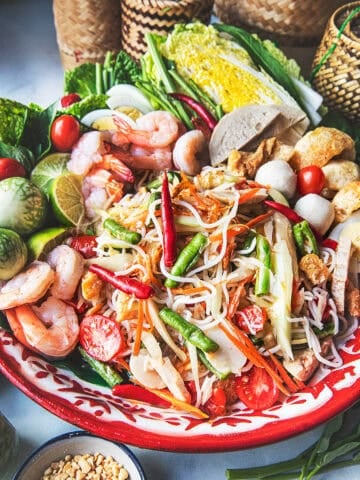
- Som Tum Mua. A loaded street food version often mixed with noodles, seafood, and extra vegetables.
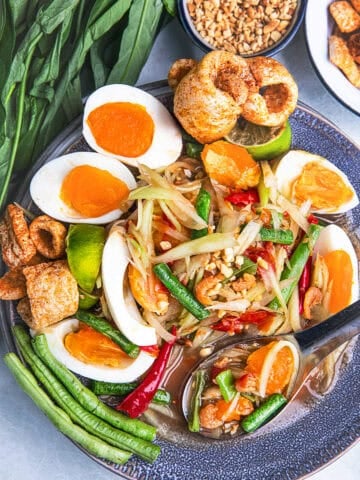
- Som Tum Kai Kem. Made with salted egg for added richness and creaminess.
- Som Tum Fruit. Uses ingredients like green mango, pineapple, or mixed fruit instead of papaya.
- Som Tum Corn. Made with boiled or grilled corn for a slightly sweet variation.
- Som Tum Taeng Gwa (with cucumber). A refreshing cucumber version popular in Thailand.
- Som Tum Tua (with long green beans). A less popular but well loved by locals.
What Is Som Tum?
Som Tum, also spelled Som Tam, or (Tum Som or Tum Bak Hoong in Isaan dialect) is a traditional Thai salad made with shredded green papaya, garlic, chilies, lime juice, fish sauce, and palm sugar. The ingredients are lightly pounded together in a mortar and pestle to help the flavors soak into the vegetables while keeping everything crisp and fresh.
The name comes from the Thai words for “sour” and “pound,” which describes both the flavor and the cooking method. Unlike creamy Western salads, Som Tum is light, crunchy, refreshing, and packed with bold flavor.
Som Tum Isaan vs Som Tum Thai
The two most common styles are Som Tum Isaan and Som Tum Thai. Neither version is more authentic than the other. They simply reflect different regional styles and preferences within Thai cuisine.
Som Tum Isaan is bolder, saltier, more pungent, and usually much spicier. It often contains MSG, Pla Ra, a fermented fish sauce commonly used in Isaan cooking. Some versions also include pickled crab, extra chilies, and stronger umami flavors.
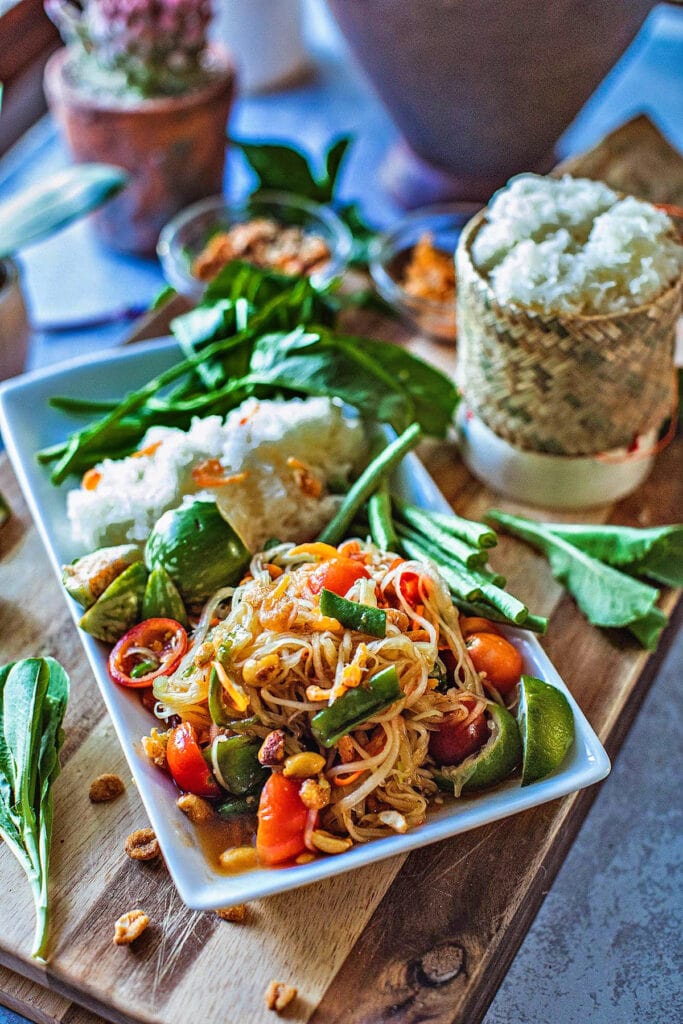
Som Tum Thai is the version most Americans recognize from Thai restaurants. It is slightly sweeter, milder, and often topped with peanuts and dried shrimp. The dressing is typically made with fish sauce, lime juice, and palm sugar.
Essentials Ingredients for Authentic Som Tum
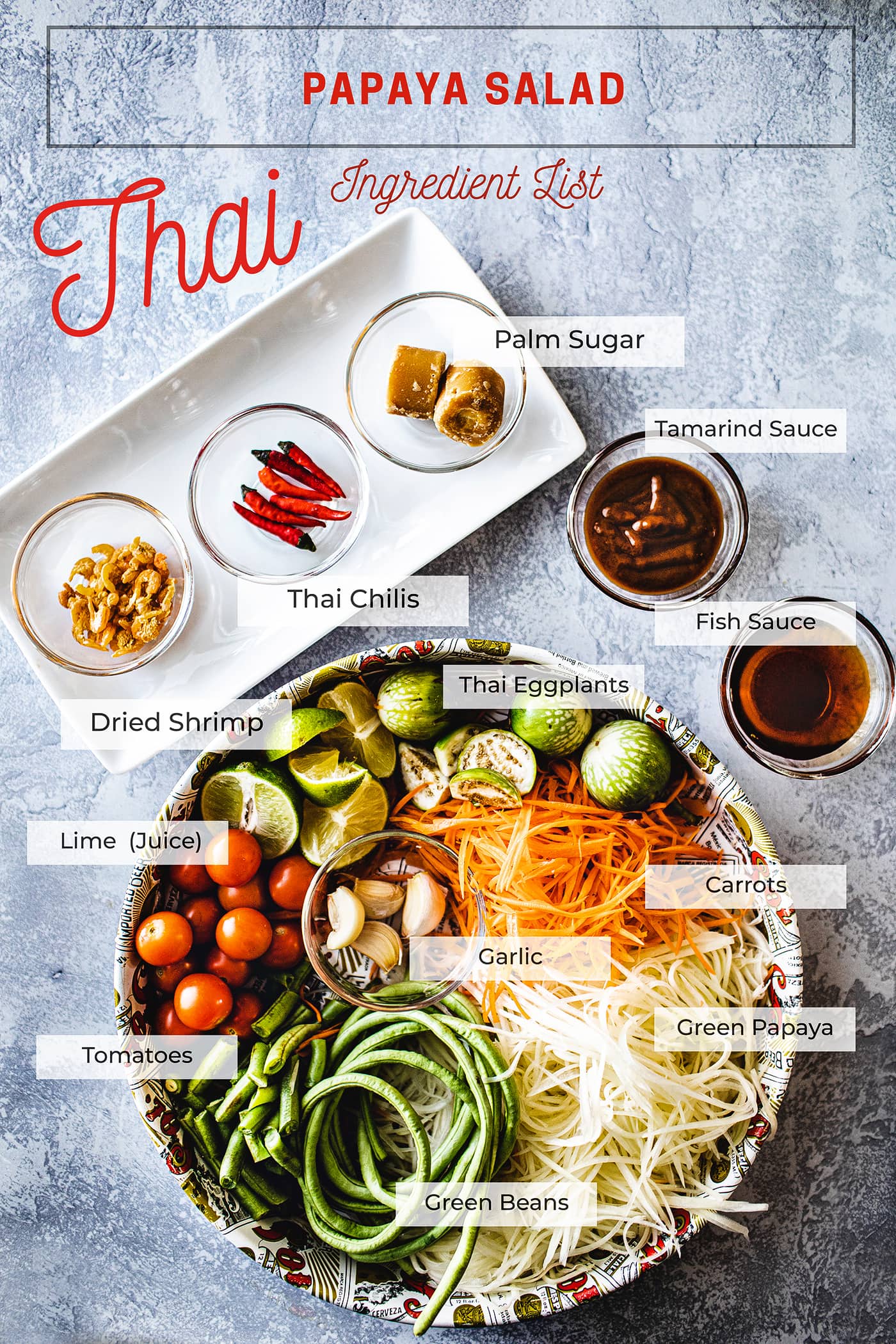
These ingredients are what give Som Tum its signature flavor. These are the foundational basic ingredients that builds the foundation for most Som Tum recipes. There are lots of variations out there but build from these basic and add on as preferred from this list.
- Green papaya. Firm unripe papaya shredded into thin strands. It gives the salad its signature crunch.
- Thai bird’s eye chilies. Small but very spicy. Adjust to your heat tolerance.
- Garlic. Adds sharp depth to the dressing.
- Palm sugar. A natural sweetness that balances the sour lime and salty fish sauce.
- Fish sauce. Brings salt and umami to the salad.
- Lime juice. Fresh lime juice creates the bright acidity.
- Cherry tomatoes. Add sweetness and juiciness.
- Green beans. Often lightly bruised in the mortar for texture.
Additional add-ins. These are optional, but great for adding extra texture and flavor to your Som Tum depending on what you have or enjoy.
- Dried shrimp. These add salty umami flavor to the salad. You can usually find them at Asian markets.
- Tamarind. Adds a sour tangy flavor to the salad. Use lightly since it can quickly overpower the balance. Tamarind concentrate or homemade pulp both work well.
- Shrimp or crab paste (Kapi). Common in Isaan style Som Tum, these add a deeper savory flavor and pungent taste.
Traditional Tools Used to Make Thai Green Papaya Salad
- A clay mortar and wooden pestle )Krok and Sak) are traditionally used to make Som Tum. The clay mortar gently bruises the ingredients without crushing them, helping the dressing absorb into the vegetables while keeping the papaya crisp.
- To shred the papaya, many home cooks use a julienne peeler (Kiwi peeler.) or shredder. Traditional Thai cooks often use a knife technique that creates uneven strands with excellent texture.
- You will also need a vegetable peeler and a large spoon for tossing the salad.
Som Tum Sauce Basics
Som Tum sauce is usually made fresh right in the mortar and pestle instead of mixed separately ahead of time. The dressing is what gives the salad its bold salty, sour, sweet, spicy, and savory flavor, so getting the balance right makes a big difference.
The basic sauce is made with fish sauce, lime juice, palm sugar, garlic, and Thai chilies, all pounded together until the sugar dissolves and the flavors come together.
In Isaan style Som Tum, Pla Ra and Pu Dong (pickled crab) are often added for a deeper, funkier flavor. Every cook makes it a little differently, but the best Som Tum should taste balanced with no single flavor overpowering the others.
Som Tum Tips for Parties and Large Batches
When I cooked Som Tum for a large crowd at Feast World Kitchen, I learned quickly that making the dressing fresh for every order wasn’t realistic during service. So I made the dressing ahead of time to help speed up the process.
For large batches, you can mix the fish sauce, lime juice, and palm sugar dressing a day ahead and store it in the fridge. Then add the fresh papaya, tomatoes, green beans, and chilies right before serving.
The flavor still tastes fresh, but it makes prepping for parties, food trucks, pop-ups, and events much easier!
How to Pick Green Papayas
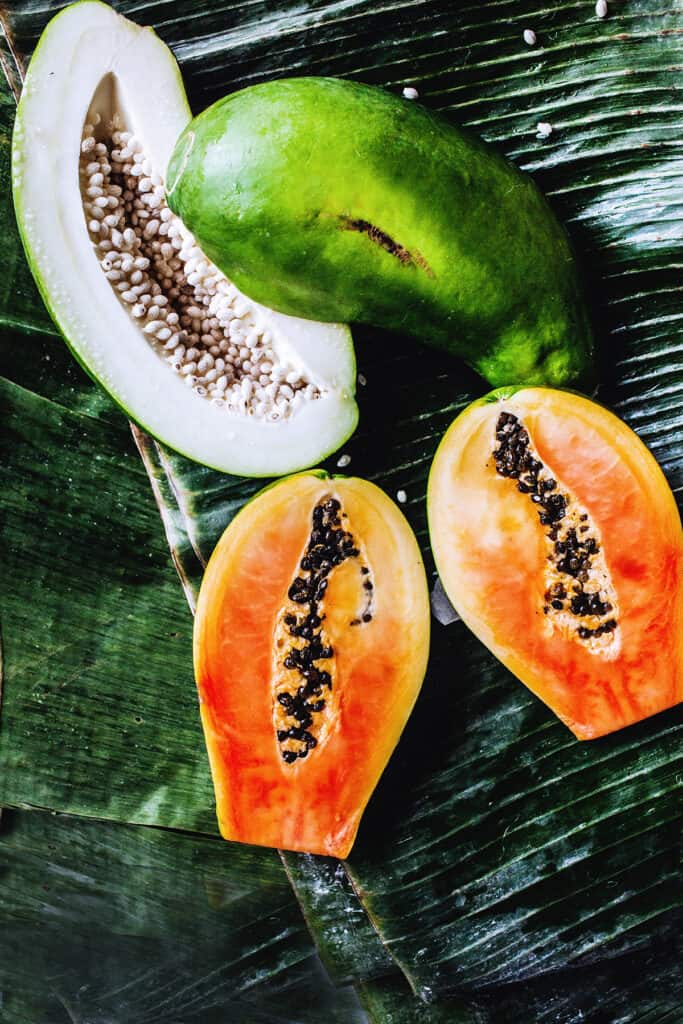
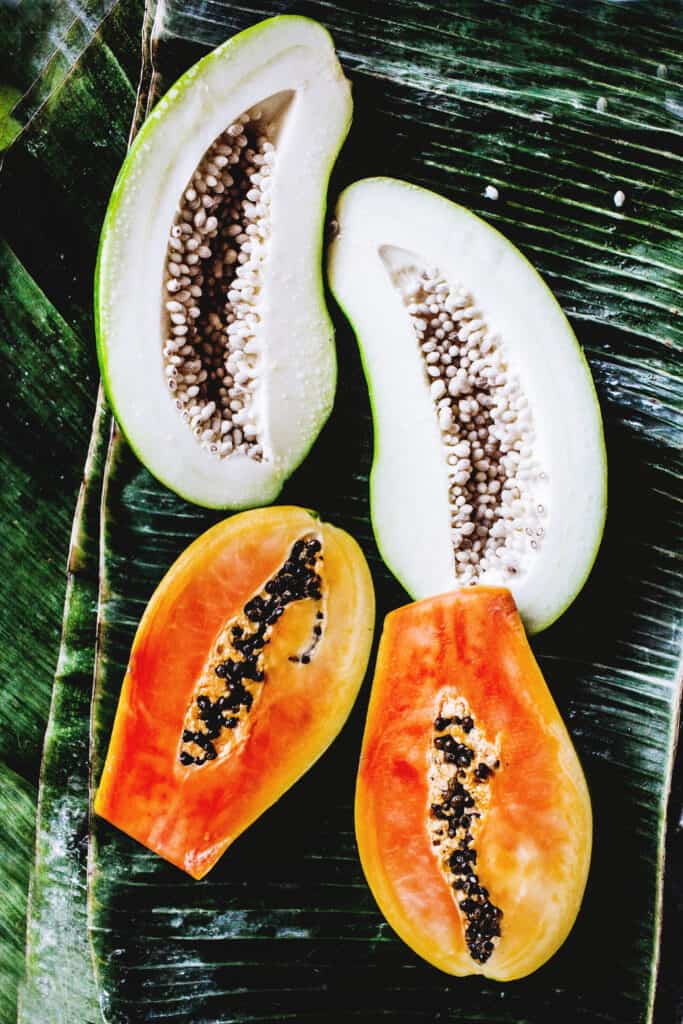
Choosing the right green papaya makes a big difference in the texture of Som Tum. Look for papayas with dark green skin that feel firm with little to no softness. Inside, the flesh should be pale white or light green, not orange.
Skip papayas that are turning yellow or feel soft since they are starting to ripen and will not stay crisp in the salad.
I recommend buying green papayas from Asian markets since they are usually firmer and better for papaya salad than the ripening ones often sold at regular grocery stores.
How to Cut Green Papaya
Traditionally, green papaya is shredded by hand using a knife. The papaya is peeled first, then thin strands are sliced off to create the classic texture used in Som Tum. See how to cut a papaya here.
For beginners, I recommend using a julienne peeler or shredder because it is safer, faster and easier. For extra crunch, soak the shredded papaya in cold water for a few minutes before draining well.
How Som Tum Is Traditionally Made
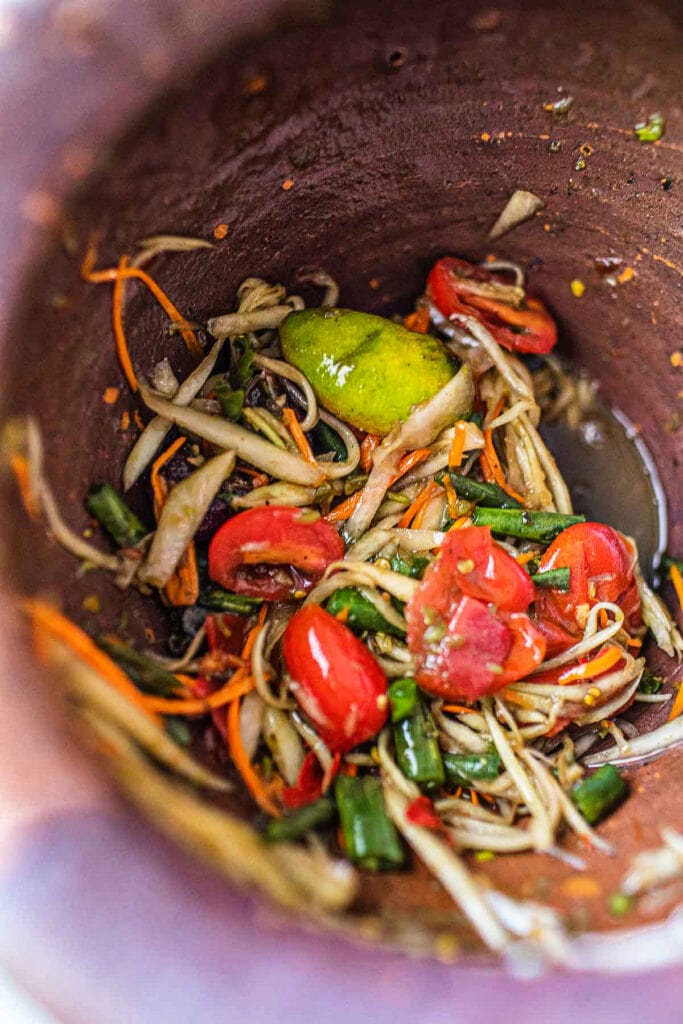
Som Tum is made in a clay mortar and pestle called a krok in Thai. The garlic and chilies are pounded first. Then the palm sugar dissolves into the mixture before fish sauce and lime juice are added. Next the papaya, tomatoes, and green beans are lightly pounded and tossed.
The goal is to bruise the ingredients, not mash them. This method blends the flavors while keeping the papaya crisp. These are the general steps, not strictly followed but a general idea of how it should be done.
How to Make Thai Papaya Salad
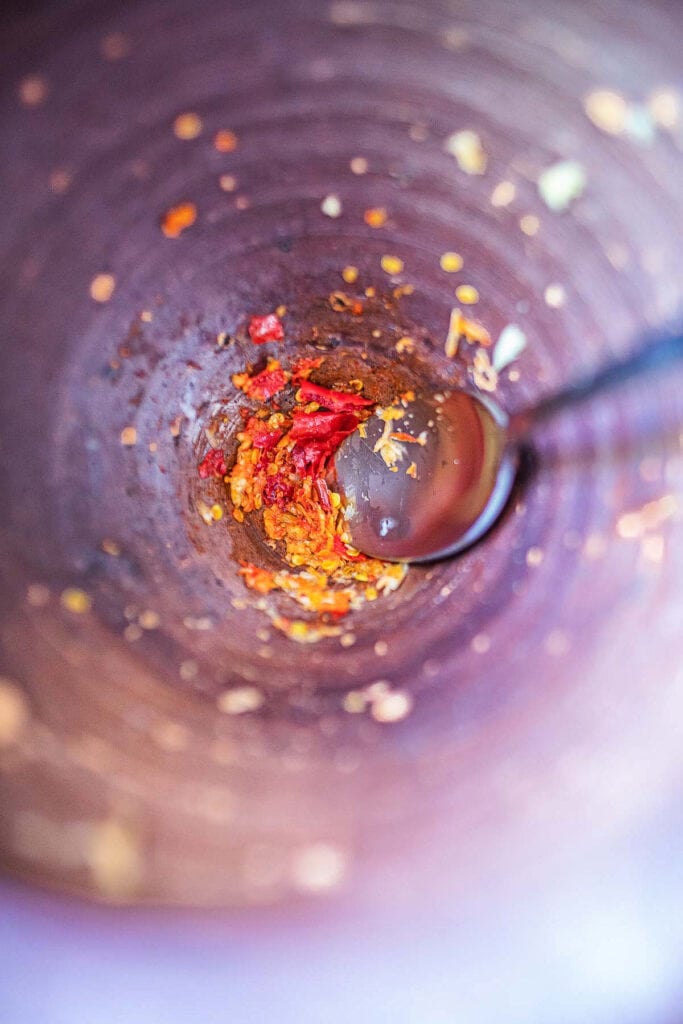
Som tum is traditionally made by pounding garlic and Thai chilies first in the mortar. The goal is not to mash the salad. The goal is to lightly bruise and combine the ingredients while keeping everything fresh and crisp.
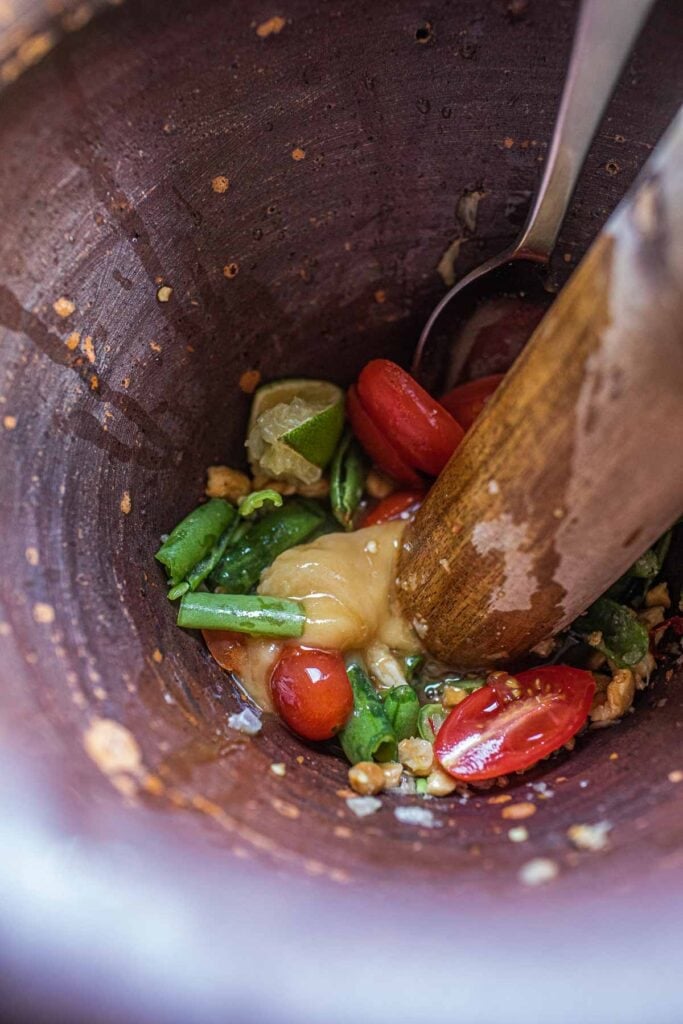
- Start with garlic and chilies. Start with the garlic and chilies. Pound them together until rough and fragrant.
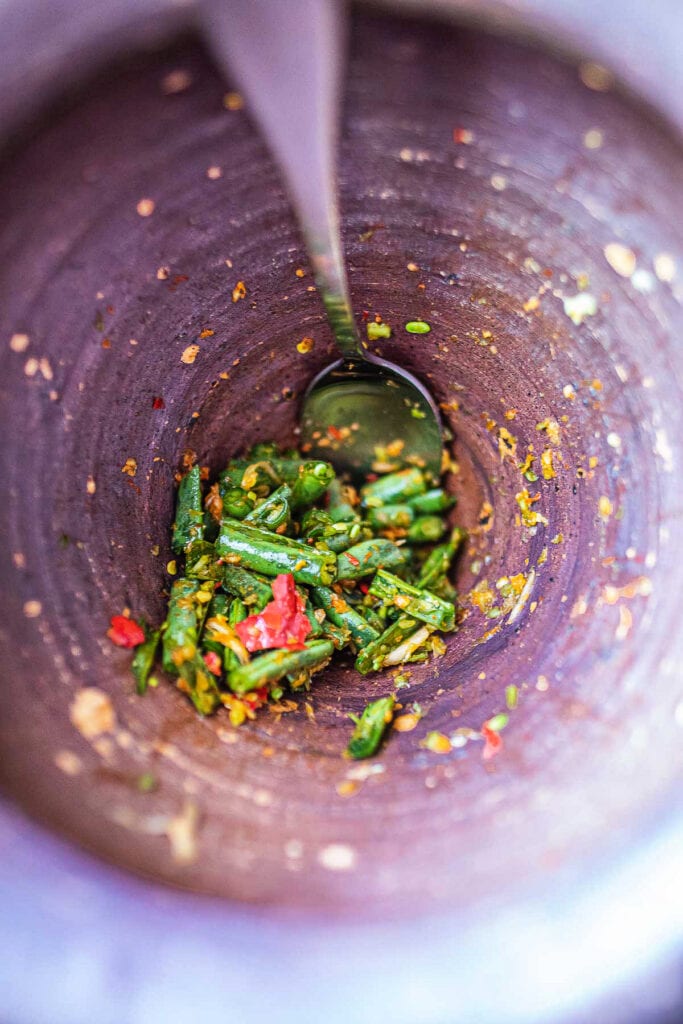
- Add the crunchy ingredients. Toss in "crunchier or tougher" ingredients like green beans, Thai eggplants, peanuts, or dried shrimp and lightly bruise them.
- Build the dressing. Add the palm sugar so it can dissolve, then add the tomatoes and lime wedges to help release their juices. I like leaving the lime rinds in for extra flavor.
- Add the sauces. Pour in the fish sauce, lime juice, Pla Ra, and MSG if using. Use a spoon to mix everything together.
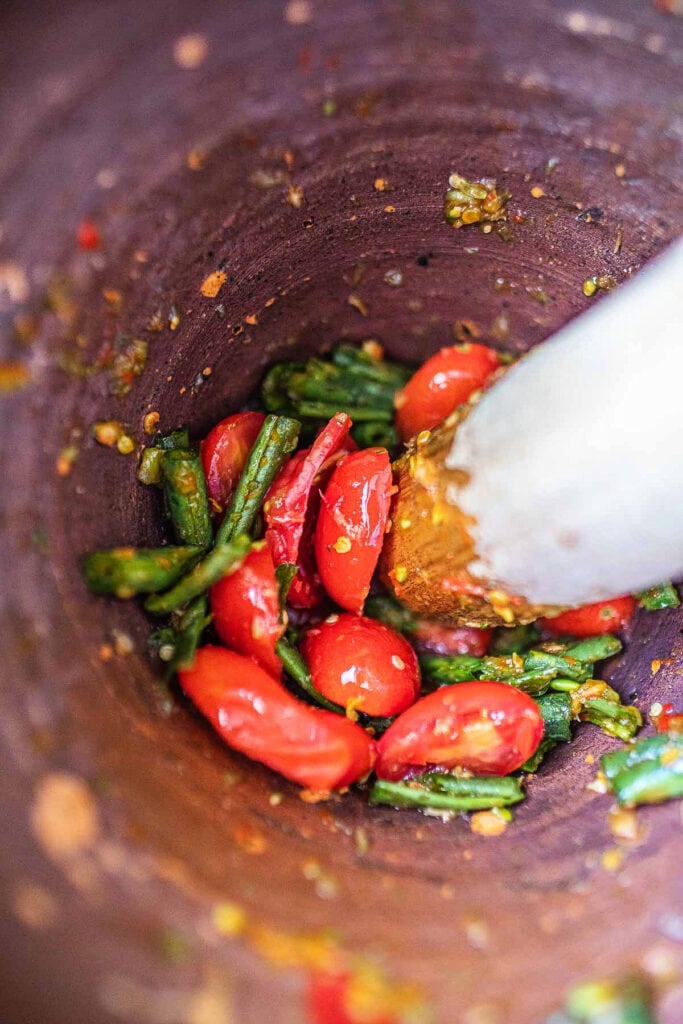
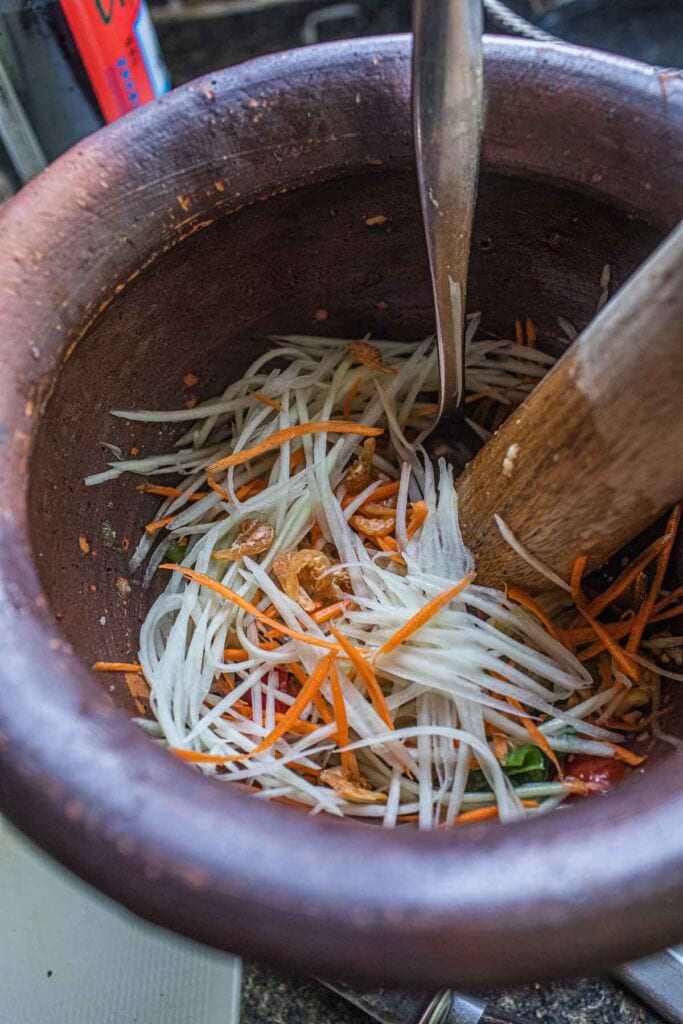
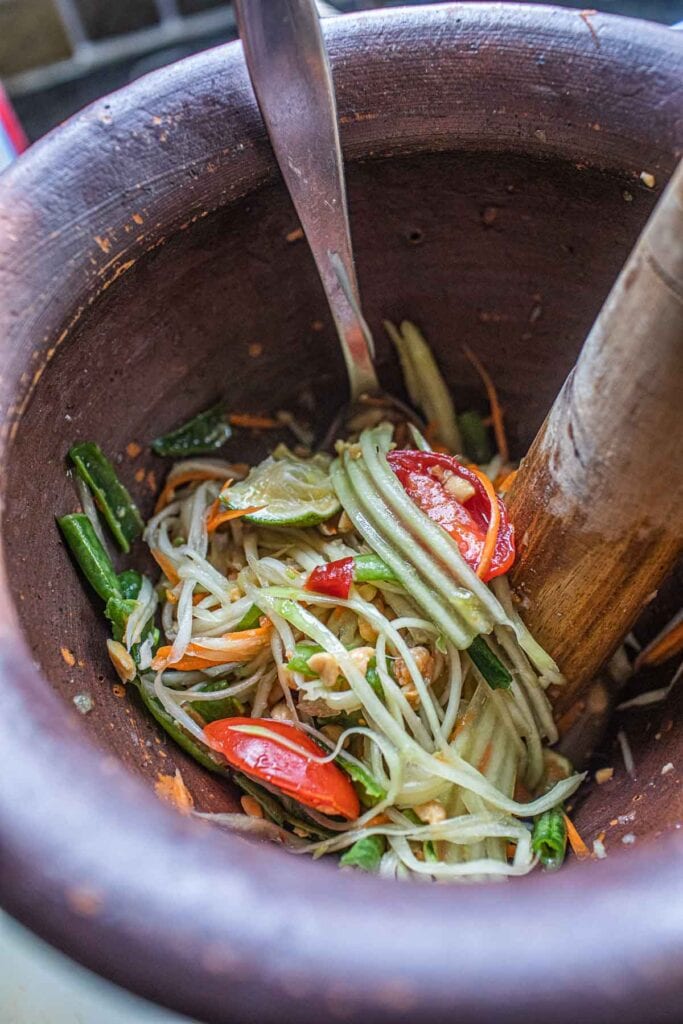
- Add the shredded papaya. Toss in the green papaya and carrots if using, then gently mix and lightly pound everything together so the papaya absorbs the dressing without getting soggy.
- Taste and adjust. Add pickled crab here if using, then give it one last mix. Taste and adjust the flavors as needed, then let it sit for a minute while you grab your sticky rice, veggies, or grilled meats. Done and ready to eat!
What to Serve with Som Tum
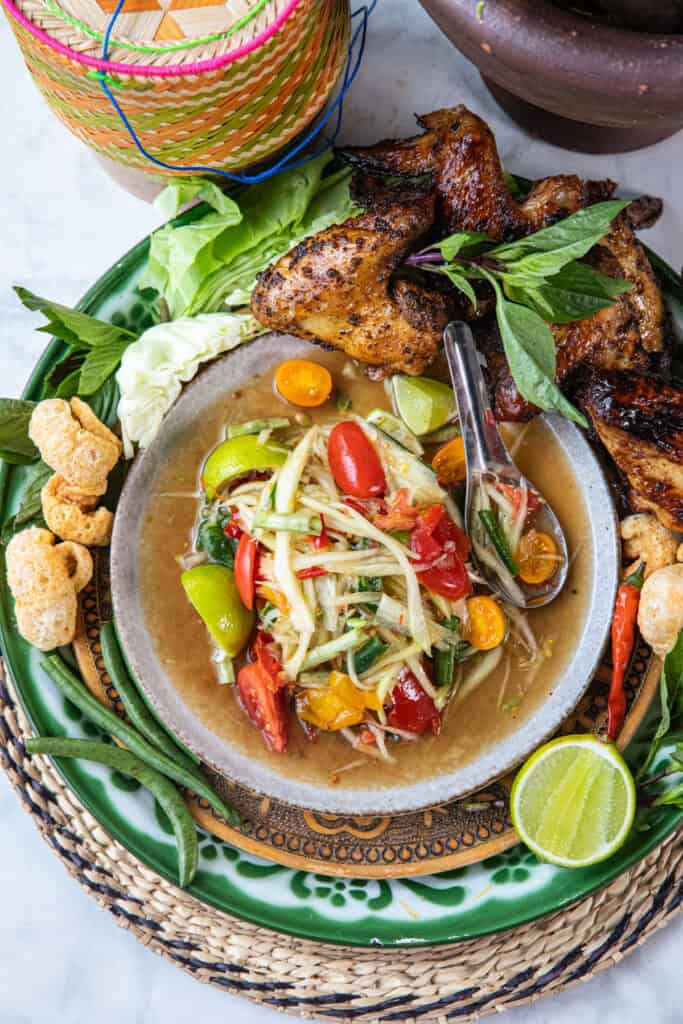
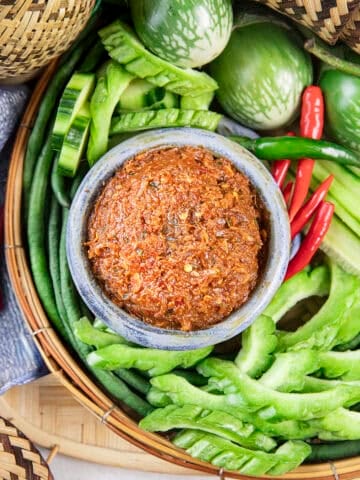
Som tum is rarely eaten alone. It’s usually served with a load of vegetables on the side. Vegetables like cabbage, green beans, water spinach, cucumber, Thai eggplants or lettuce. Papaya salad when eaten as a meal, it's typically served alongside these dishes.
- Sticky rice or purple sticky rice
- Laab like Laab Moo, Laab Gai or Laab Beef.
- Grilled chicken (Gai Yang)
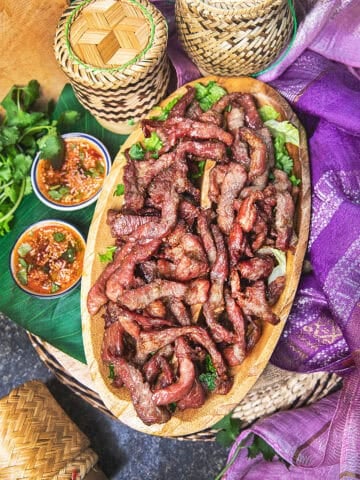
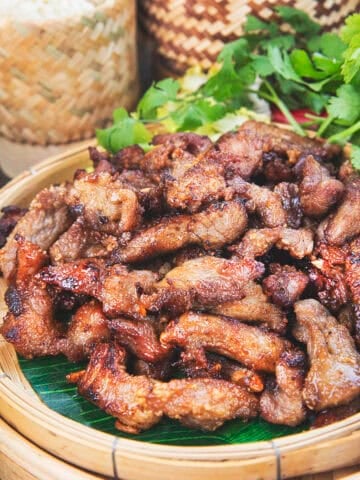
- Or Kor Moo Yang, a simple grilled pork neck served with Nam Jim Jeow.
Common Salad Additions and Variations
One of the fun things about Som Tum is how customizable it can be. While green papaya is the base, many cooks add extra ingredients depending on personal preference or what they have on hand.
Popular additions include carrots, Thai eggplants, dried shrimp, seafood, noodles, pickled crab, Moo Yor, mango, chayote, water spinach, and Sa To seeds. I personally love adding shredded carrots for extra color and texture.
Every batch of Som Tum can be a little different, and that is part of what makes it so good. The most important thing is finding the flavor balance you enjoy most.
How to Store Leftover
Som Tum is best eaten fresh right after it is made while the papaya is still crisp and crunchy. As it sits, the vegetables release water and the salad starts to soften.
Leftovers can still be enjoyed later the same day, but the texture and flavors will not be quite as fresh and vibrant.
Frequently Asked Questions
Traditionally, yes, but you can adjust the spice level.
Yes, but the flavor will be different. You can substitute with soy-based alternatives.
Yes. Mango, cucumber, green beans, cabbage, or mixed fruit are common substitutes.
Related and Pairing
Looking for other recipes like this? Try these Isaan dishes. They pair well with Som Tum.

Hi there, I’m Suwanee!
I’m the person behind this Thai food blog. I spent the first thirteen years of my childhood in Thailand, where I fell in love with the flavors of Thai cooking. What started as sharing recipes from my kitchen has grown into a journey from home cook to restaurant chef — and now one of just eight contestants chosen nationwide for PBS’s The Great American Recipe, Season 4. You’re in the right place if you love to cook Thai food. Come by often, and let’s get cooking!
Leave a Reply