
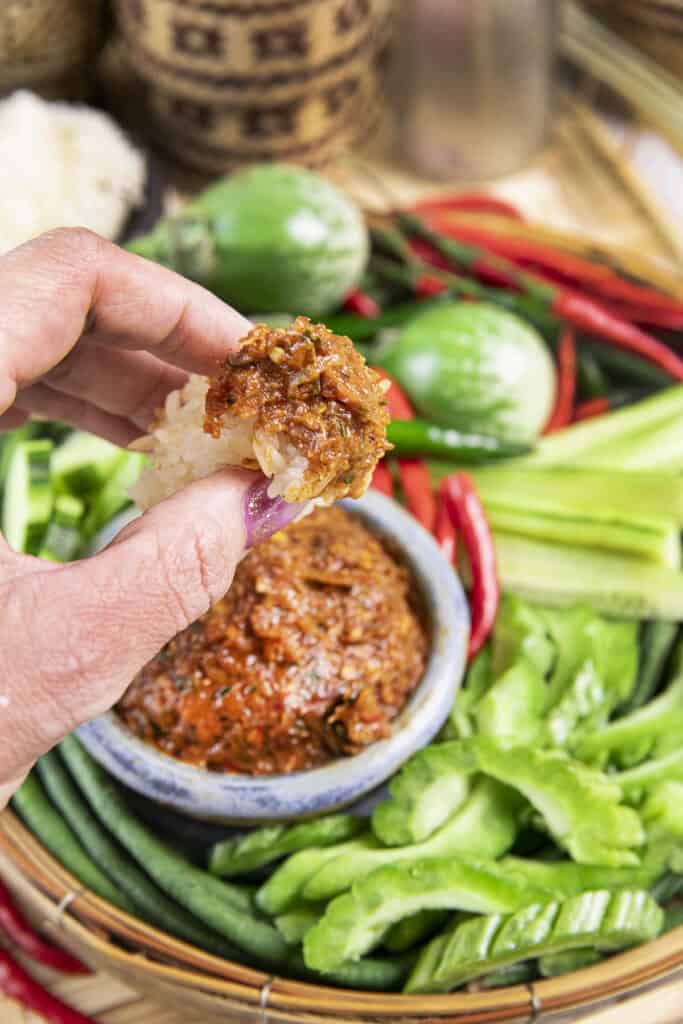
This Jeow Bong is bold, smoky, funky, and very real village food. It’s spicy, deeply savory, and made for scooping up with Sticky Rice and whatever else is on the table. If you love real Isaan heat and fermented flavor, this is a must!
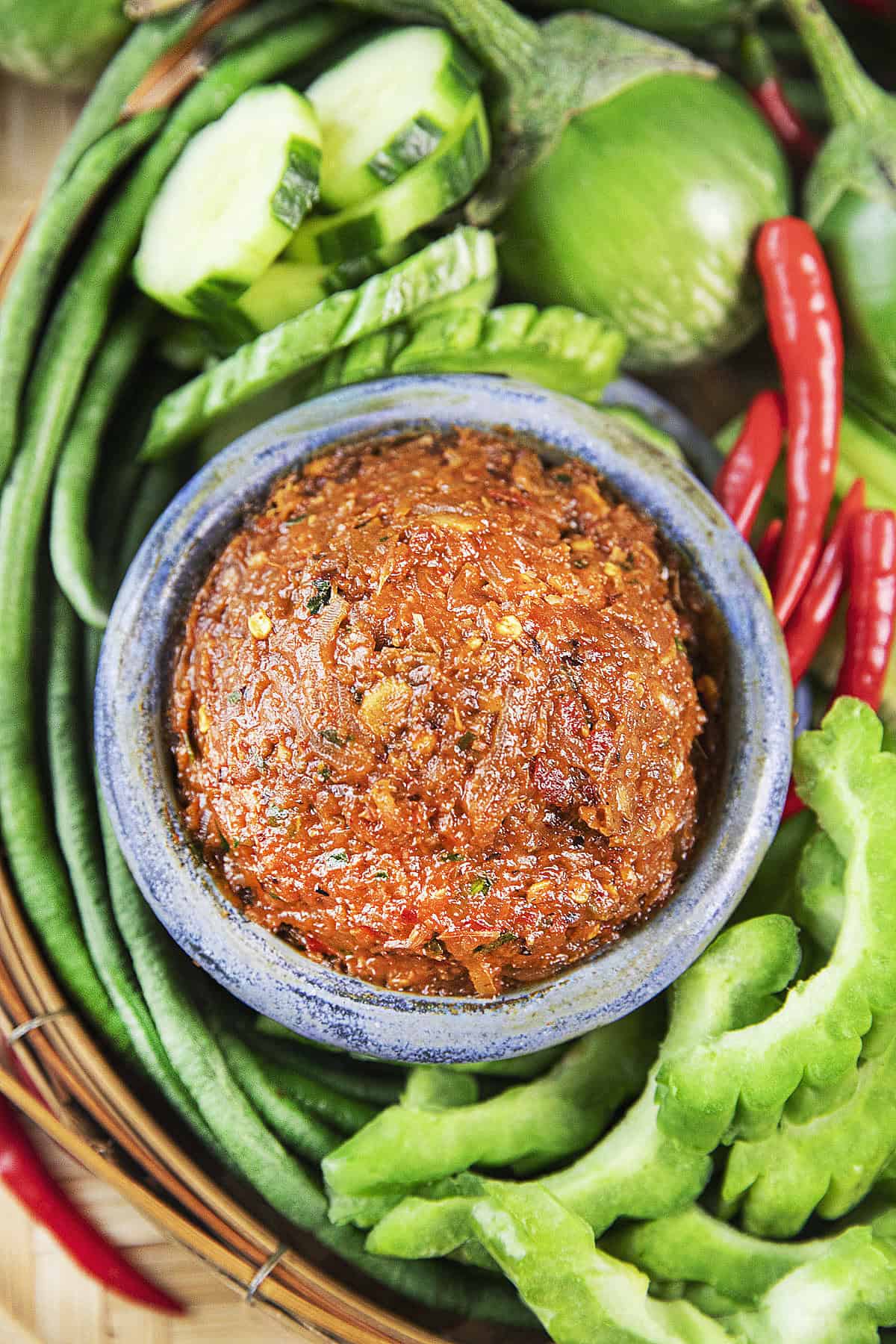
Jeow Bong is best enjoyed with Sticky Rice, alongside dishes like Khao Jee or Thai beef jerky, where bold, fermented flavors really shine.
This is everyday food where I’m from. Jeow Bong shows up with regular meals, not just special occasions. My family is mixed of Thai Isaan, Lao and Cambodian, so this kind of food has always lived right in that overlap. It's the most basic and simple food we know and love so well.
Jump to:
What Is Jeow Bong?
Jeow bong is a thick, smoky chili paste used all over Isaan and Laos. It’s made from dried chilies, garlic, shallots, oil, and something fermented to give it depth. Some versions use pork skin, some use pla dek, and some use whatever the cook has on hand.
It’s not meant to be poured. It’s meant to be scooped, dipped, and eaten slowly with rice.
My Memory of Jeow Bong
My mom made jeow bong in big batches and packed it into whatever plastic containers we had lying around. We dipped sticky rice, pork or beef jerky, and moo tod straight into it. Pla dek was always used. Always extra spicy. Always very stinky. Our kitchen was outdoors, so the smell could do its thing without taking over the house.
Learn more about Isaan cuisine with this guide here.
Ingredients
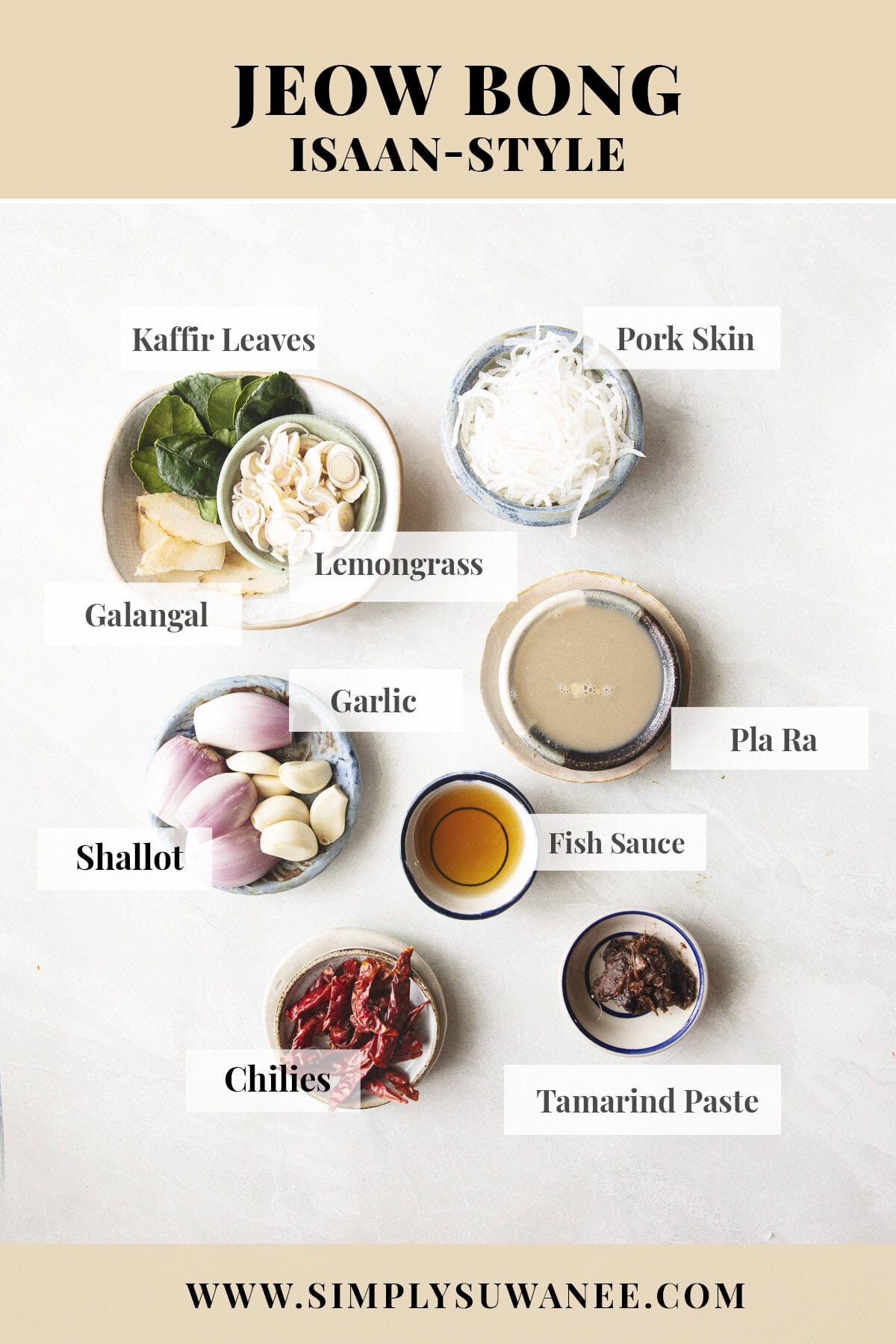
- Shallots. Add sweetness and body once dry-toasted and lightly charred.
- Garlic. Brings savory depth and mellows as it roasts.
- Galangal. Adds a clean, peppery bite that cuts through richness.
- Lemongrass. Brightens the paste and keeps it from feeling heavy.
- Dried chilies. Provide heat and a smoky backbone.
- Kaffir lime leaves (makrut). Add sharp citrus aroma and should be added last so they don’t burn.
- Cooked pork skin. Adds chew and richness and keeps this version approachable without pla dek.
- Tamarind flesh (from pods, not paste or concentrate). Adds gentle sourness and texture using the actual pulp.
- Fish sauce. Provides salt and umami and ties all the flavors together.
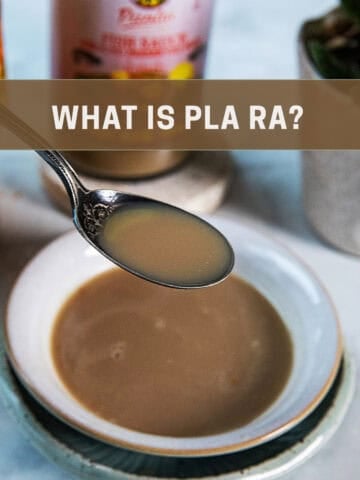
- Pla Ra. Fermented fish sauce for the funky umami Isaan Flavor.
- Optional. MSG. MSG is commonly used in Jeow Bong. You can omit it if choosing not to use it. You can use sugar instead to help round out the flavors.
Unique Ingredients
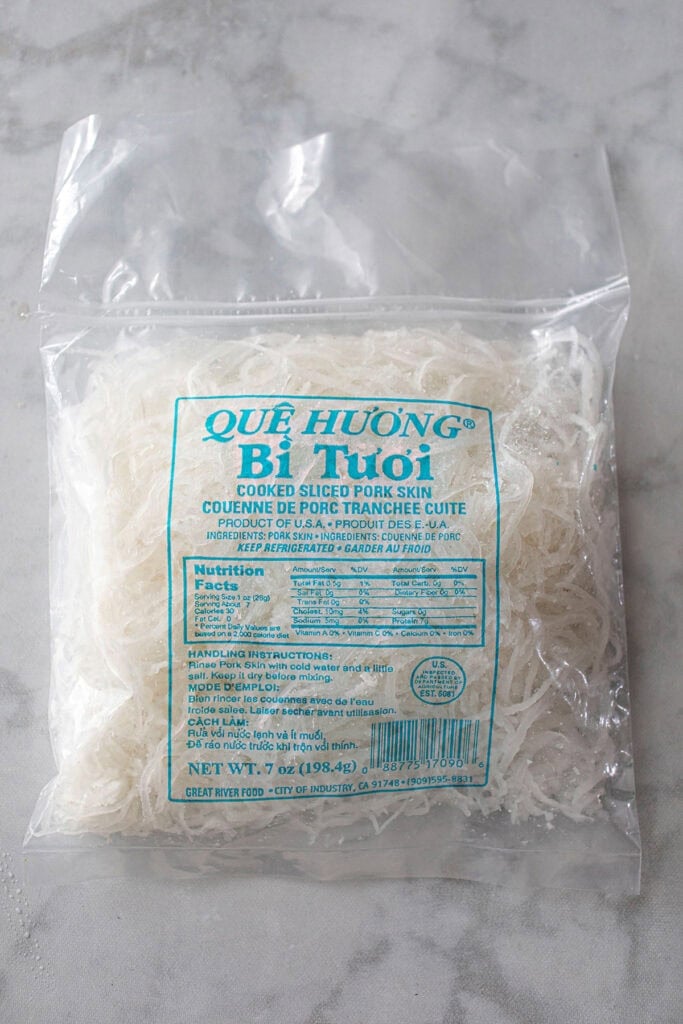
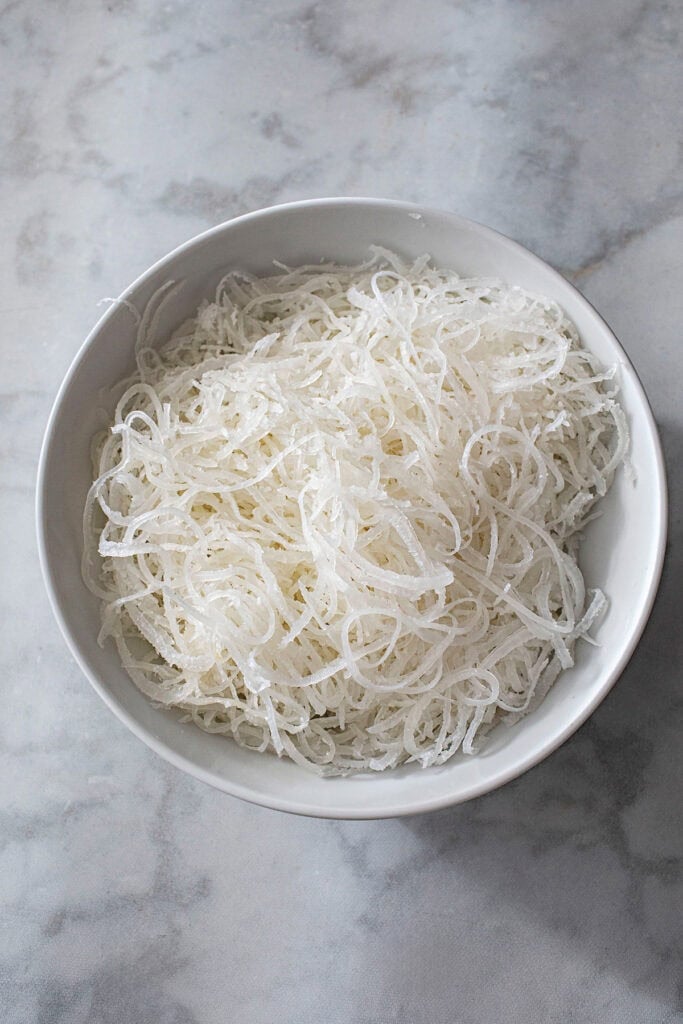
- Cooked pork skin. Adds chew and richness and keeps this version approachable without Pla Dek. Find these in the freezer section of the Asian market.
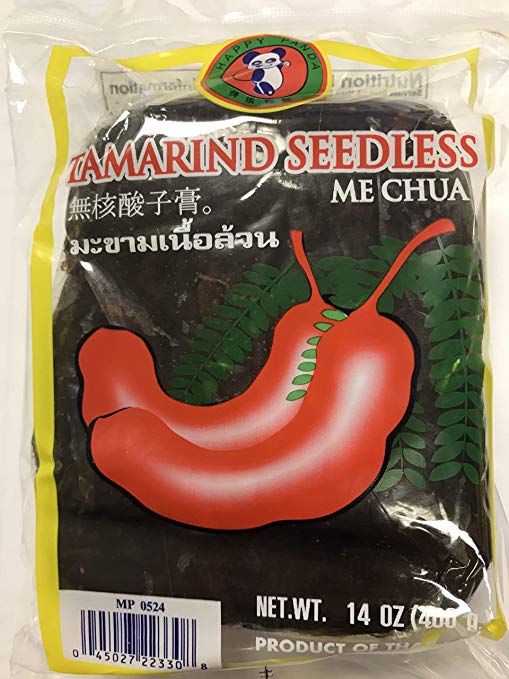
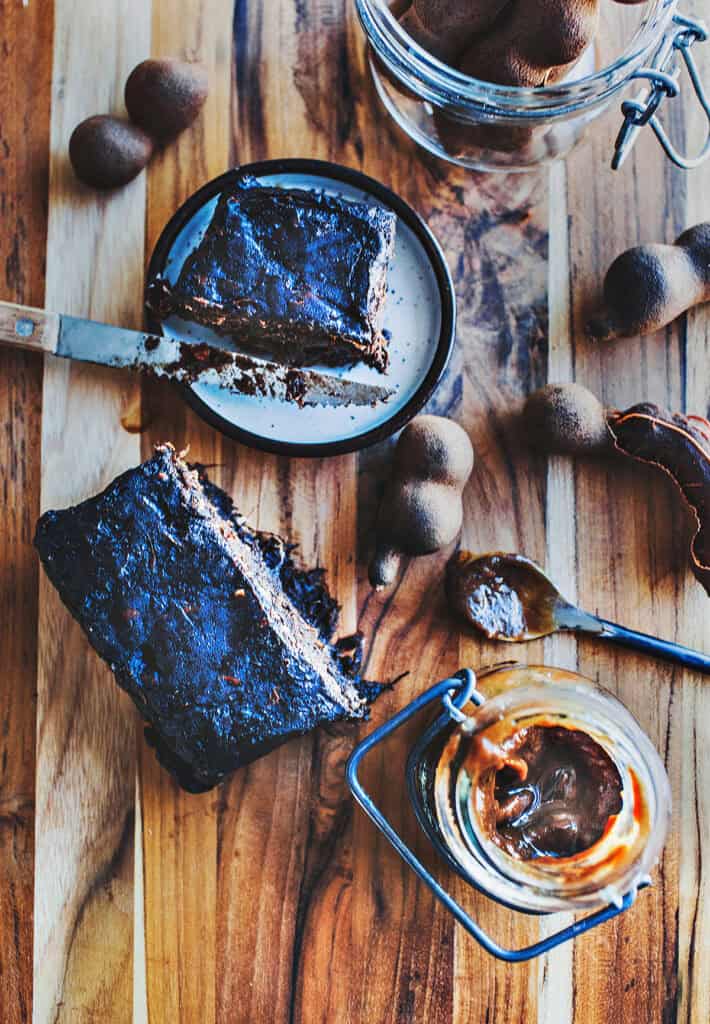
- Tamarind flesh (from pods, not paste or concentrate). Adds gentle sourness and texture and keeps the Jeow Bong thick and paste-like. They can be found at most Asian markets.
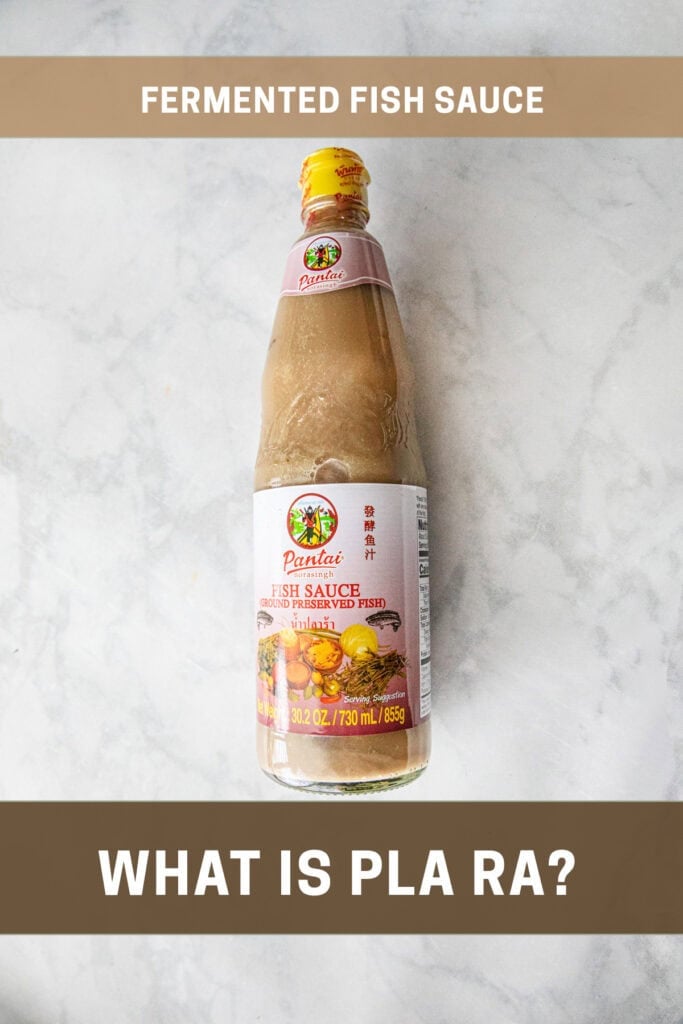
- Pla Ra Fermented fish sauce. These can be found at the Asian market. See image before for the exact brand used.
How to Make Jeow Bong
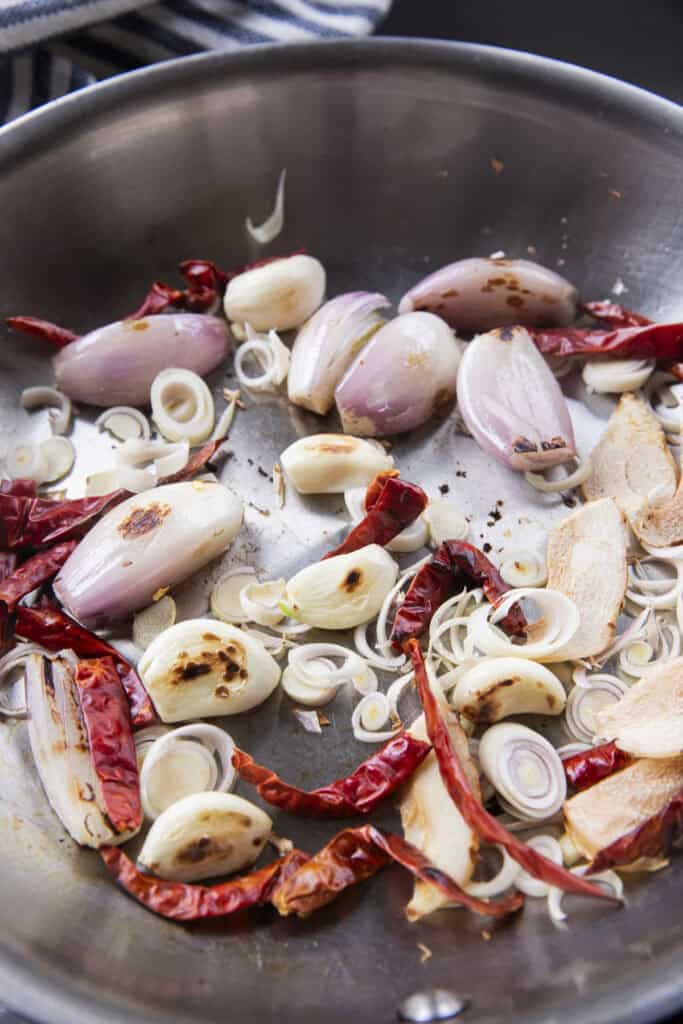
- Dry-toast the shallots, garlic, and galangal in a pan until fragrant and lightly charred. Don’t rush this step. It builds the base flavor.
- Add the chilies and lemongrass and toast briefly. These cook faster and don’t need much time.
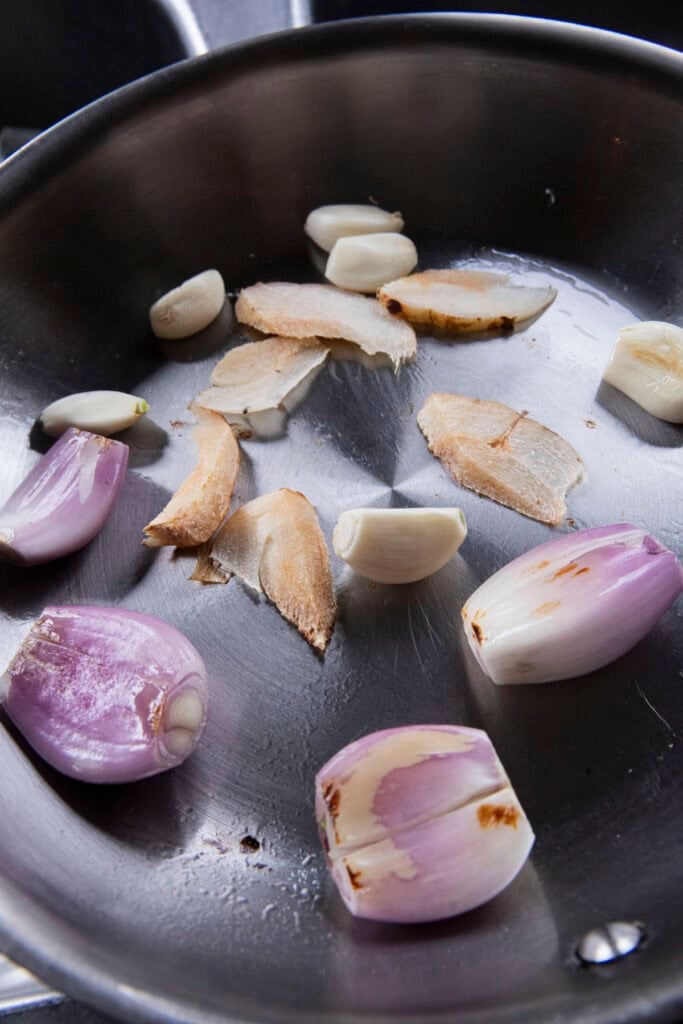
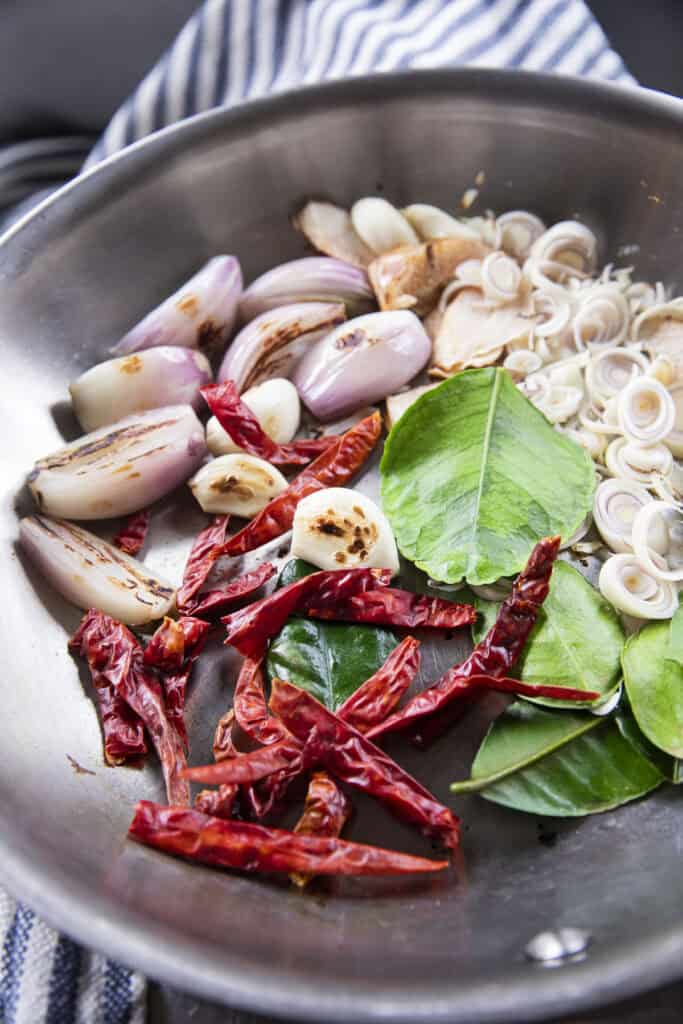
- Add the Kaffir Lime Leaves last and remove from heat as soon as they turn fragrant so they don’t burn. Thinly slice or hand-shred the leaves.
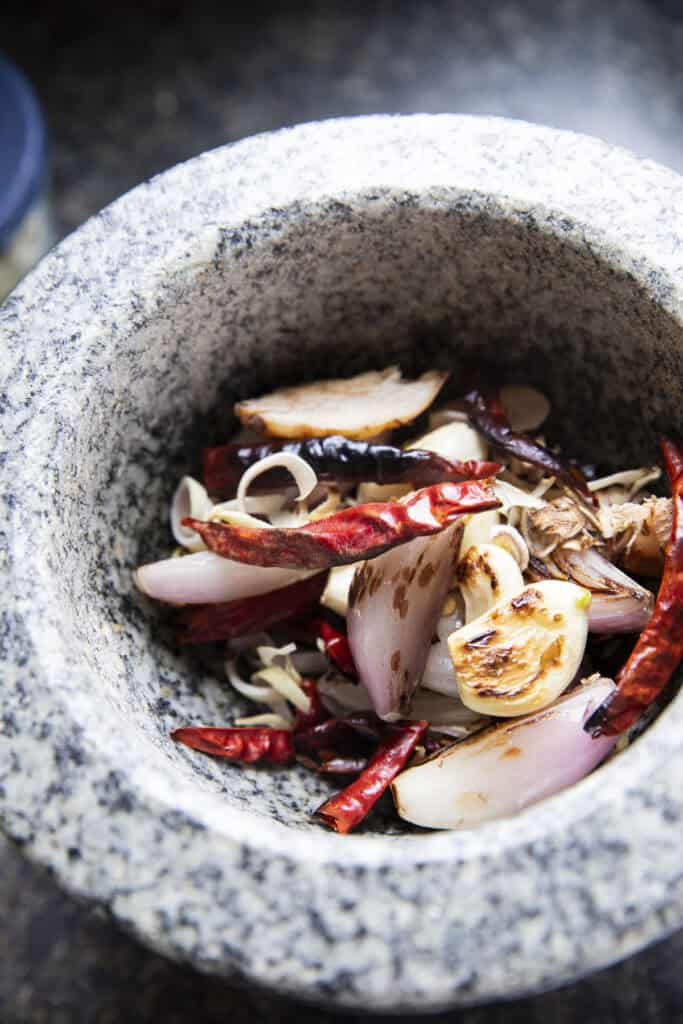
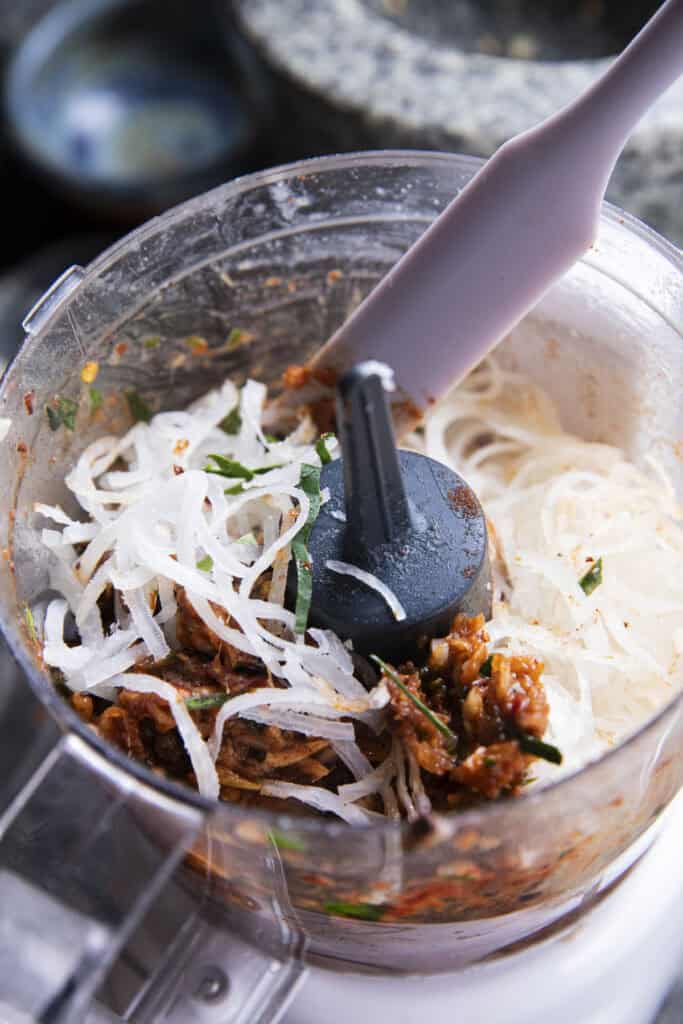
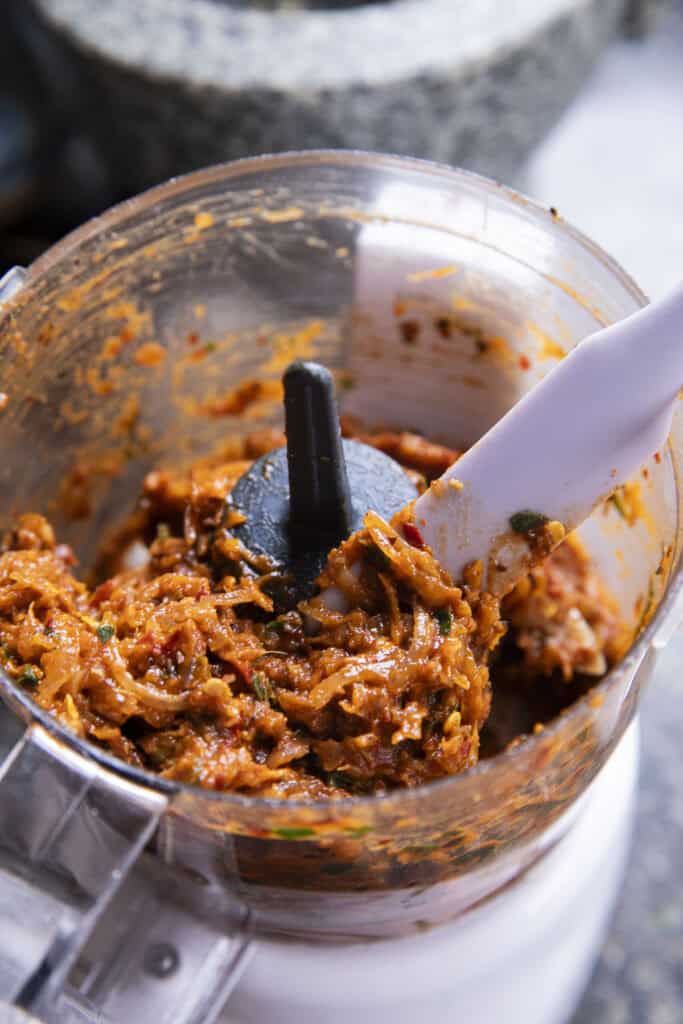
- Transfer everything to a food processor. Add fish sauce, Pla Ra, tamarind flesh, MSG or sugar if using. Blend into a thick paste. Same as using mortar and pestle.
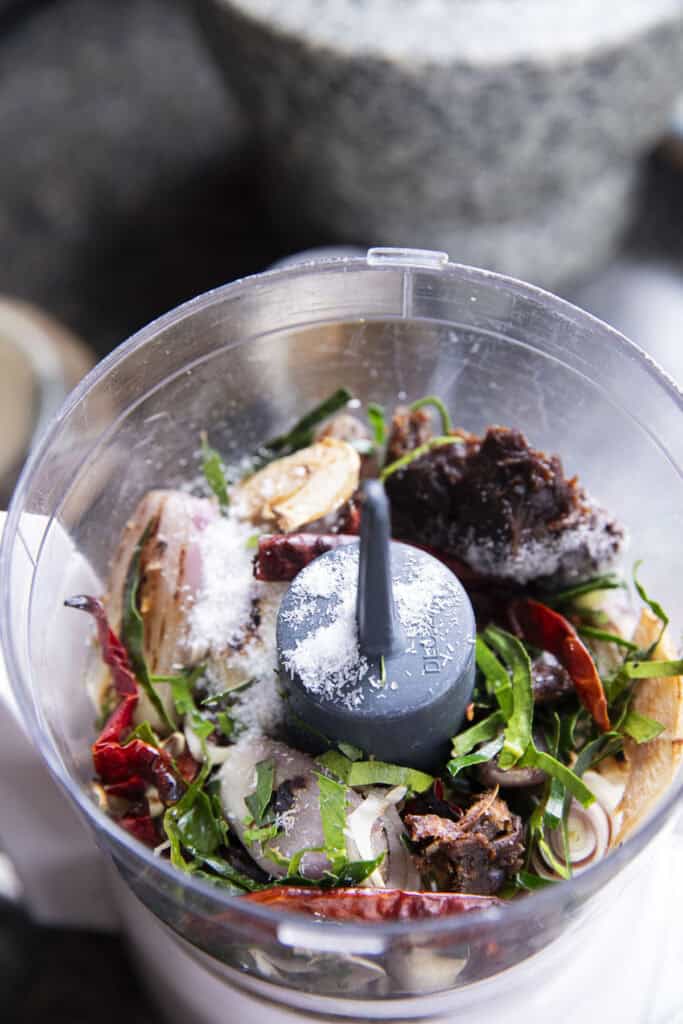
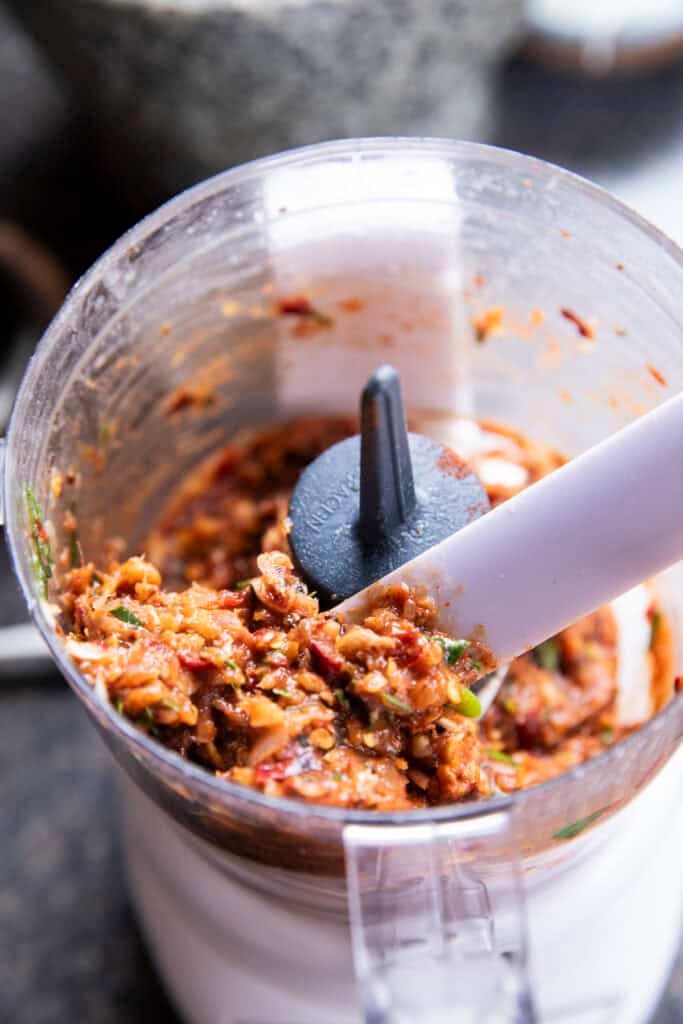
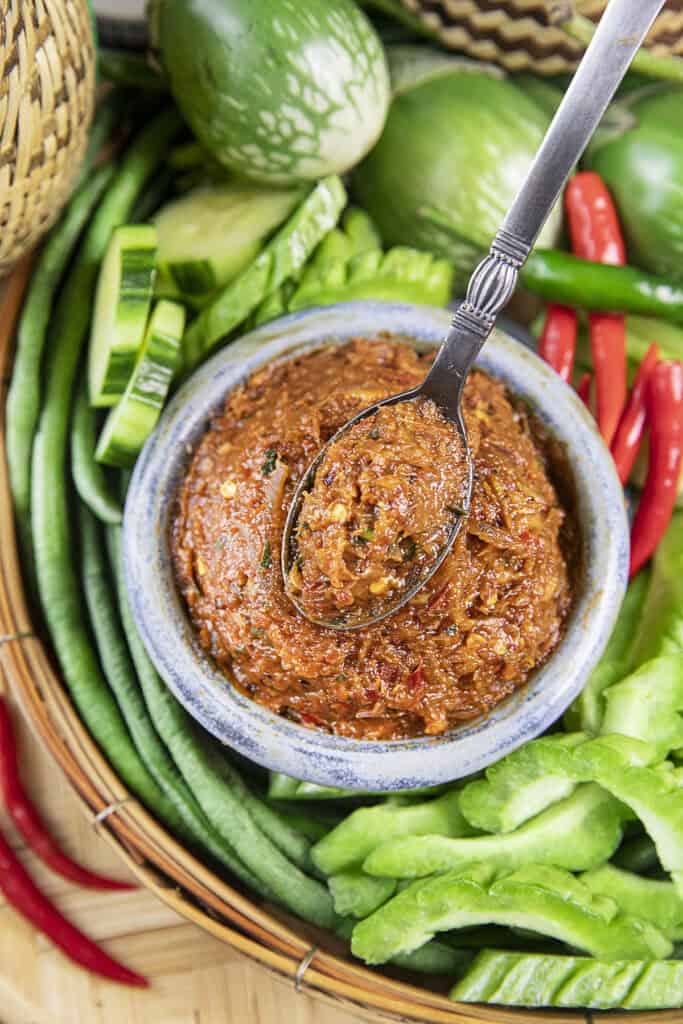
- Add the pork skin, blend once more, then taste and adjust seasoning. Scoop the paste into a serving bowl, arrange around with crispy fresh veggies, beef jerky, fried or grilled meat and sticky rice. Enjoy!
How We Eat Jeow Bong
This is one of those sauces that works with almost everything. But mainly, we eat it with sticky rice, meat jerky, raw vegetables, grilled pork or chicken, fried fish, or dried meat. Sometimes it’s the only “side” on the table, and that’s enough. A little goes a long way.
Suwanee's Top Tips
- There’s no need to cook this version since the pork skin and Pla Ra are already cooked. Traditional Pla Dek versions must be cooked.
- A mortar and pestle gives a rougher, more rustic texture. A food processor is faster and makes a finer paste. Both work.
- With a paper towel, lightly coat the pan with a thin layer of neutral oil before dry-toasting to keep the aromatics from burning too quickly.
Storage
Keep jeow bong in a clean jar in the fridge. It lasts about two to three weeks. Store it in small glass jars so you can use it up while it’s fresh. Always use a clean spoon so it doesn’t spoil early.
More Isaan Recipes You'll Love
- Laab Moo (Pork Laab Salad). An Isaan style Laab with ground pork.
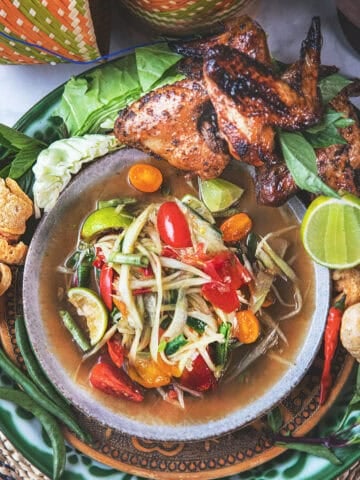
- Som Tum Isaan. Isaan-style green papaya salad
- Gai Yang (Isaan Grilled Chicken). Smoky grilled chicken with dipping sauces on the side.
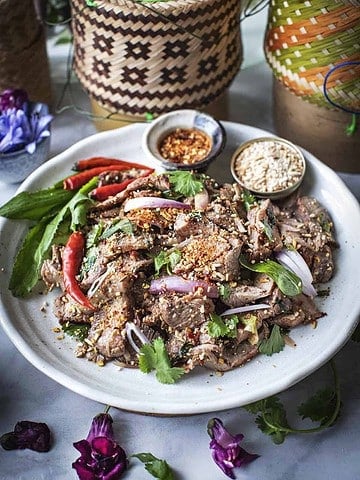
- Nam Tok (Pork or Beef). Spicy Isaan salads where Jeow Bong adds extra depth.
- Moo Tod (Thai Fried Pork). Crispy pork that pairs perfectly with spicy chili pastes.
Frequently Asked Questions
Yes. Freeze Jeow Bong in small batches using glass containers or mason jars. It keeps well for up to 3–4 months.
Yes. The heat is real but warm and slow, not sharp.
Both. This kind of food has always crossed borders, especially in places along the border of both countries.
Related Recipes
Looking for other recipes like this? Try these Isaan dishes too.
Jeow Bong (Isaan Chili Dipping Sauce)
- Total Time: 25 minutes
- Yield: 1.25 cups 1x
- Diet: Low-Carb
Description
This Jeow Bong is bold, smoky, funky, and very real village food. It’s spicy, deeply savory, and made for scooping up with Sticky Rice and whatever else is on the table. If you love real Isaan heat and fermented flavor, this is a must!
Ingredients
- 2.5 oz shallots
- 7-8 large garlic cloves
- 3 slices galangal (about quarter-size each)
- 2 stalks lemongrass, thinly sliced (about ¼ cup)
- 10–20 dried chilies (Adjust as needed)
- 3–4 kaffir lime leaves, thinly julienned
- 2 oz cooked pork skin, cut into small 1-inch pieces. See image in blog post for reference.
- 1 tablespoon tamarind flesh (from pods, not paste or concentrate). See image in blog post for reference.
- 1 tablespoons fish sauce (add more after tasting if needed)
- 3 tablespoon Pla Ra. See image in blog post for reference.
- ½ teaspoon MSG. Optional. or substitute 1 teaspoon sugar
Instructions
- Dry-toast the shallots, garlic, and galangal in a pan until fragrant and lightly charred. Don’t rush this step. It builds the base flavor.
- Add the chilies and lemongrass and toast briefly. These cook faster and don’t need much time.
- Add the Kaffir Lime Leaves last and remove from heat as soon as they turn fragrant so they don’t burn. Thinly slice or hand-shred the leaves.
- Transfer everything to a food processor. Add fish sauce, Pla Ra, tamarind flesh, MSG or sugar if using. Blend into a thick paste. Same as using mortar and pestle.
- Add the pork skin, blend once more, then taste and adjust seasoning. Scoop the paste into a serving bowl, arrange around with crispy fresh veggies, beef jerky, fried or grilled meat and sticky rice. Enjoy!
Notes
- There’s no need to cook this version since the pork skin and Pla Ra are already cooked. Traditional Pla Dek versions must be cooked.
- A mortar and pestle gives a rougher, more rustic texture. A food processor is faster and makes a finer paste. Both work.
- With a paper towel, lightly coat the pan with a thin layer of neutral oil before dry-toasting to keep the aromatics from burning too quickly.
- Prep Time: 15 minutes
- Cook Time: 10 minutes
- Category: Isaan food, Sauces
- Method: stovetop
- Cuisine: Thai

Hi there, I’m Suwanee!
I’m the person behind this Thai food blog. I spent the first thirteen years of my childhood in Thailand, where I fell in love with the flavors of Thai cooking. What started as sharing recipes from my kitchen has grown into a journey from home cook to restaurant chef — and now one of just eight contestants chosen nationwide for PBS’s The Great American Recipe, Season 4. You’re in the right place if you love to cook Thai food. Come by often, and let’s get cooking!
Leave a Reply