
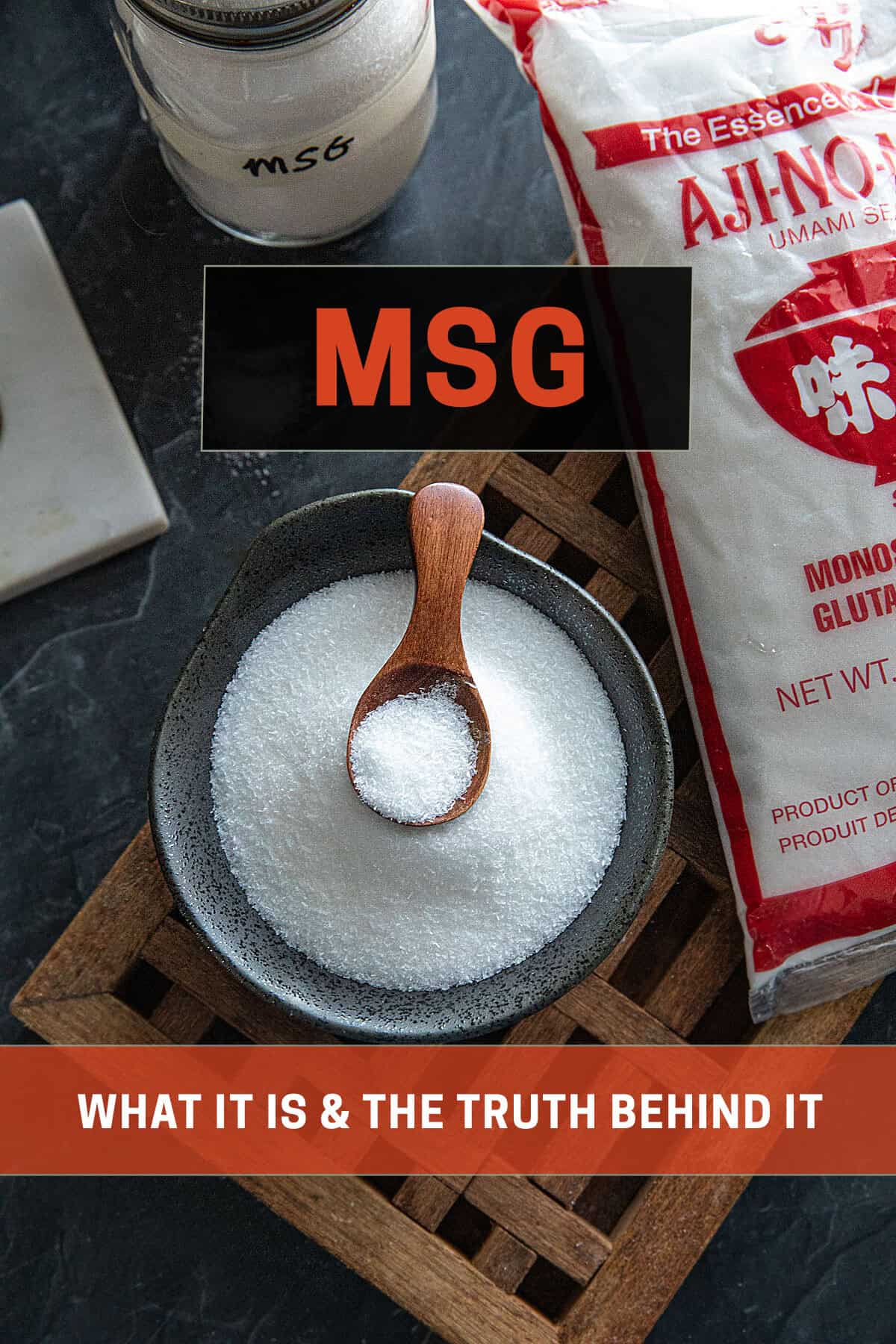
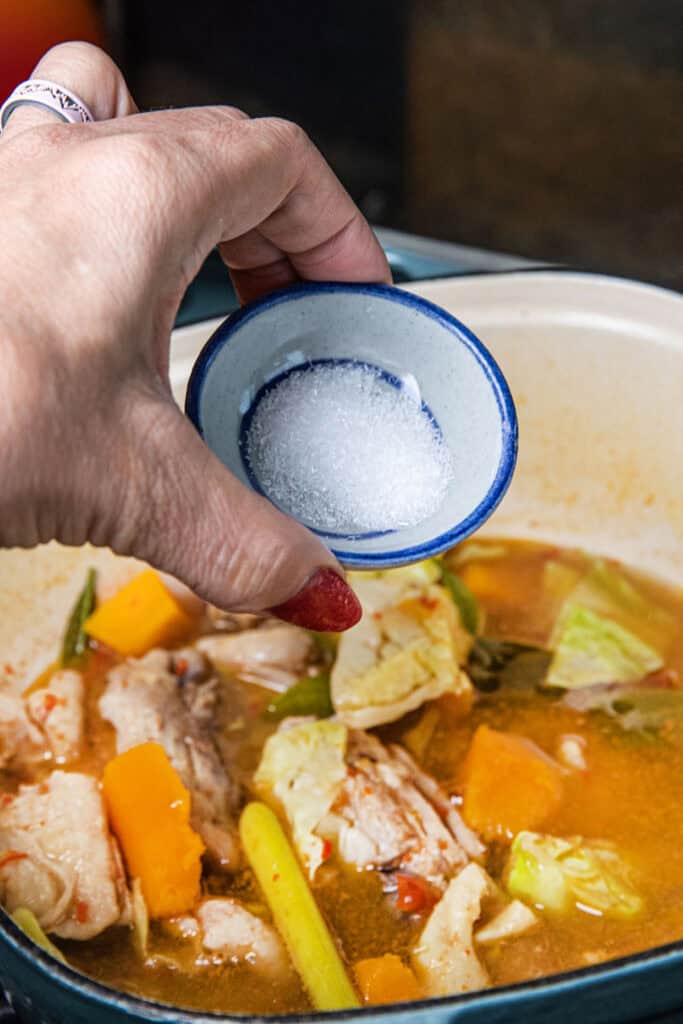
MSG, or monosodium glutamate, is a seasoning commonly used in Thai cooking, especially in everyday home kitchens and rural regions like Isaan. While it often carries a negative reputation in the United States, MSG has long been part of practical, flavor-forward cooking traditions across Asia.
In Isaan kitchens, MSG commonly shows up in dishes like laab moo (Thai pork larb salad), beef larb, Sai Krok Isaan, Jeow dipping sauces, spicy salads such as Som Tam Isaan, Som Tum Pu Pla Ra and light soups and broths like savory Isaan soup, Gaeng Om Gai.
Jump to:
- MSG in Thai and Isaan Cooking
- What Is MSG
- How MSG Is Made
- Why Thai Cooks Use MSG
- Why MSG Has a Bad Reputation
- What Modern Scientific Studies Say
- What about MSG Symptoms?
- MSG vs Salt
- Where MSG Shows Up Naturally
- Should You Use MSG In Your Cooking?
- Top Tip
- Respecting Food Cultures Without Fear
- FAQ
- More Thai Kitchen Resources
- Hi there, I’m Suwanee!
MSG in Thai and Isaan Cooking
Thai cuisine has always been about balance, resourcefulness, and feeding people well.
MSG is simply one more option cooks have used to build flavor, especially in parts of Thailand where ingredients are stretched and shared among many.
In Isaan food, MSG is often used to boost savory depth and support the bold, punchy flavors the region is known for.
Food is personal. Flavor is personal. Use what makes your cooking joyful.
What Is MSG
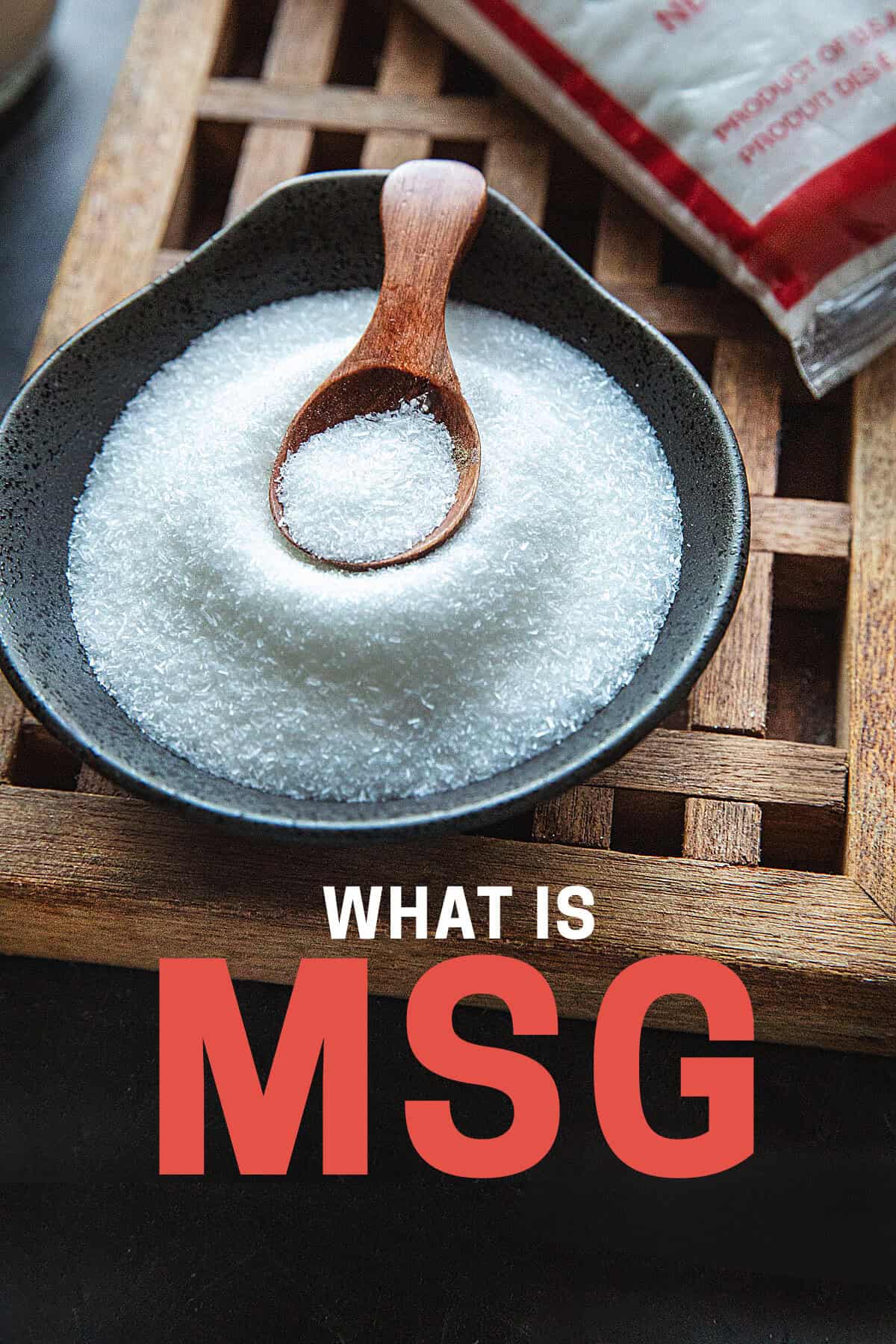
MSG stands for monosodium glutamate, but don’t let the name scare you. Glutamate is something you already eat all the time. It naturally shows up in everyday foods like tomatoes, mushrooms, seaweed, Parmesan cheese, soy sauce, anchovies, and even human breast milk.
MSG is just a concentrated version of that same savory compound, used to boost umami and make food taste fuller and more satisfying.
How MSG Is Made
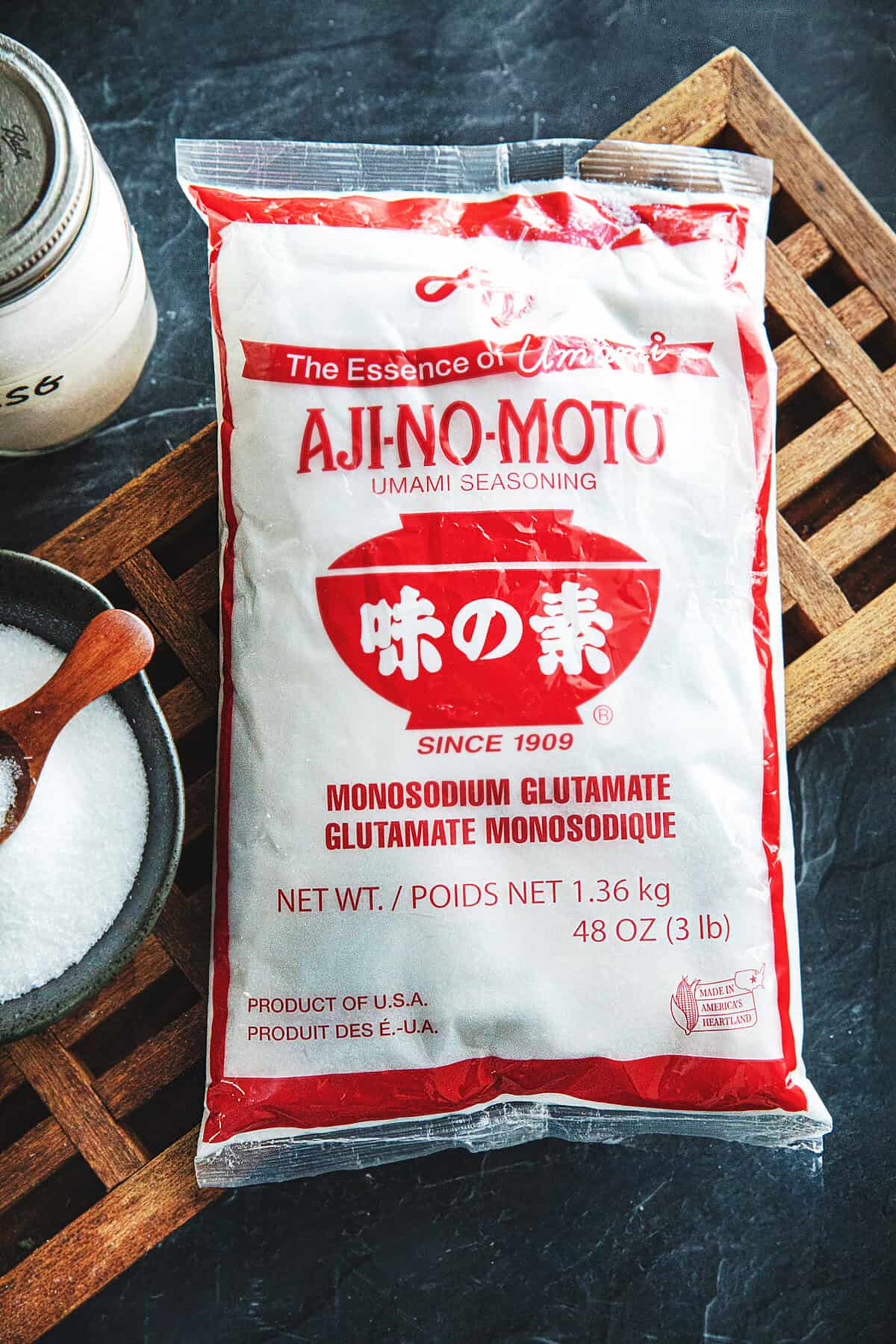
Modern MSG is created through a gentle fermentation process, often using sugar cane or sugar beets. Yeast or bacteria transform the sugars into glutamate, which is then combined with table salt to form tiny white crystals.
It is one of the most widely used flavor enhancers and food additives in the world.
Why Thai Cooks Use MSG
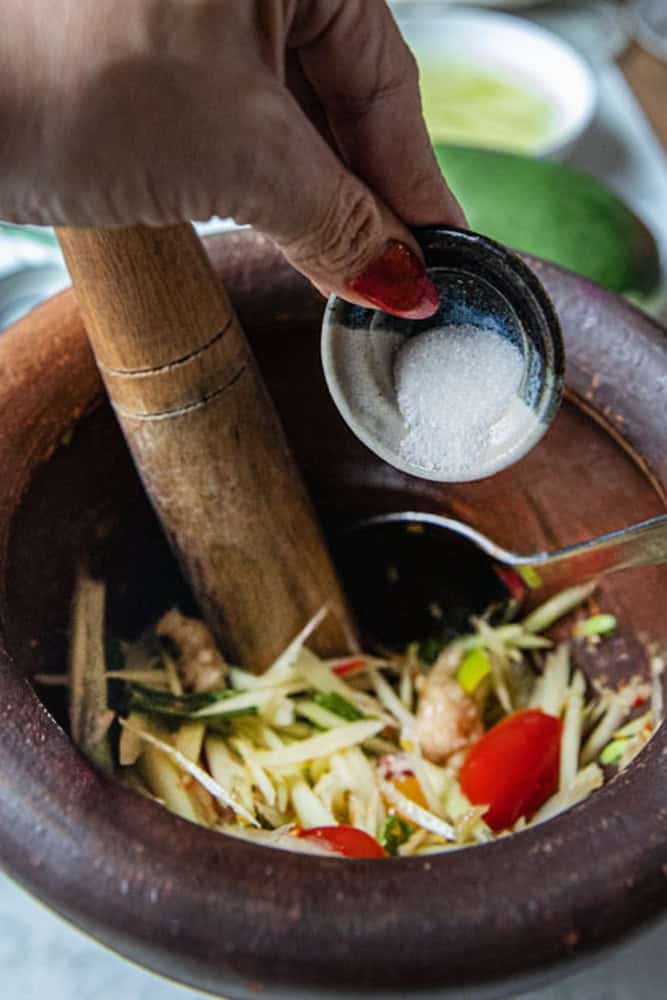
Thai cooking, especially Isaan food, is built on balance, not richness from cream or butter. Flavor comes from fish sauce, lime, chilies, salt, herbs, and fermented ingredients like pla ra. When protein is limited and vegetables do most of the work, those flavors can stretch thin. That’s where a small pinch of MSG comes in.
It boosts savory depth, balances sharp acidity, and helps lean dishes taste fuller. It’s used like salt, just a light lift, never the main ingredient.
Why MSG Has a Bad Reputation
The fear of MSG in America began in 1968, when Dr. Robert Ho Man Kwok wrote a short letter to the New England Journal of Medicine, (Paywalled), describing discomfort after eating Chinese food. The letter coined the phrase “Chinese Restaurant Syndrome.” The following year, newspapers repeated it everywhere. The idea became tied to cultural bias and fear of unfamiliar Asian cooking.
What often gets left out is what research actually shows.
What Modern Scientific Studies Say
Decades of modern studies, including both human and animal research, have found no convincing evidence that MSG harms the general population.
Major health and food safety organizations around the world agree. The World Health Organization, U.S. Food and Drug Administration, European Food Safety Authority, The Mayo Clinic and Food Standards Australia New Zealand all classify MSG as safe to eat.
What about MSG Symptoms?
Some people report mild symptoms like headaches, flushing, heart palpitations, or difficulty breathing. However, controlled trials show these reactions only occur when MSG is consumed in unusually high amounts, far beyond normal cooking levels, often measured in grams of MSG per kilogram of body weight. In everyday home cooking, the small amounts used are not associated with these effects.
MSG vs Salt
MSG contains one-third of the sodium of regular table salt. Using MSG lets cooks add savory flavor while lowering sodium intake, which may benefit people watching their blood pressure or overall sodium content.
A little salt plus a tiny pinch of MSG often tastes better than a lot of salt alone.
Where MSG Shows Up Naturally
Glutamate occurs naturally in many foods, even when no added MSG appears on the label. It’s found in ingredients like mushrooms, tomatoes, seaweed, cheese, shellfish, fermented foods, soy sauce, and shrimp paste, as well as in broths, salad dressings, instant noodles, and snack foods.
Food manufacturers and fast food kitchens use MSG because it enhances flavor, not because it masks poor quality ingredients.
Should You Use MSG In Your Cooking?
You absolutely can, and you absolutely don’t have to.
If you choose to use MSG, Use very small amounts, add it after tasting, and think of it as a seasoning, not a shortcut.
If you choose not to use MSG, focus on layering flavor, use high quality fish sauce, and add aromatics and acids thoughtfully. Both approaches are personal preference and can produce excellent food.
Top Tip
Many Thai cooks add just a small pinch of MSG for extra savory depth. If you’ve been to Thailand or eaten Asian food at restaurants, chances are you’ve already had MSG many times without even realizing it.
Respecting Food Cultures Without Fear
MSG isn’t toxic, and it isn’t cheating. It’s also not exclusive to Chinese restaurants or Asian cooking. MSG is simply a seasoning, like salt, sugar, soy sauce, or stock. Understanding how and why cooks use it helps us become more informed, open, and respectful eaters.
FAQ
No. Large scientific studies show no convincing evidence that MSG causes harm when eaten in normal amounts. Major food safety organizations worldwide classify it as safe.
Yes. MSG has been used for decades in Thai home kitchens, street food, and rural regions like Isaan as one optional way to add savory depth alongside fish sauce and fermented ingredients.
More Thai Kitchen Resources
Looking for other helpful kitchen resources like this? Check these articles below.

Hi there, I’m Suwanee!
I’m the person behind this Thai food blog. I spent the first thirteen years of my childhood in Thailand, where I fell in love with the flavors of Thai cooking. What started as sharing recipes from my kitchen has grown into a journey from home cook to restaurant chef — and now one of just eight contestants chosen nationwide for PBS’s The Great American Recipe, Season 4. You’re in the right place if you love to cook Thai food. Come by often, and let’s get cooking!
Leave a Reply