
If you have ever stood in the Asian aisle confused by all the different soy sauce bottles, you are definitely not alone. Thai cooking uses several types of soy sauce to build flavor, color, and balance in dishes like Pad See Ew, fried rice, stir fries, and marinades.
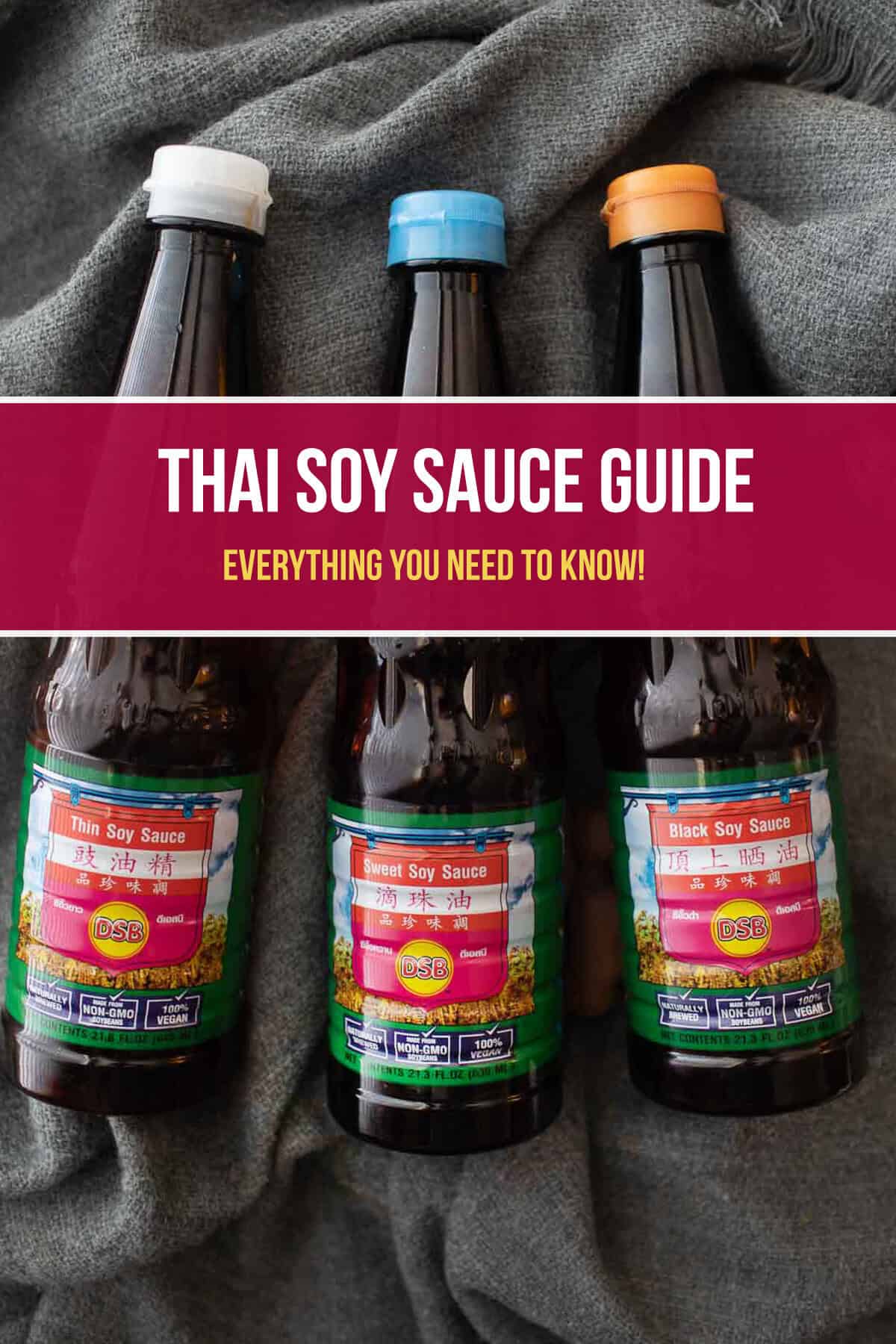
Once you understand what each bottle does, Thai recipes start making a whole lot more sense.
If you are building a Thai pantry at home, check out my guides on how to season a wok, Thai Chili peppers guide, fish sauce, oyster sauce Thai sauces, Thai Rice, Thai basil, Thai noodles, Isaan food, and how to balance Thai flavors.
These pantry staples and cooking techniques work together to create the bold, balanced flavors found in authentic Thai cooking.
Jump to:
- Soy Sauce in Thai Cooking
- Soy Sauce in Isaan Cooking
- What Is Soy Sauce?
- What Does Thai Soy Sauce Taste Like?
- The Main Types of Soy Sauce Used in Thai Cooking
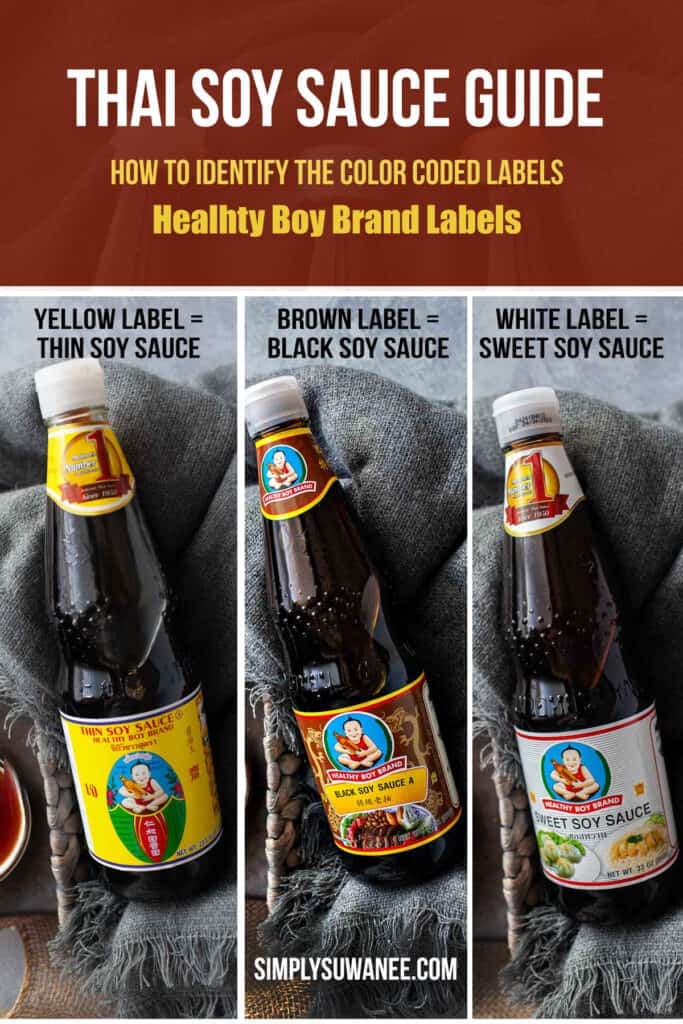
- Thin Soy Sauce (Light Soy Sauce)
- Black Soy Sauce (Or Dark Soy Sauce)
- Sweet Soy Sauce (Or Sweet Dark Soy Sauce)
- Mushroom Soy Sauce
- Seasoning Sauces
- Golden Mountain Seasoning Sauce
- Maggi Seasoning Sauce
- Chalagtong (Gold Label) Seasoning Sauce
- How Thai People Actually Use Soy Sauce
- Soy Sauce vs Fish Sauce
- Thai Soy Sauce vs Chinese Soy Sauce
- Thai Soy Sauce vs Japanese Soy Sauce
- Best Thai Soy Sauce Brands
- What Soy Sauce Do Thai Restaurants Use?
- FAQ
- More Thai Kitchen Tips!
- Hi there, I’m Suwanee!
Soy Sauce in Thai Cooking
Soy sauce is a huge part of everyday Thai cooking. While fish sauce is often the bold flavor people associate with Thai food, soy sauce adds savory depth, color, richness, and balance to dishes like stir fries, noodle dishes, fried rice, marinades, braised dishes, and dipping sauces.
Soy Sauce in Isaan Cooking
Traditional Isaan cooking relies more heavily on fish sauce and Pla Ra than soy sauce. The flavors are often built from fermented fish, herbs, lime juice, roasted rice powder, and chilies.
Soy sauce became more common through Chinese influence in dishes like Pad See Ew and Rad Na. Many Isaan cooks also reach for seasoning sauces like Golden Mountain or Ros Dee more often than regular soy sauce.
What Is Soy Sauce?
Soy sauce is a fermented sauce traditionally made from soybeans, salt, water, and roasted grains like wheat. The fermentation process creates a salty, savory sauce rich in umami flavor.
In Thai cooking, soy sauce is often used alongside fish sauce, oyster sauce, sugar, and aromatics. That is how Thai cooking builds layered, balanced flavor
What Does Thai Soy Sauce Taste Like?
Thai soy sauce tastes salty, savory, and rich in umami. Depending on the type, it can also taste slightly sweet, smoky, caramel-like, or smooth and light. Most Thai soy sauces are softer and slightly less intense compared to some Chinese or Japanese soy sauces.
The Main Types of Soy Sauce Used in Thai Cooking
This is where people usually get overwhelmed, so let’s simplify it.
Thin Soy Sauce (Light Soy Sauce)
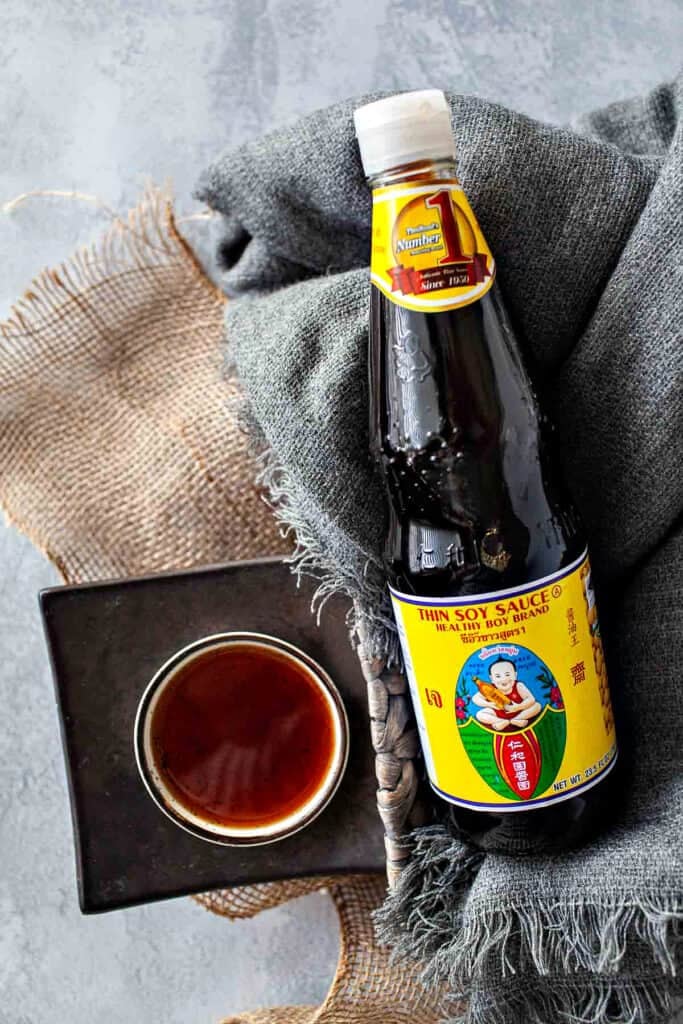
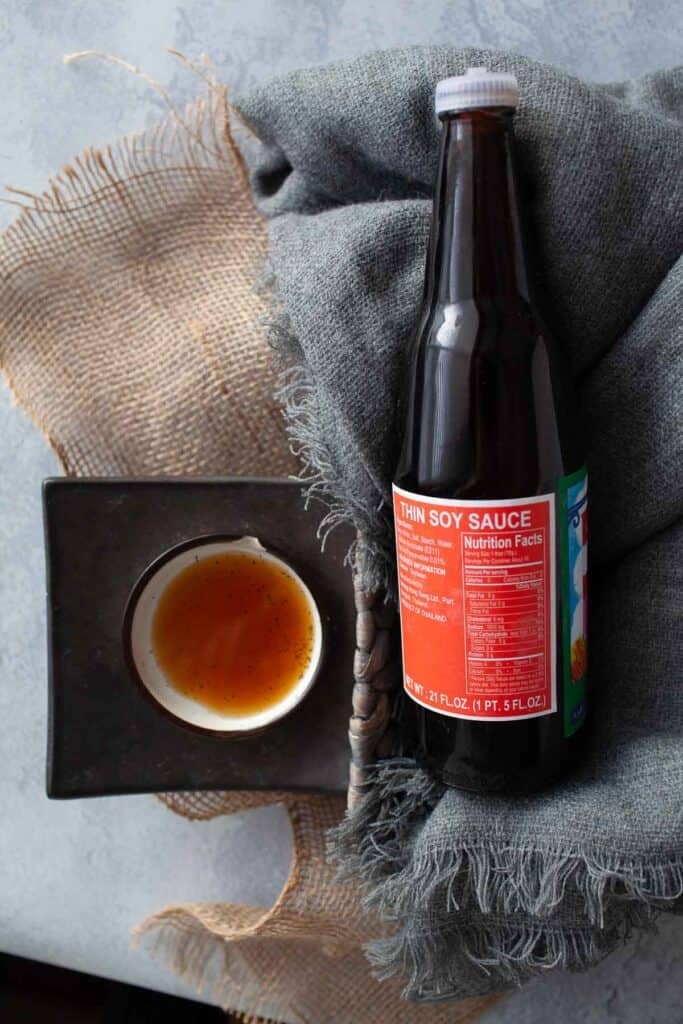
Thin soy sauce is the everyday soy sauce most commonly used in Thai cooking. It is salty, light, and savory without being too heavy. This is usually what Thai recipes mean when they simply say “soy sauce.”
It is commonly used in stir fries, fried rice, noodle dishes, marinades, and noodle soups.
Black Soy Sauce (Or Dark Soy Sauce)
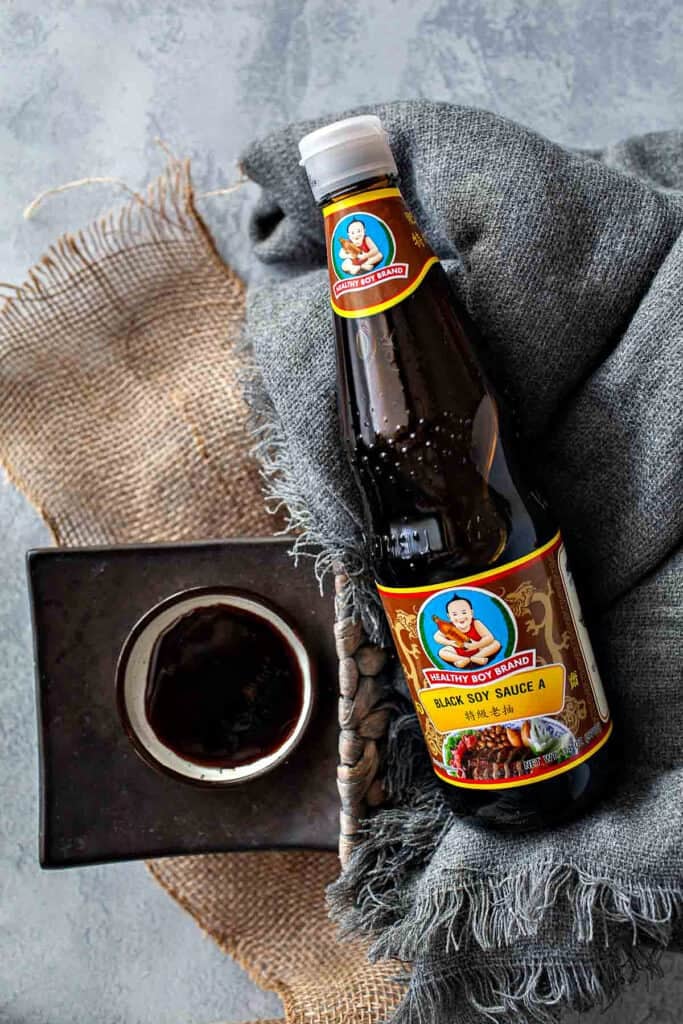
Dark soy sauce is thicker, darker, and slightly sweeter than thin soy sauce. It is mainly used for color, richness, and mild sweetness. A little goes a long way.
One of the biggest mistakes beginners make is using too much dark soy sauce because they want that rich restaurant color. Dark soy sauce is mainly used lightly for added color.
It is commonly used in Pad See Ew, Drunken Noodles, braised dishes, and some rice dishes. Dark soy sauce also helps give noodle dishes their glossy dark appearance.
Sweet Soy Sauce (Or Sweet Dark Soy Sauce)
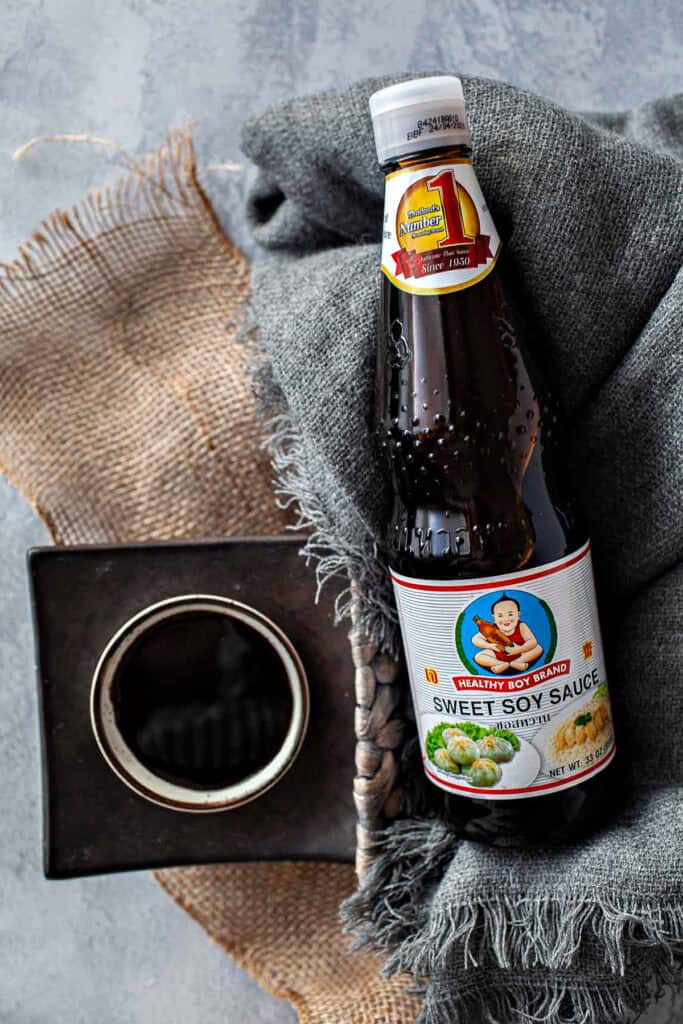
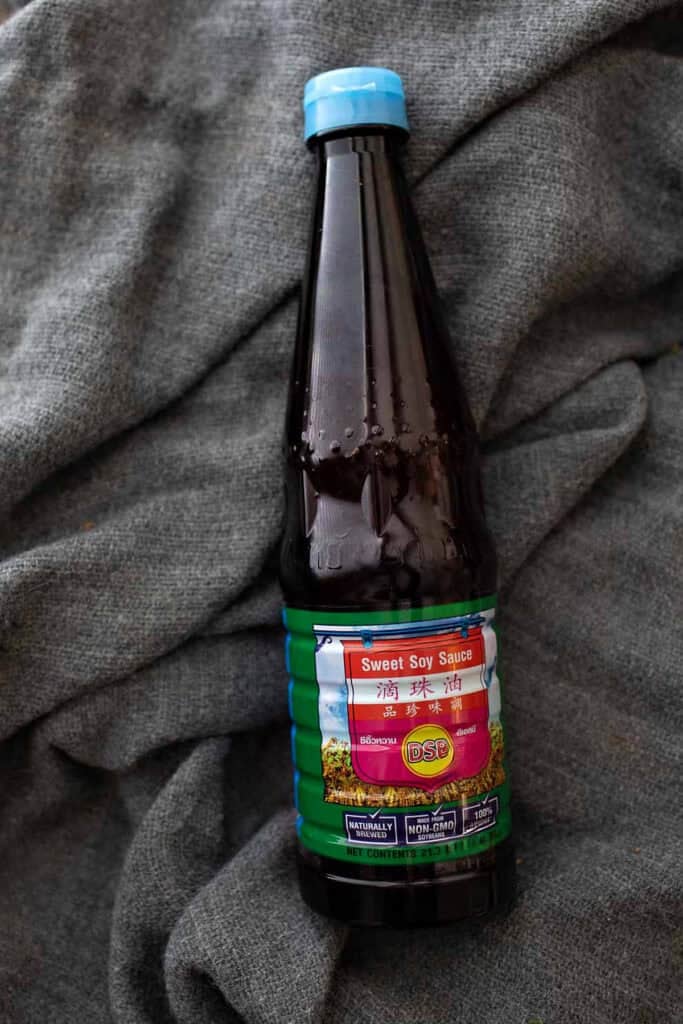
Sweet soy sauce is thick, syrupy, and sweeter than regular soy sauce. In Thailand, it is commonly used in noodle dishes, dipping sauces, and marinades.
It adds sweetness, shine, dark color, and rich flavor to a dish. This is one of the ingredients that helps give Pad See Ew and Moo Hong its signature glossy coating.
Mushroom Soy Sauce
Mushroom soy sauce is commonly used in vegetarian cooking because it adds extra umami depth and a richer savory flavor. It works especially well in vegetable dishes, stir fries, noodle dishes, and mushroom-based recipes. Vegan recipes using mushroom soy sauce are: Vegan Pad Thai, Vegan Thai green and red curry, vegan Laab, and tofu Satay.
Seasoning Sauces
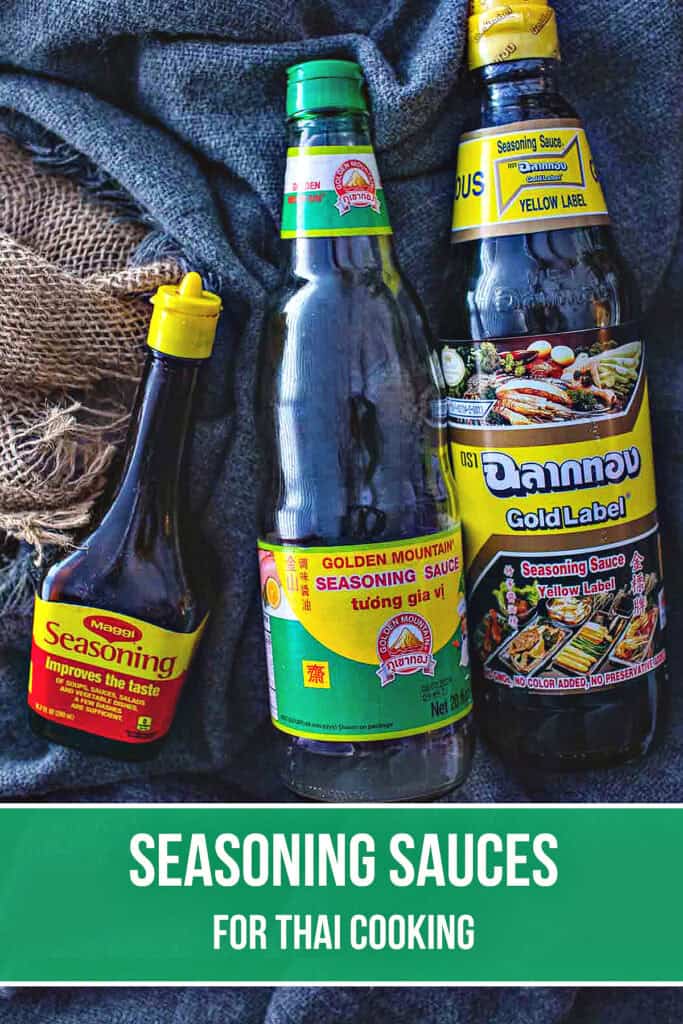
This one surprises a lot of people. Seasoning sauce is soy-based, but it tastes different from regular soy sauce. It is lighter, more savory, and slightly more complex. Honestly, many Thai home cooks reach for seasoning sauce before regular soy sauce.
Golden Mountain Seasoning Sauce
Golden Mountain is probably the most iconic Thai seasoning sauce. If you have eaten Thai stir fries at restaurants, there is a good chance this flavor was involved somewhere.
It has a lighter savory flavor than regular soy sauce and is commonly used in Jok, Thai fried rice, stir fries like Pad Woon Sen, marinades, and everyday Thai cooking.
Maggi Seasoning Sauce
Maggi is technically not traditional soy sauce, but it is very popular in Thailand and found in many Thai kitchens and restaurants. It's used interchangeably with the Golden Mountain Seasoning sauce.
It has a strong savory flavor that many Thai people grew up eating with fried eggs, rice, soups, and stir fries. Growing up, Maggi was one of those flavors that instantly made simple food taste better.
Chalagtong (Gold Label) Seasoning Sauce
Chalag Tong, also known as Gold Label seasoning sauce, is another popular Thai seasoning sauce commonly used in Thai kitchens and restaurants. (See image above) It has a savory balanced flavor similar to Golden Mountain and works well in stir fries, fried rice, marinades, and noodle dishes.
How Thai People Actually Use Soy Sauce
Thai cooking rarely depends on only one sauce. Fish sauce adds salty fermented depth, thin soy sauce brings balance, dark soy sauce adds color, sweet dark soy sauce adds mild sweetness, and oyster sauce brings richness and texture.
Soy Sauce vs Fish Sauce
People often ask which one is more important in Thai cooking. Honestly, both matter.
Fish sauce brings salty fermented umami flavor while soy sauce adds smoother savory depth and balance. Many Thai recipes use both together.
If you are new to fish sauce, check out my full fish sauce guide to learn the different brands and how Thai people use it in everyday cooking.
Thai Soy Sauce vs Chinese Soy Sauce
Thai soy sauces are often lighter, smoother, and slightly sweeter compared to many Chinese soy sauces.
Chinese soy sauces are commonly used for stronger savory flavor and deeper saltiness, while Thai soy sauces are usually blended together with fish sauce, oyster sauce, sugar, and aromatics for balanced flavor.
Thai Soy Sauce vs Japanese Soy Sauce
Japanese soy sauce is often cleaner, sharper, and more pronounced in flavor. Thai soy sauce tends to taste softer and is usually used as part of a layered sauce combination rather than the main dominant flavor.
Best Thai Soy Sauce Brands
Here are some of the most common Thai soy sauce brands used in Thai kitchens and restaurants. These can all be found at most Southeast Asian grocery stores or on Amazon.
Healthy Boy Thin Soy Sauce
One of the most recognizable Thai soy sauce brands and a staple in many Thai households. It has a balanced salty flavor that works well in everyday cooking.
Healthy Boy Sweet Soy Sauce
Thick, slightly syrupy, and rich in caramel-like flavor. This is one of the sauces that helps give Pad See Ew its glossy dark finish.
Healthy Boy Mushroom Soy Sauce
A richer soy sauce often used in vegetable dishes and vegetarian cooking because it adds extra umami flavor.
Golden Mountain Seasoning Sauce
Probably the most iconic Thai seasoning sauce. Many Thai cooks use this more often than regular soy sauce for everyday cooking.
Maggi Seasoning Sauce
Not technically traditional soy sauce, but extremely popular in Thailand. It has a strong savory flavor many Thai people grew up eating with fried eggs, rice, soups, and stir fries. A little goes a long way.
Dragonfly Dark Soy Sauce
A popular dark soy sauce used for adding rich color and mild sweetness to noodle dishes. Commonly used in Pad See Ew, Drunken Noodles, and braised dishes.
Dek Som Boon
Also known as Healthy Boy’s competitor in many Thai kitchens. Dek Som Boon offers several types of soy sauces including thin, dark, sweet, and mushroom soy sauce. Commonly used in stir fries, marinades, noodle dishes, and everyday cooking.
ABC Sweet Soy Sauce
This Indonesian sweet soy sauce is not traditionally Thai, but some people use it as a substitute because of its thick sweet flavor. It is sweeter and heavier than most Thai sweet soy sauces, so use lightly.
Thai Kitchen Soy Sauce
Thai Kitchen products are widely available in American grocery stores and are often easier for beginners to find. While not my first choice for authentic Thai cooking, they can still work for simple weeknight meals.
What Soy Sauce Do Thai Restaurants Use?
Most Thai restaurants use a combination of sauces rather than relying on just one bottle. Thai cooking is all about layering flavors. Many restaurant dishes combine soy sauce, fish sauce, oyster sauce, sugar, and aromatics together to create balanced flavor, color, and richness. Most Thai restaurants commonly use:
- Healthy Boy Thin Soy Sauce
- Golden Mountain Seasoning Sauce
- Maggi Seasoning Sauce
- Dark soy sauce
- Sweet dark soy sauce
A Quick Tip About Thai Soy Sauce Bottle Caps
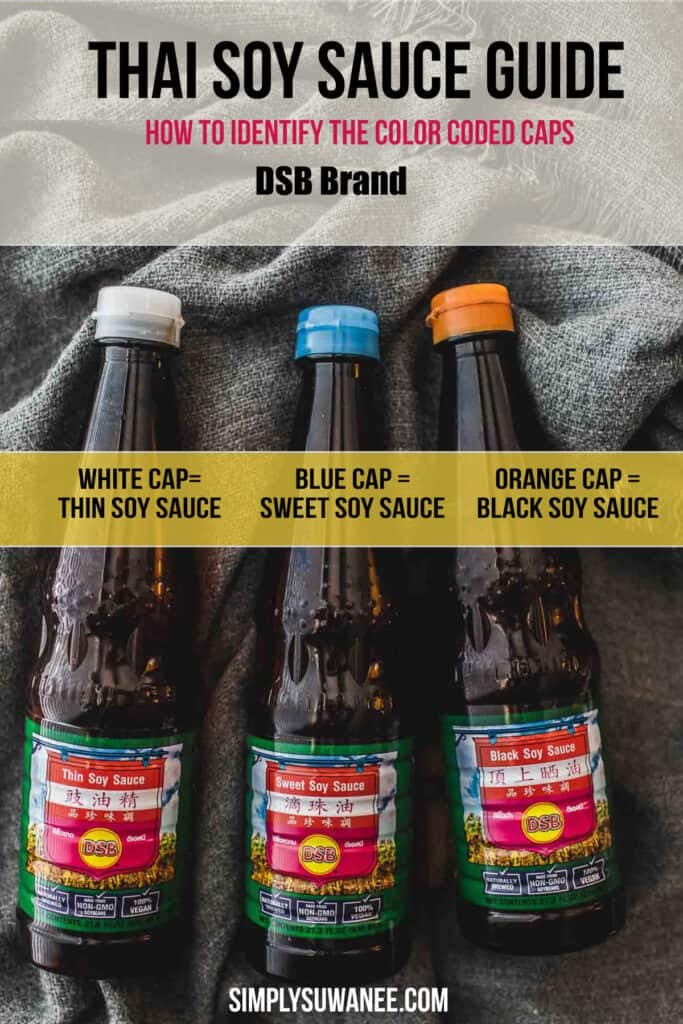
One thing that can make shopping for Thai soy sauces easier is paying attention to the bottle cap colors. Many Thai brands use similar color patterns to help identify different sauces quickly.
- White caps are often thin soy sauce or light soy sauce.
- Blue caps are commonly sweet soy sauce.
- Orange or black caps are usually black soy sauce or dark soy sauce.
- Green caps are often seen on Golden Mountain Seasoning Sauce
- Yellow labels or caps are often seasoning sauces for, Maggi, or Chalag Tong (Golden label).
Some brands, like Healthy Boy, rely more on label colors than cap colors. Others, like Kwong Hung Seng, use both.
Cap and label colors can vary by brand, so always double check the bottle label. But once you notice the general color patterns, shopping for Thai soy sauces gets much easier. Honestly, I still recognize many sauces by the cap or label color before even reading the bottle.
FAQ
Thai soy sauce is commonly called see ew (ซีอิ๊ว) in Thai. Different types include thin soy sauce, dark soy sauce, sweet soy sauce, and seasoning sauce, all used for different purposes in Thai cooking.
Usually yes, but authentic Thai brands will give you more traditional flavor and balance.
Traditional soy sauce often contains wheat. If needed, look for gluten-free tamari or gluten-free soy sauce alternatives.
Not exactly. Thai soy sauces are often smoother, slightly lighter, and sometimes sweeter compared to Chinese or Japanese soy sauces. Thai cooking also layers several sauces together to create balanced flavor rather than relying on just one soy sauce alone.
Pad See Ew usually uses a combination of thin soy sauce, dark soy sauce, and sweet dark soy sauce. Thin soy sauce adds savory flavor while dark and sweet soy sauce help create the dish’s rich dark color and glossy noodles.
More Thai Kitchen Tips!
If you enjoyed this guide, here are a few more Thai pantry staples, cooking tips, and recipes to explore next.

Hi there, I’m Suwanee!
I’m the person behind this Thai food blog. I spent the first thirteen years of my childhood in Thailand, where I fell in love with the flavors of Thai cooking. What started as sharing recipes from my kitchen has grown into a journey from home cook to restaurant chef — and now one of just eight contestants chosen nationwide for PBS’s The Great American Recipe, Season 4. You’re in the right place if you love to cook Thai food. Come by often, and let’s get cooking!
Leave a Reply