
Thai chilies are small, but they shape the flavor of Thai food in a big way. From spicy som tum to fragrant curries and wok fried noodles, chilies add heat, balance, and depth to many classic Thai dishes.
If you are building a Thai pantry at home, make sure to read about Thai Curry Paste Guide, Coconut Milk Guide, Fish Sauce Guide, Thai Basil Guide, Different types of Thai sauces, how to season a wok and Thai Pantry Guide.
Understanding how Thai ingredients work together makes cooking Thai food much easier.
Jump to:
- Understanding Thai Peppers
- What’s the Scoville Scale?
- Types of Thai Chilies
- Bird’s Eye Chili (Prik Kee Noo)
- Thai Spur Chili (Prik Chi Fa)
- Thai Jinda Peppers (Prik Jinda)
- Small Green Chilies (Prik Kee Noo Suan)
- Prik Yuak (Mild Thai Yellow Chili)
- Dried Thai Chilies (Prik Haeng)
- Young Green Peppercorns (Prik Thai On)
- White Peppercorns (Prik Thai)
- Black Pepper Peppercorns (Prik Dum)
- Chili Flakes (Prik Bon)
- Chili Powder (Prik Bon La Ead)
- Are Sweet Bell Peppers Used in Thai Cooking?
- Where to Buy Thai Chilies
- Substitutes for Thai Chilies
- Fresh vs Dried Thai Chilies
- Try these Recipes Using Thai Chilies
- FAQs About Thai Peppers
- More Thai Kitchen Tips
- Hi there, I’m Suwanee!
Growing up in Thailand, chilies were always close by. We grew them around our yard, behind the house, and near our fish pond alongside other herbs we used almost daily.
When it was time to cook, we picked what we needed, rinsed them off, and tossed them into soups, curries, sauces, and stir fries. Most of the time, we never had to buy chilies from the market because they were already growing right outside our door.
Understanding Thai Peppers
Thai chilies do more than add heat. They bring aroma, color, and depth to many Thai dishes.
Some are used fresh in salads, soups, and dipping sauces. Others are dried, roasted, or blended into curry pastes. Each variety has its own role in the kitchen.
In Thai cooking, chilies are part of the balance. Their heat works alongside lime juice, fish sauce, herbs, and coconut milk to create the bold flavors Thai food is known for.
What’s the Scoville Scale?
The Scoville Scale measures how spicy a pepper is. The higher the Scoville Heat Unit (SHU), the hotter the chili. For examples, see these peppers scoring below:
- Bell pepper: 0 SHU (zero spice)
- Jalapeño: 2,500–8,000 SHU (mild to medium)
- Thai bird’s eye chili: 50,000–100,000 SHU (hot!)
- Ghost pepper: 1,000,000+ SHU (extreme!!)
In short: more SHU = more fire in your food.
Types of Thai Chilies
Thailand uses many different types of chilies, each with its own purpose in the kitchen. Some bring intense heat, while others add color, aroma, or a milder warmth.
Here are the most common Thai chilies and how they are used in everyday cooking.
Bird’s Eye Chili (Prik Kee Noo)
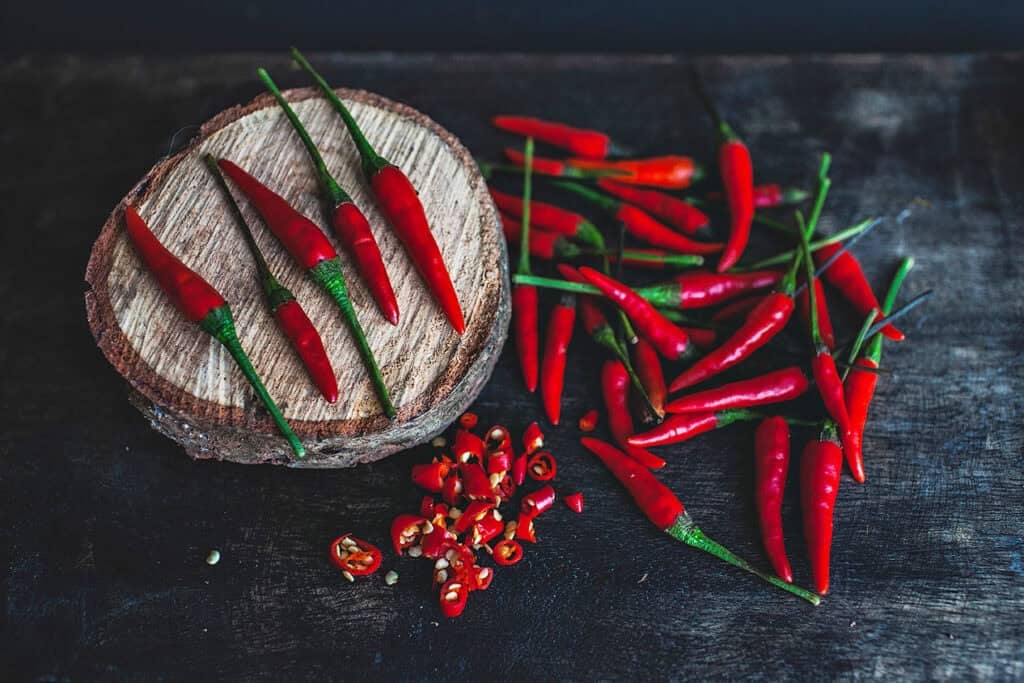
If there is one chili that defines Thai cooking, it's prik kee noo, also known as Thai bird's eye chili. If you're new to Thai cooking, start with less than you think you need. Even one chili can add plenty of heat.
- Flavor Profile: Sharp, clean heat.
- Common Uses: Som tum, pad kra pao, curry paste, soups, dipping sauces.
- Heat Level: 50,000 to 100,000 SHU.
Thai Spur Chili (Prik Chi Fa)
Also known as Spur Chili, Prik Chee Fah are the long red chilies slightly larger than Bird’s Eye Chili but still offers a significant amount of heat. They are milder than bird's eye chilies and are often used for color and aroma as much as heat.
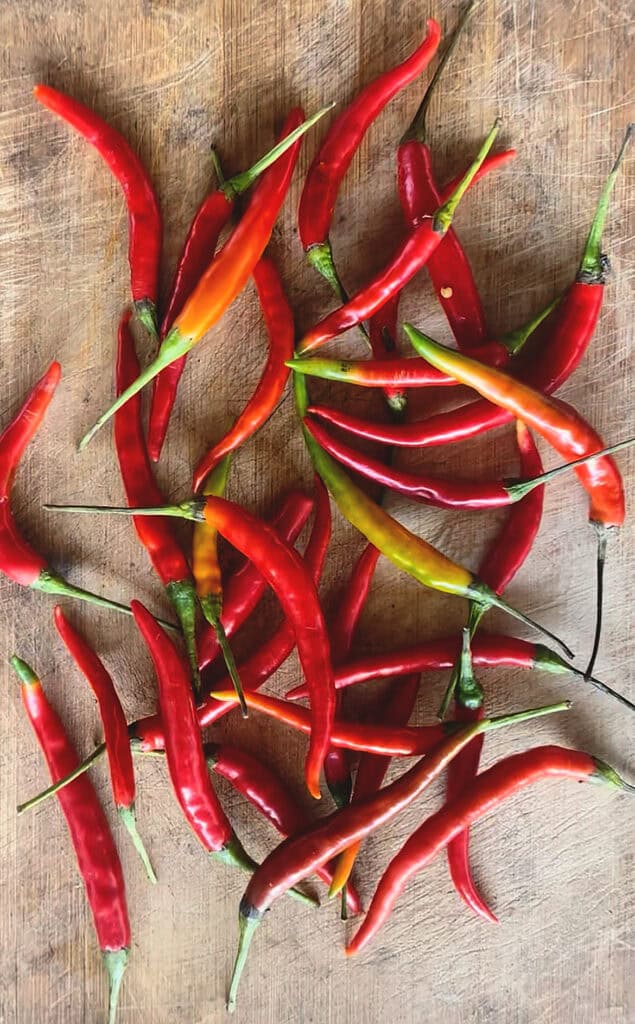
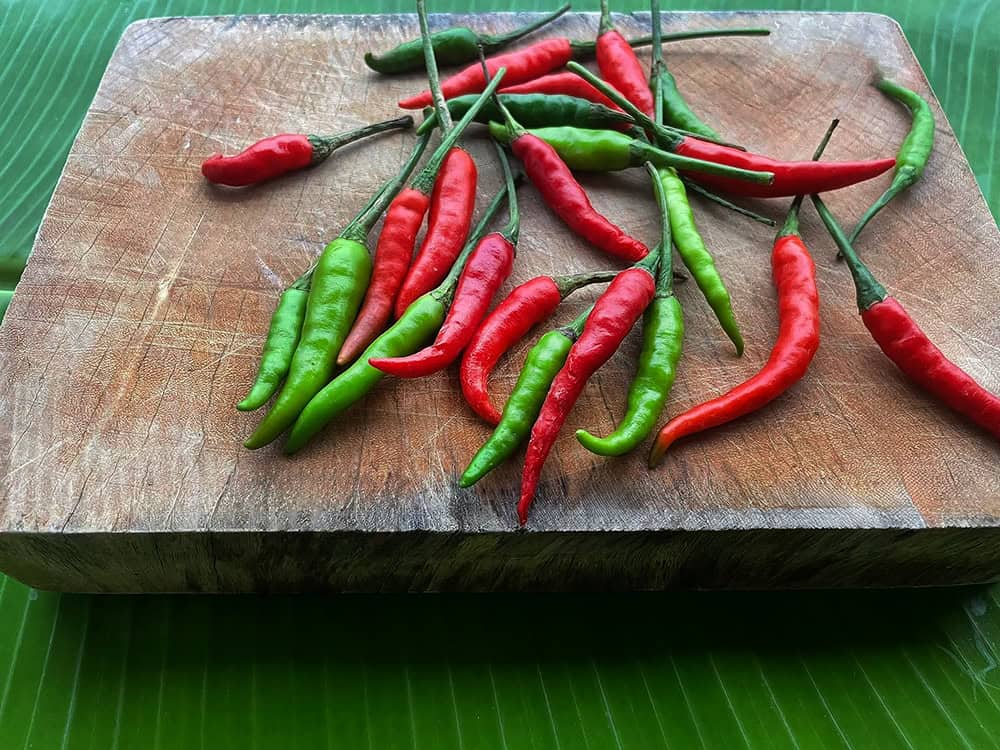
- Flavor Profile: Hot with a slightly fruity undertone.
- Common Uses: Curry pastes, stir fries, soups, garnishes.
- Heat Level: 5,000–30,000 Scoville units.
Thai Jinda Peppers (Prik Jinda)
Thai Jinda peppers are one of the most commonly used chilies in Thai cooking. They’re longer and a bit milder than bird’s eye chilies but still pack a solid punch.
Red Jinda chilies are usually a little sweeter while green ones taste brighter and more grassy.
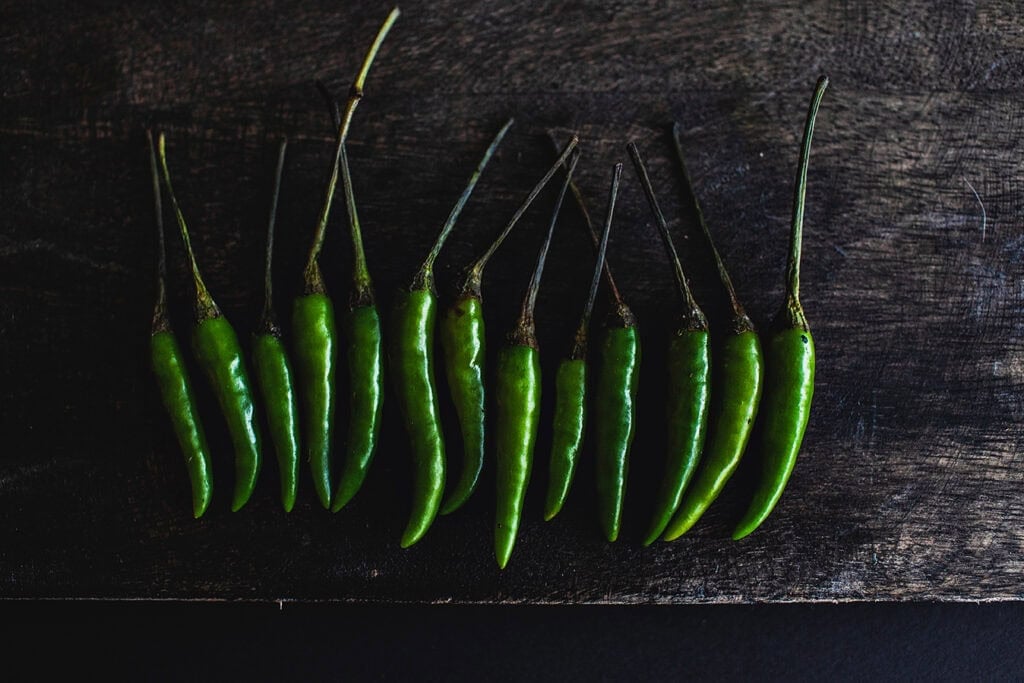
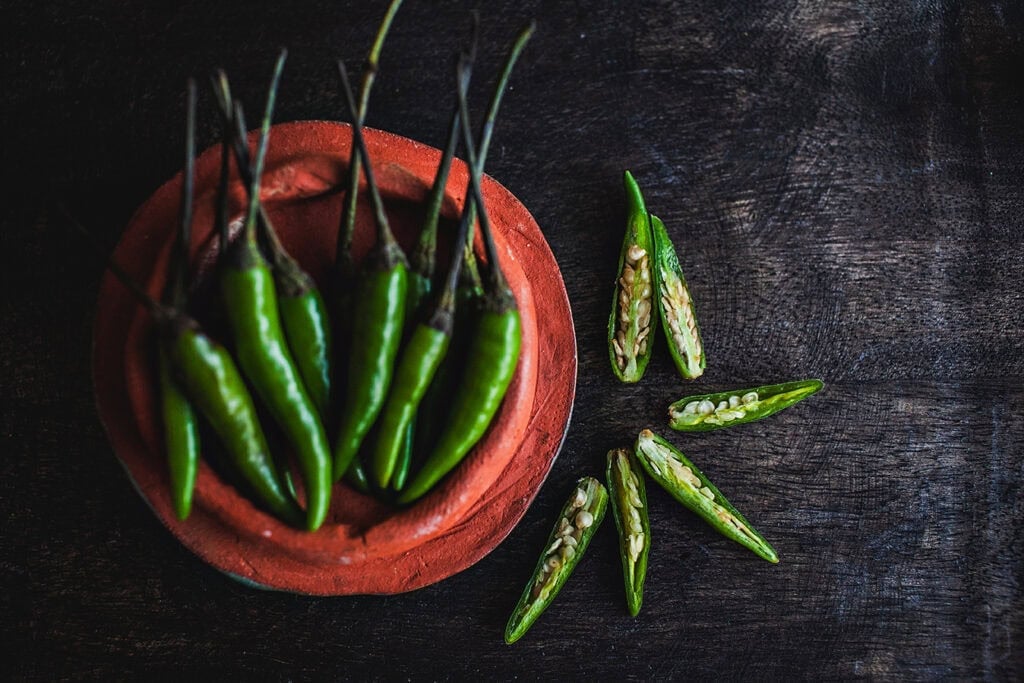
- Flavor Profile: Bright, clean heat with a slightly grassy, fresh flavor.
- Common Uses: Pad kra pao, red curry paste, stir-fried dishes, soups.
- Heat Level: Medium to hot (about 50,000–75,000 Scoville units).
Small Green Chilies (Prik Kee Noo Suan)
These tiny chilies are even hotter than regular bird’s eye chilies. They have a fresh grassy flavor with intense heat and are commonly used raw in dipping sauces and soups.
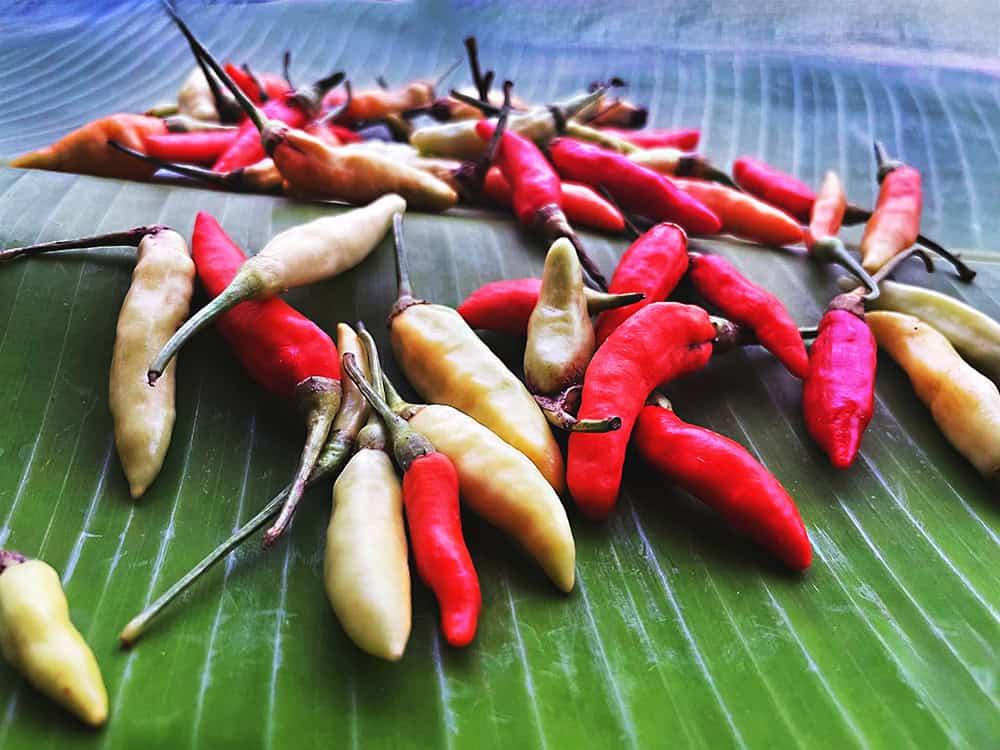
- Flavor Profile: Intense, fresh, grassy heat.
- Common Uses: Dipping sauces, green curry, fresh relishes.
- Heat Level: Around 70,000–100,000 SHU.
Prik Yuak (Mild Thai Yellow Chili)
Prik Yuak is a mild, sweet Thai chili that resembles a banana pepper but is smaller and more slender. Often pale yellow or light green in color, these chilies are used for their gentle heat and pleasant aroma rather than fiery spice.
While not as commonly talked about as bird’s eye chilies, they play an important role in Thai home cooking, especially in dishes that focus on balance and fragrance.
- Flavor Profile: Mild, slightly sweet with a grassy aroma
- Common Uses: Thai banana blossom salad (Yum Hua Plee), stir-fried vegetable dishes, some Northern Thai soups, grilled chili dips (Nam Prik), and chili pastes where mild heat is preferred.
- Heat Level: 100–1,000 Scoville units
Dried Thai Chilies (Prik Haeng)
These are sun-dried bird’s eye or spur chilies used for dry chili pastes, chili flakes, or infused oils. Toast them before grinding for a smoky edge.
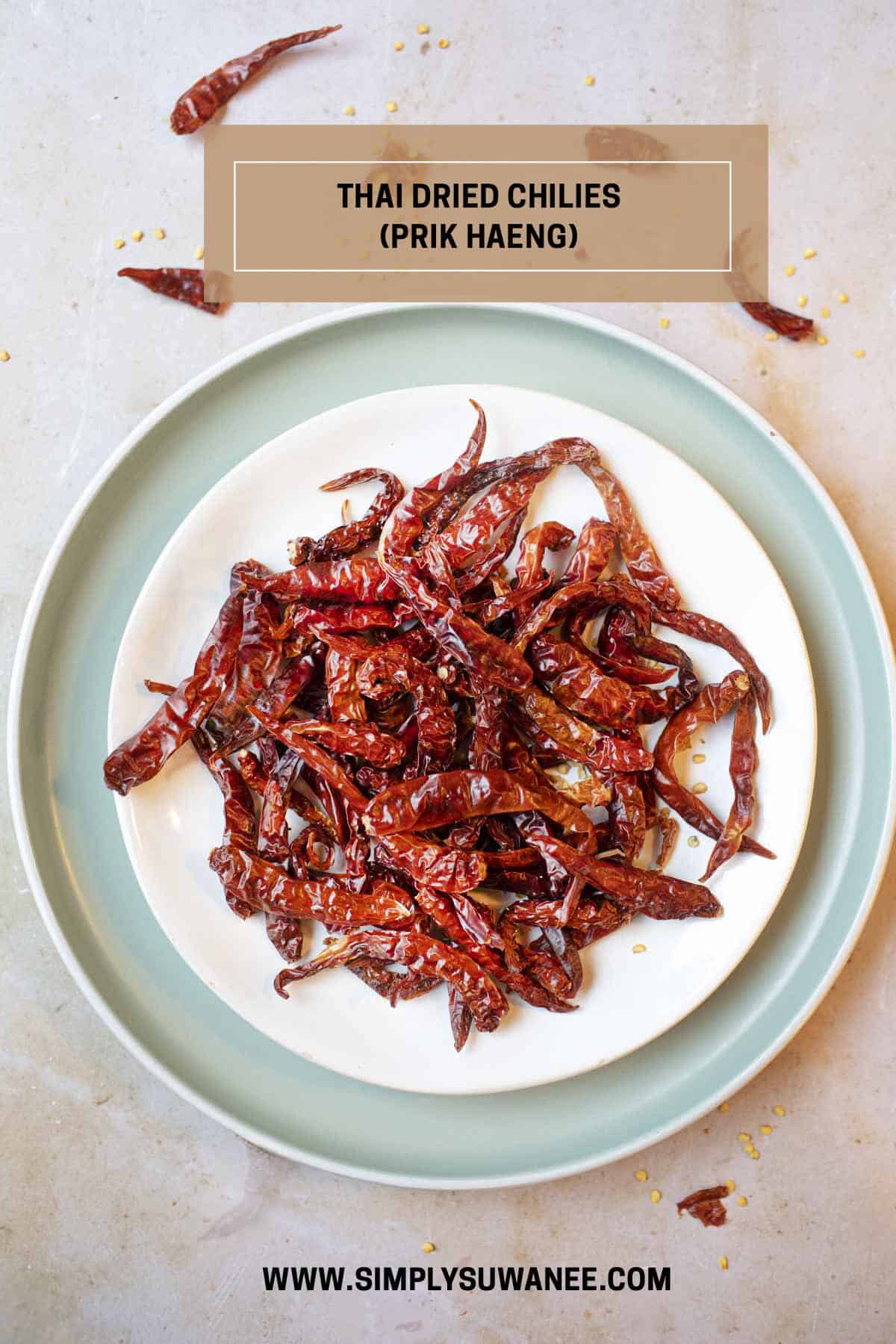
- Flavor Profile: Concentrated, smoky heat.
- Common Uses: Nam prik pao (chili jam), chili flakes, Thai larb, dry stir-fries.
- Heat Level: Depends on original variety, intensified by drying.
Young Green Peppercorns (Prik Thai On)
These are young, unripe peppercorns still on the stem are mild, citrusy, and slightly bitter, with a fresh bite that mellows when cooked.
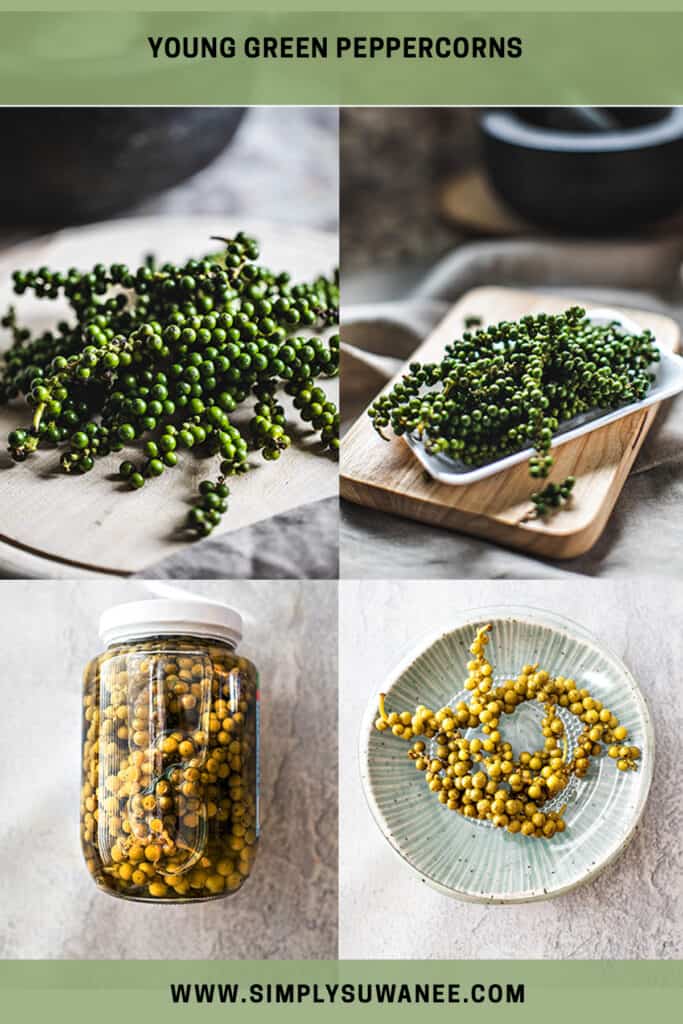
- Flavor Profile: Bright, slightly peppery with a fresh, herbal kick.
- Common Uses: Stir-fried with seafood (Pad Cha) or curry (especially in Thai jungle curry), drunken noodles ,and some Isaan soups.
- Heat Level: Mild to medium.
White Peppercorns (Prik Thai)
These mildly spicy, earthy peppercorns are used often in Thai soups, marinades, and stir-fries.
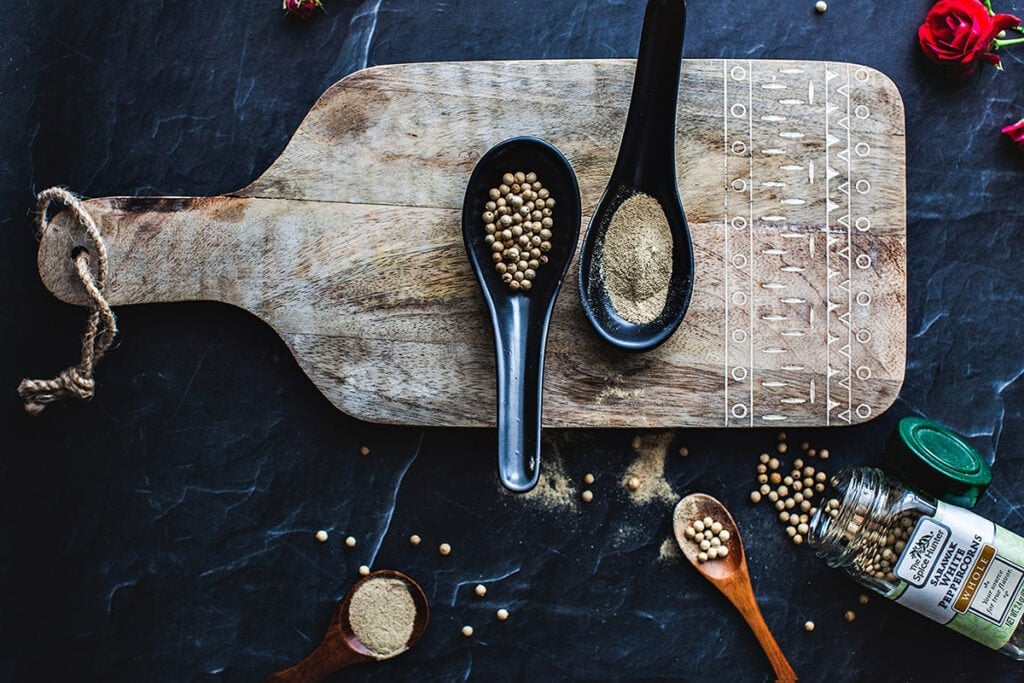
- Flavor Profile: Earthy, slightly fermented.
- Common Uses: In stir fries like Wad Woon Sen and Thai gravy based noodles Rad Na.
- Heat Level: Mild to medium.
Black Pepper Peppercorns (Prik Dum)
Used in both Thai and Chinese-influenced dishes, these bring bold heat and a sharp bite.
- Flavor Profile: Pungent, slightly citrusy, warm spice.
- Common Uses: Grilled meats, spicy dipping sauces, marinades.
- Heat Level: Medium.
Chili Flakes (Prik Bon)
Made from toasted dried Thai chilies, these flakes are a pantry staple in Thai kitchens and many restaurant and food stalls.
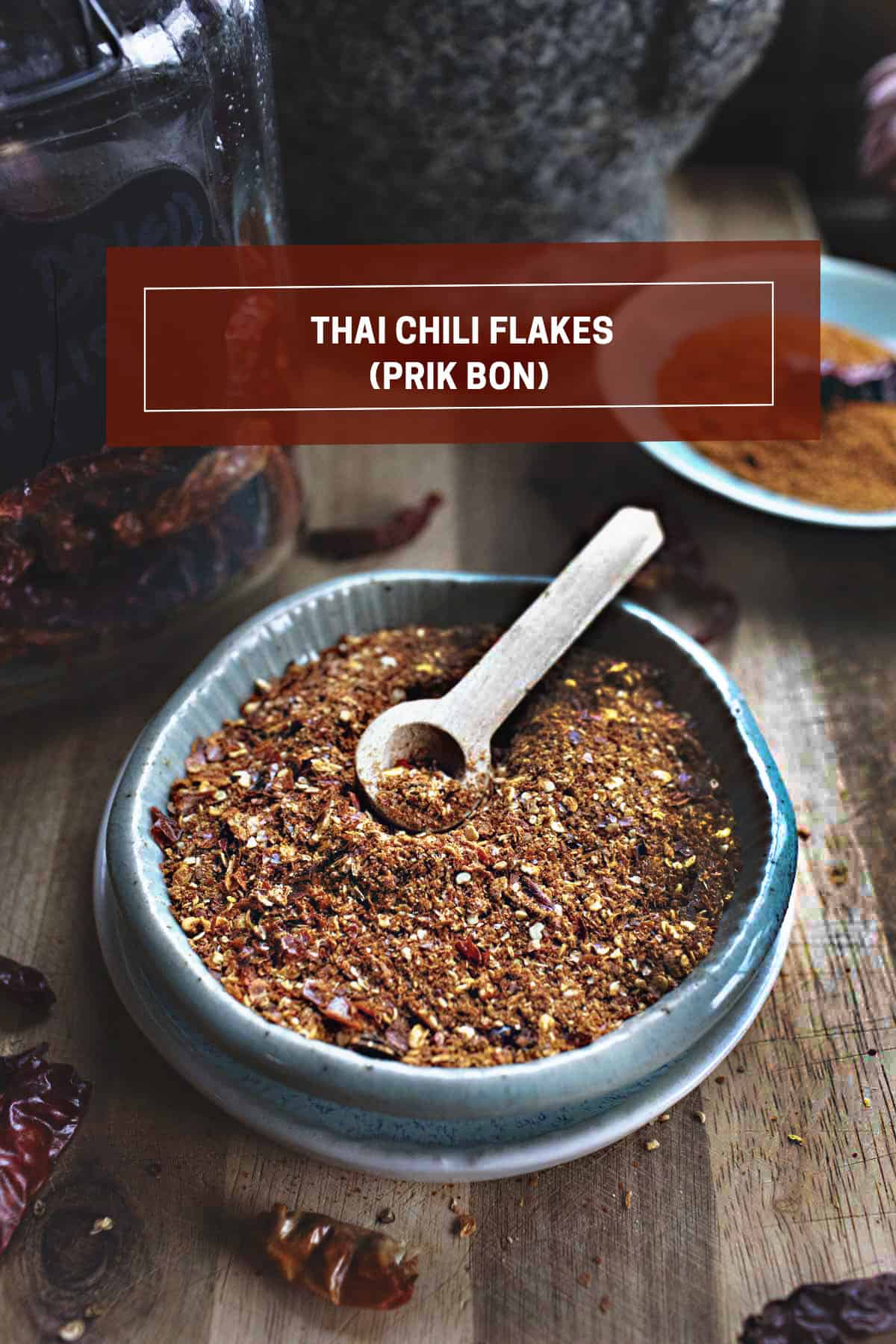
- Flavor Profile: Dry, spicy, slightly bitter.
- Common Uses: Sprinkled on noodles, stir-fries, larb, soups, or mixed into chili oil.
- Heat Level: Hot.
Chili Powder (Prik Bon La Ead)
This is finely ground dried chili, sometimes blended with salt or other seasonings, depending on the brand.
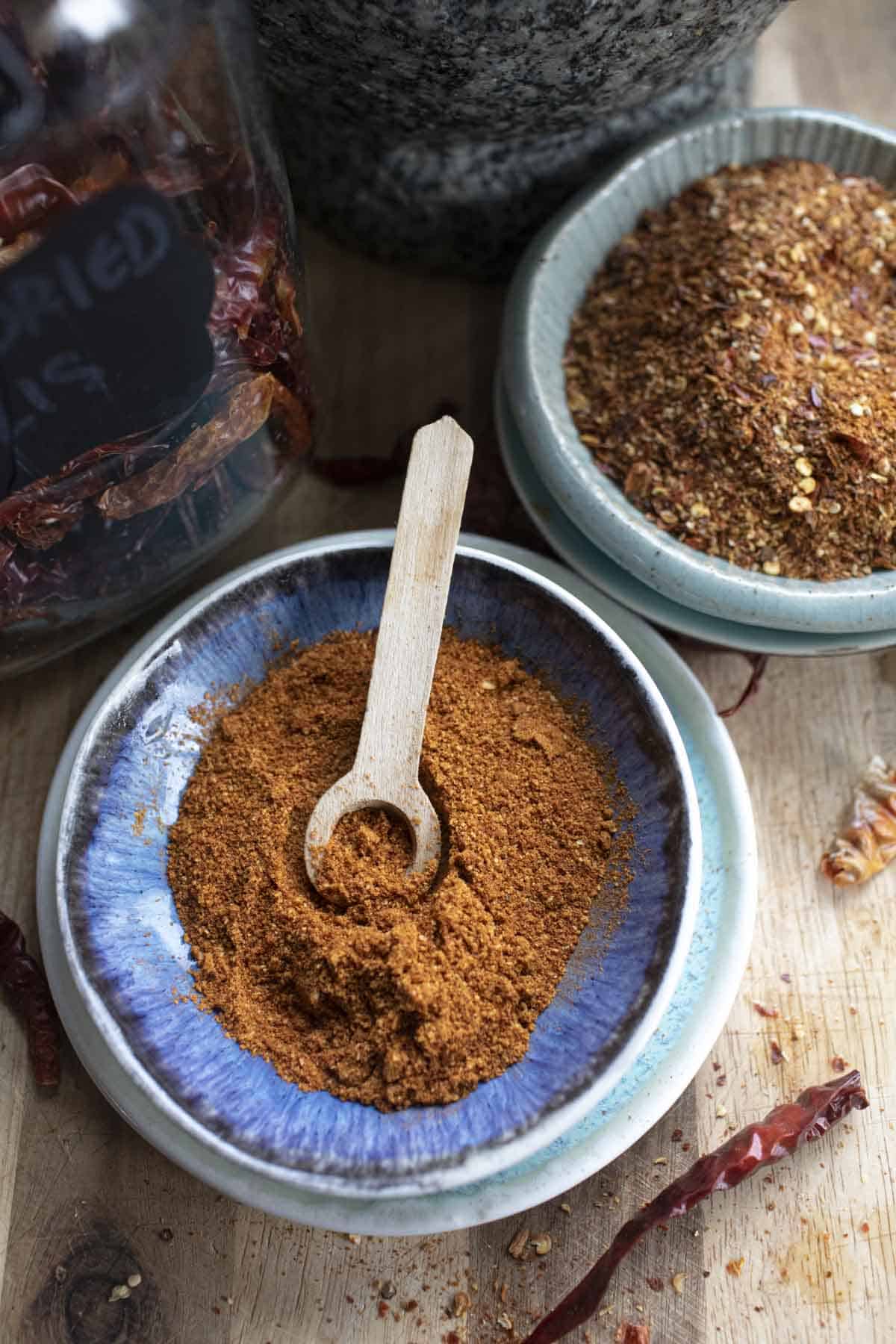
- Flavor Profile: Earthy, spicy, and sometimes smoky.
- Common Uses: Thai soups, curries, marinades, spice blends like yellow curry powder.
- Heat Level: Medium to hot (depending on blend).
Are Sweet Bell Peppers Used in Thai Cooking?
Bell peppers are not traditional in most Thai recipes, but they are common in modern Thai-American cooking and restaurant dishes.
They add color, crunch, and sweetness without extra heat.
I occasionally use them when cooking for kids or guests who prefer milder food, but traditional Thai recipes are more likely to use mild Thai chilies such as Prik Yuak.
Where to Buy Thai Chilies
Fresh and dried Thai chilies are usually available at Asian grocery stores. Some farmers markets with Southeast Asian growers may also carry them during the growing season.
If you find fresh Thai chilies, buy extra and freeze them. They hold their flavor and heat surprisingly well for months.
Substitutes for Thai Chilies
Can’t find Thai chilies at your local store? No worries, here are some good substitutes that can still give you that spicy kick:
- Serrano Peppers: Fresh, crisp heat and widely available. Use them in stir-fries and sauces.
- Jalapeños: Milder and more grassy in flavor, but can be used in a pinch. Great for fusion dishes.
- Poblano Pepper. Not traditionally Thai, but used in some fusion dishes. Offers a rich, earthy flavor with low heat.
- Cayenne Pepper: Use in very small amounts if you’re mimicking dried Thai chili powder.
- Fresh Fresno Chilies: Similar in size and shape to Thai spur chilies, but milder. Good in salads and dips.
These substitutes won’t be exactly the same, but they’ll still bring great heat and flavor to your Thai dishes.
Fresh vs Dried Thai Chilies
Both dried and fresh Thai chilies bring bold heat and authentic flavor to Thai cooking, but they’re not always interchangeable. Here’s how to know when to use one over the other and when it’s okay to substitute.
Fresh Thai chilies bring bright, sharp heat and are commonly used in salads, soups, stir fries, and dipping sauces.
Dried chilies have a deeper, smokier flavor and are often used in curry pastes, chili oil, chili flakes, and nam prik pao.
Many Thai recipes use both. Fresh chilies add brightness while dried chilies add depth.
Use Fresh Thai Peppers When
- You’re making dishes like Som Tum (Papaya Salad), Pad Kra Pao (Basil Stir-Fry), or dipping sauces like Nam Jim Jeow.
- You want bright, sharp heat and fresh chili aroma.
- The recipe calls for the chili to be sliced, crushed, or used raw.
Use Dried Thai Peppers When
- You’re making curry pastes, chili oil, or Nam Prik Pao (Thai chili jam).
- You need a smokier, deeper heat that builds slowly.
- The chilies are being toasted, ground, or soaked and blended.
When It Doesn’t Matter Much
- When the chili is used purely for infusing oil (like in stir-fries), either form works.
- In some soups or stews (like Tom Yum), either fresh or dried can give the right amount of heat. Just adjust quantity as needed.
- If the chili isn’t the main flavoring (e.g., used as a topping), feel free to sub.
Try these Recipes Using Thai Chilies
- Thai chili sauce- Sriracha sauce
- Thai Chili oil
- Thai ground chili- Prik Bon
- Nam Prik Noom Chili dip
- Prik Nam Pla
- Prik Nam Som- Thai pickled chilis
- Nam Prik Pao (Thai Chili Jam)
FAQs About Thai Peppers
Removing seeds reduces some heat and bitterness. For milder dishes or sensitive stomachs, slice the chili lengthwise and remove seeds before using.
Prik Yuak is the mildest, they are perfect for layering flavor without overpowering spice.
Yes! They’re high in vitamin C and capsaicin, which may boost metabolism and support digestion.
Yes, although it’s uncommon. Some people may react to bird’s eye chilies while tolerating other varieties. If they consistently cause a rash or irritation, avoid handling and eating them. If you must handle them, wear thick gloves to protect your skin. If symptoms are severe or include swelling or difficulty breathing, seek medical care right away.
Thai chilies are one of the ingredients I use most often in my kitchen. Once you learn the differences between the main varieties, it becomes much easier to adjust heat levels and create the balance that makes Thai food so distinctive.
Whether you're making a quick stir fry, a bowl of tom yum, or homemade curry paste, understanding Thai chilies will make you a better Thai cook.
More Thai Kitchen Tips
Looking for other Thai kitchen guides like this? Check out these helpful guides below.

Hi there, I’m Suwanee!
I’m the person behind this Thai food blog. I spent the first thirteen years of my childhood in Thailand, where I fell in love with the flavors of Thai cooking. What started as sharing recipes from my kitchen has grown into a journey from home cook to restaurant chef — and now one of just eight contestants chosen nationwide for PBS’s The Great American Recipe, Season 4. You’re in the right place if you love to cook Thai food. Come by often, and let’s get cooking!

Suwanee says
Hi Ian,
That’s very interesting, and I’m sorry you have such a bad reaction to bird’s eye chilies. If I had to guess, some people’s bodies are simply more sensitive to the unique compounds found in certain types of chilies. In your case, it sounds like bird’s eye chilies may be the culprit. Hopefully, you can still enjoy other chilies in your Thai cooking without the severe rash. Out of curiosity, how do you handle them when you cook? I hope you wear thick disposable gloves if you need to handle them. It may even be best to avoid them altogether if they consistently cause this reaction
Ian Schafer says
I am allergic to Birds eye chillis, but no others, I breakout in a server heat rash starting in my palms of my hands, is there a reason why?