
A well-seasoned carbon steel wok is one of the most important tools in Thai cooking. It helps create better stir fries, prevents rust, and develops more flavor with every meal.
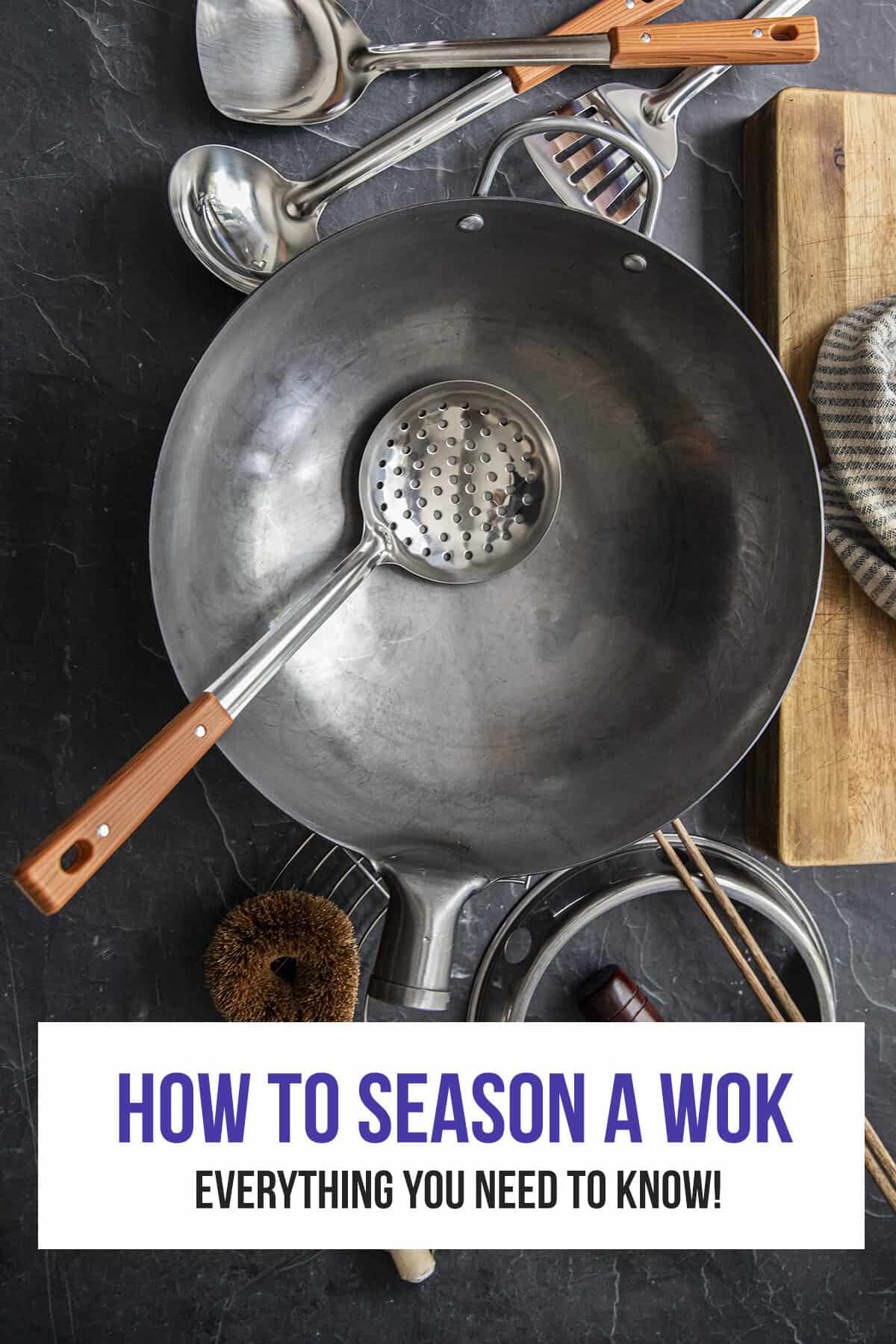
In this guide, I'll show you exactly how I season a brand-new carbon steel wok, how I maintain it, and what a properly seasoned wok should look like after years of cooking.
If you're new to Thai cooking, be sure to check out my Thai Cooking for Beginners guide, Essential Thai kitchen tools, mortar and pestle guide, Thai Chili Pepper Guide, Thai curry paste guides and how to balance Thai flavors.
Jump to:
- What Is Wok Seasoning?
- What Type of Wok Should You Season?
- Why You Need to Season a Carbon Steel Wok
- Why Carbon Steel Woks Are Best for Thai Cooking
- Supplies You Need
- Instructions
- My Personal Cleaning Routine
- What Should a Seasoned Wok Look Like?
- My Two Woks
- What Is Wok Hei?
- Why Is My Wok Not Black Yet?
- Why Is My Wok Sticky?
- What If My Wok Gets Rust?
- How to Keep a Wok From Rusting
- Can You Use Soap on a Wok?
- Common Mistakes When Seasoning a Wok
- Best Thai Recipes to Cook After Seasoning a Wok
- How to Season a Wok (Carbon Steel Wok)
- Related and Pairing
- Hi there, I’m Suwanee!
I've cooked on everything from inexpensive woks to restaurant-style carbon steel woks over the years, but I always come back to carbon steel for when I need to do some serious cooking in the kitchen, restaurants for food events.
It's the wok you'll find in many Thai home kitchens, street food stalls, and restaurants because it heats quickly, develops incredible flavor, and gets better with every meal. In this guide, I'll show you how to season a new carbon steel wok and care for it for years to come.
What Is Wok Seasoning?
Wok seasoning is simply heating a thin layer of oil onto carbon steel to create a protective coating.
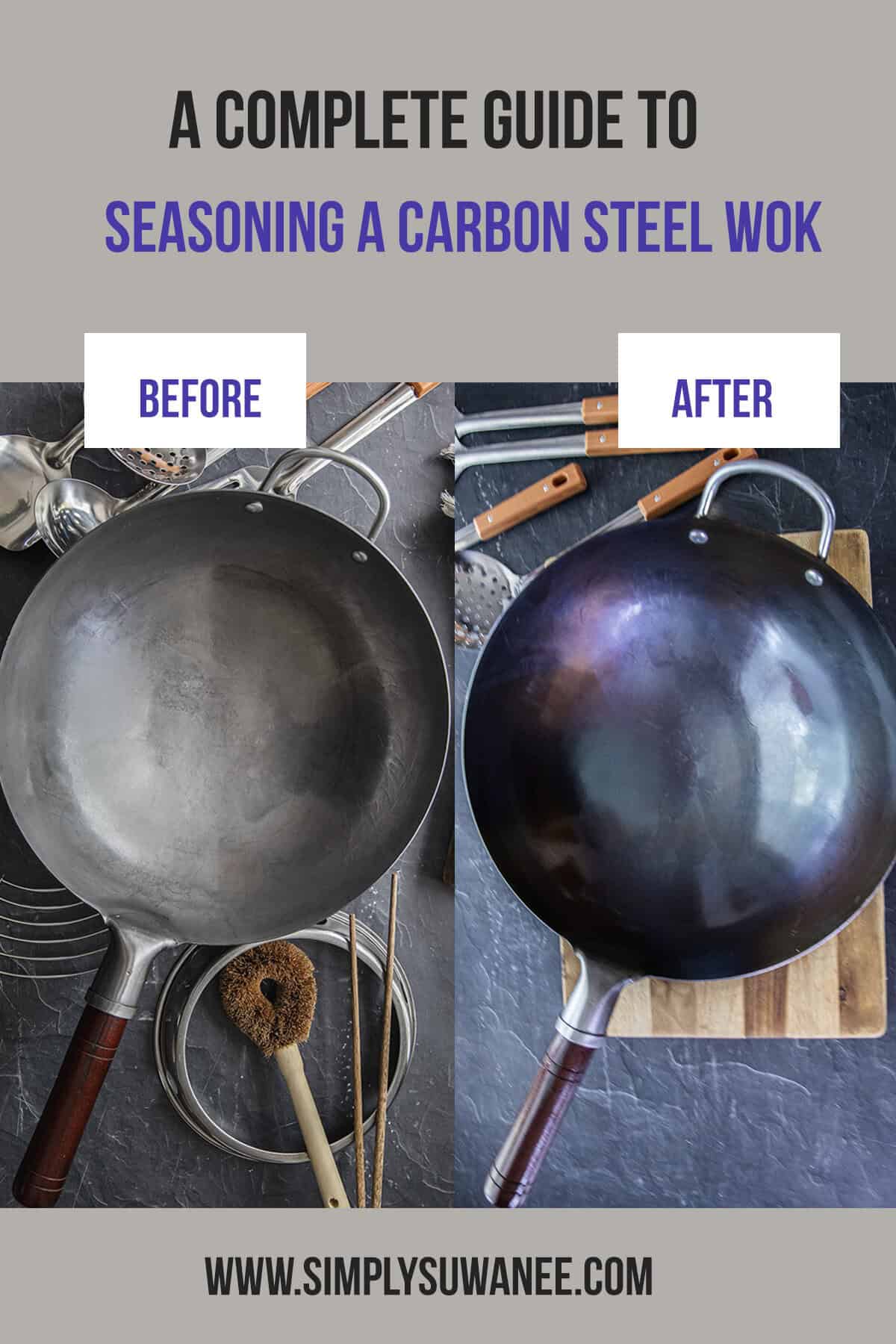
This coating helps prevent rust, reduces sticking, and improves with use. A newly seasoned wok may look bronze, blue, brown, or slightly uneven at first. Over time, it will darken naturally as you cook.
What Type of Wok Should You Season?
This guide is specifically for carbon steel woks. Carbon steel is the preferred wok material for Thai cooking because it heats quickly, responds well to high heat, and develops a natural nonstick surface over time.
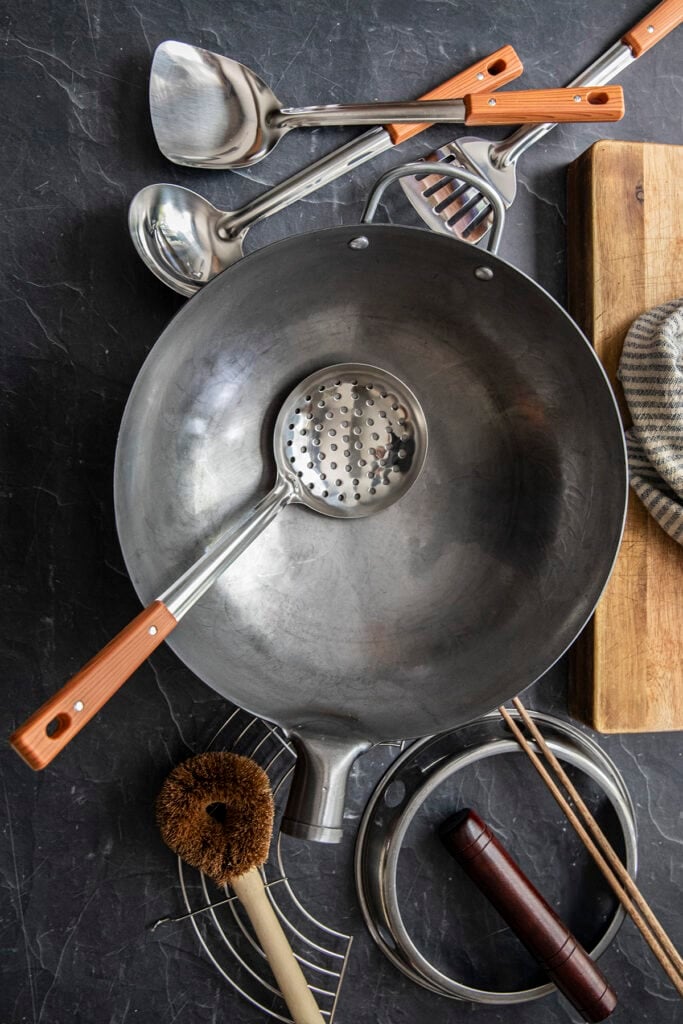
This is the wok I used in this blog post. It's a round-bottom carbon steel wok that came with a few useful accessories, including spatulas, cooking chopsticks, a scrubber, wok ring, and oil-draining rack. If you're just getting started with wok cooking, it's a nice beginner-friendly set.
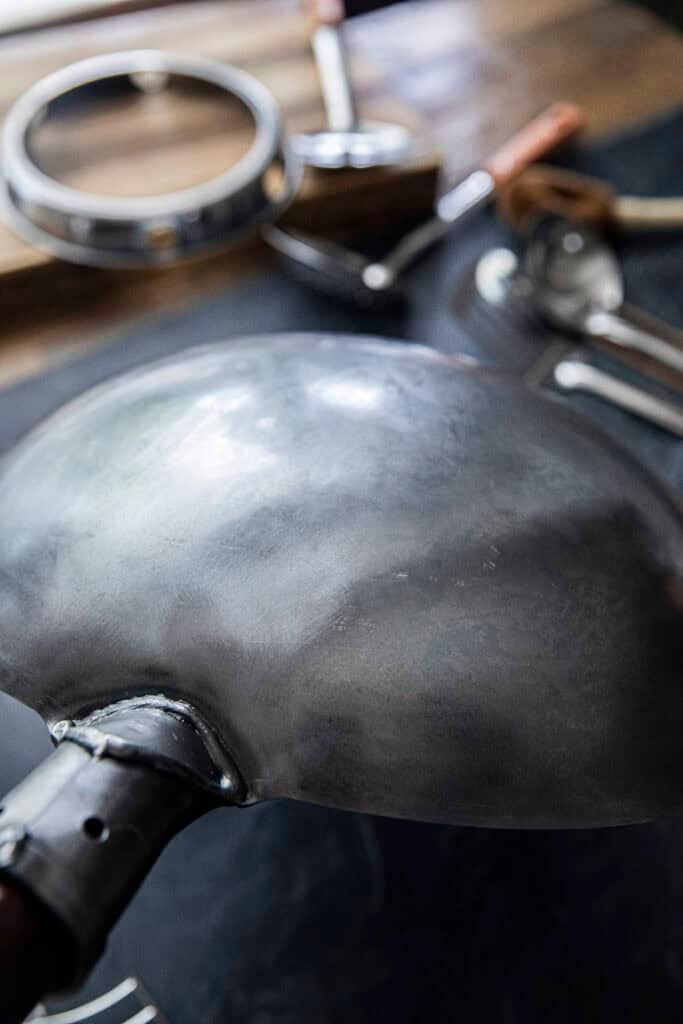
One thing I noticed is that the wooden handle needs to be attached when it arrives. I tapped mine in firmly before seasoning to make sure it felt secure and haven't had any issues with it since.
Why You Need to Season a Carbon Steel Wok
Most new carbon steel woks come with a factory coating that protects them during shipping. Before cooking, that coating needs to be removed and replaced with a seasoning layer.
Seasoning protects the wok from rust, helps food release more easily, and creates the foundation for better stir fries in the future.
Why Carbon Steel Woks Are Best for Thai Cooking
Carbon steel woks are the most common type of wok used in Thailand. They heat up quickly, handle high temperatures well, and develop a natural nonstick surface with regular use. They're ideal for stir-fries because they respond quickly to changes in heat and help create the smoky flavor known as wok hei.
Supplies You Need
To season a carbon steel wok, you'll need a few basic supplies and about 45-60 minutes of time.
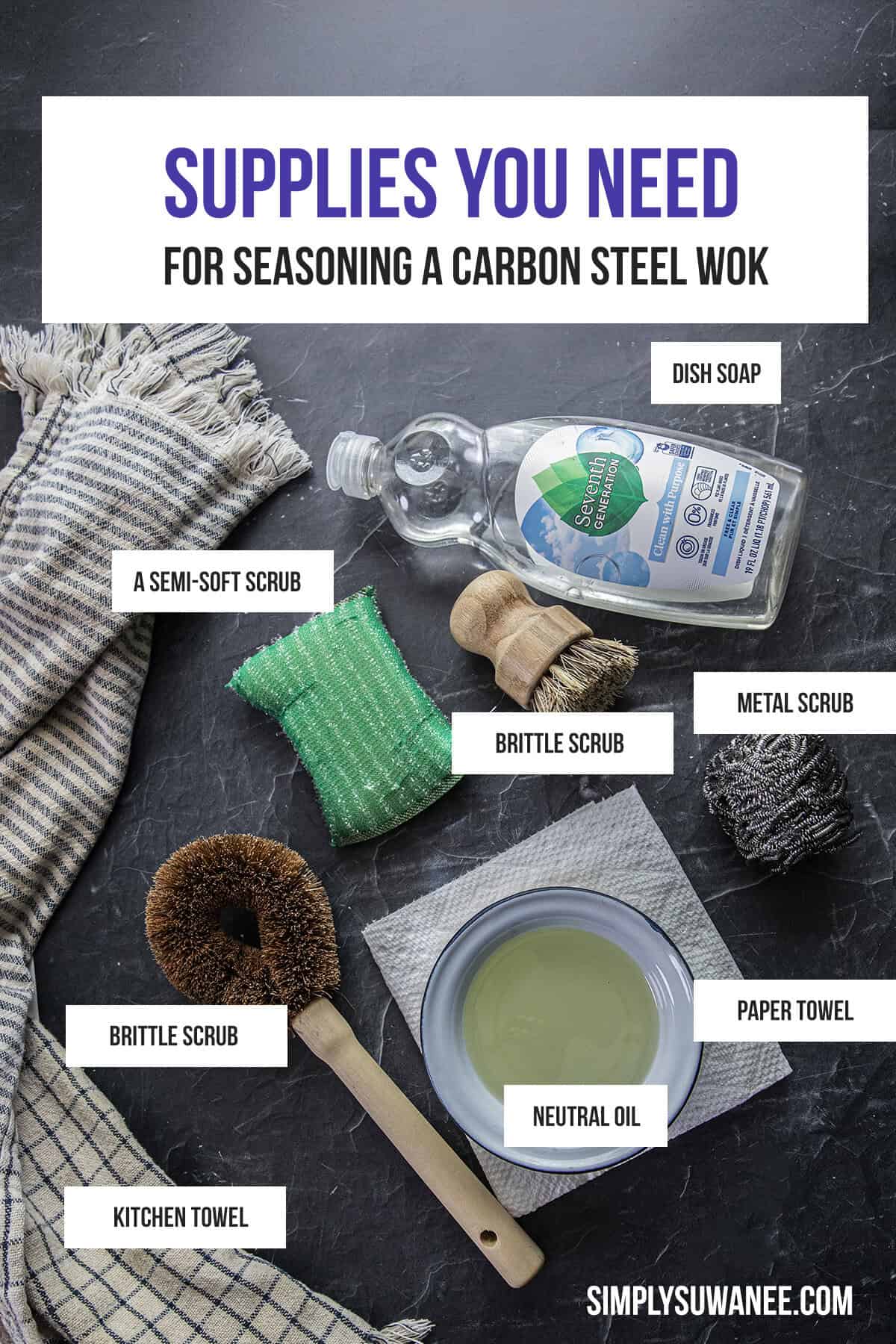
- A carbon steel wok. This is the wok I used in this blog post.
- Dish soap
- Hot water
- A metal sponge or scrubber
- Bamboo scrub brush
- Paper towels or a clean towel
- High heat cooking oil
- Tongs
- High heat cooking oil for seasoning include avocado oil, canola oil, vegetable oil, grape seed oil, or peanut oil. Choose an oil with a high smoke point.
- A few aromatics or herbs for the first fry.
For the first fry, I like to use Thai aromatics such as lemongrass, shallots, garlic, ginger, galangal, green onions, or chilies. This is optional, but it's a method I learned growing up and still use today.
Instructions
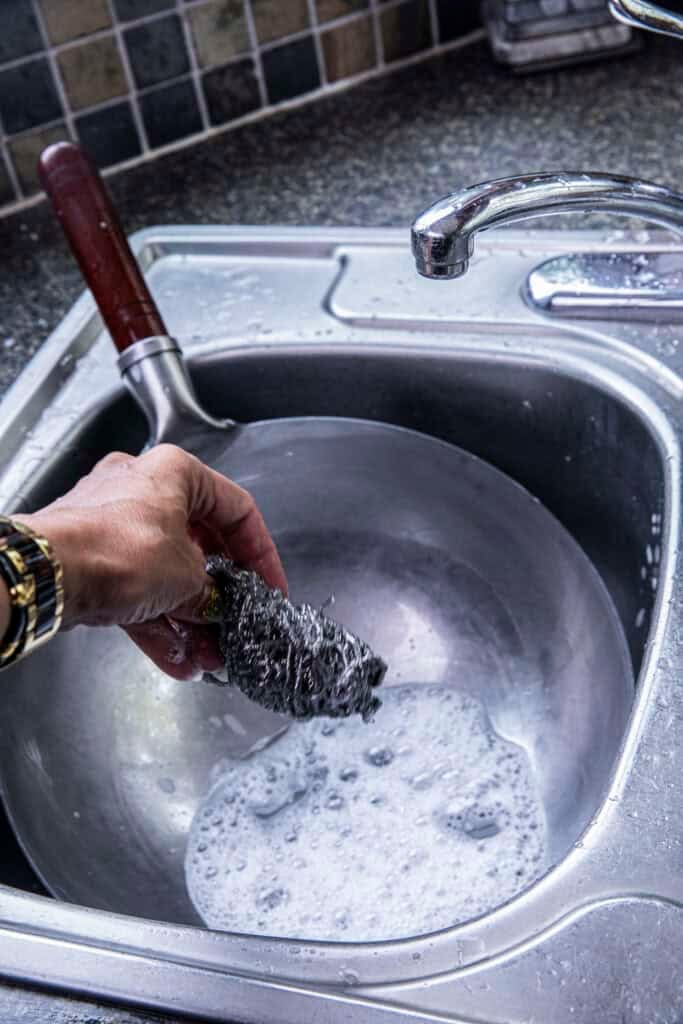
- Wash the New Wok Well. Wash the wok with hot water and dish soap. Use a sponge or scrubber to clean the inside and outside of the wok. New carbon steel woks often have a factory coating, so this first wash is important. Rinse well with hot water. Dry the wok completely with a towel.
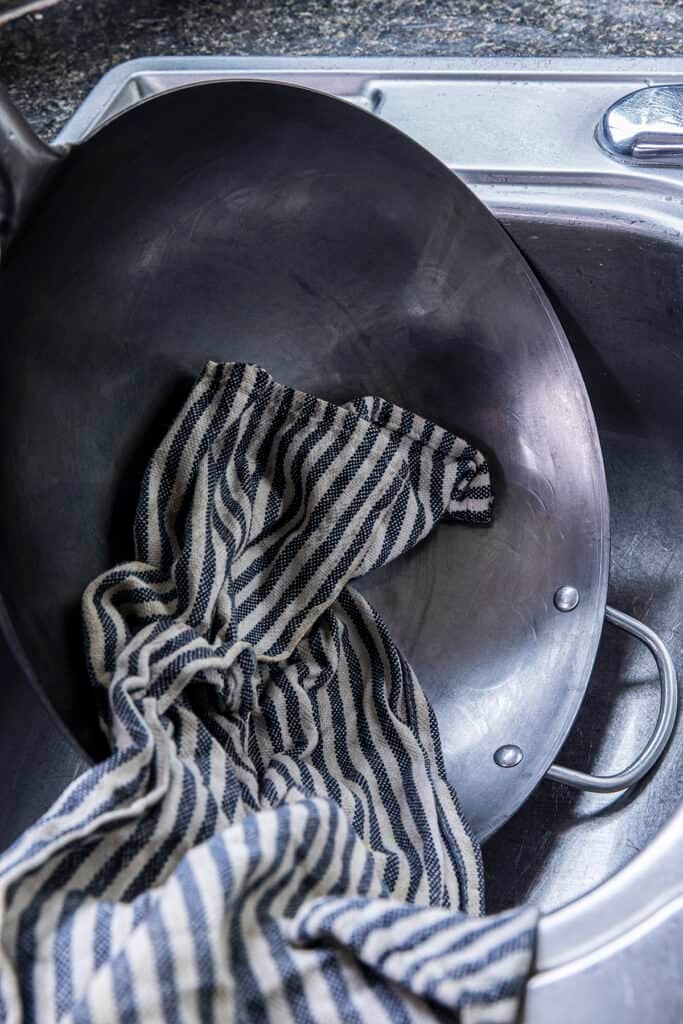
- Heat the Wok Until Dry. Place the wok on the stove over medium high heat. Let the wok heat until all moisture disappears. You may see the metal begin to change color. This is normal. The wok needs to be fully dry before adding oil. Water left on the surface can cause rust.
- Add a Thin Layer of Oil. Let the wok cool a bit first if it's too hot at this point. Add a small amount of high heat oil to the wok. Use a paper towel held with tongs to wipe the oil all over the inside surface of the wok. You only need a thin layer. The wok should look lightly glossy, not wet or greasy. Too much oil can leave sticky spots, so keep the layer very thin.
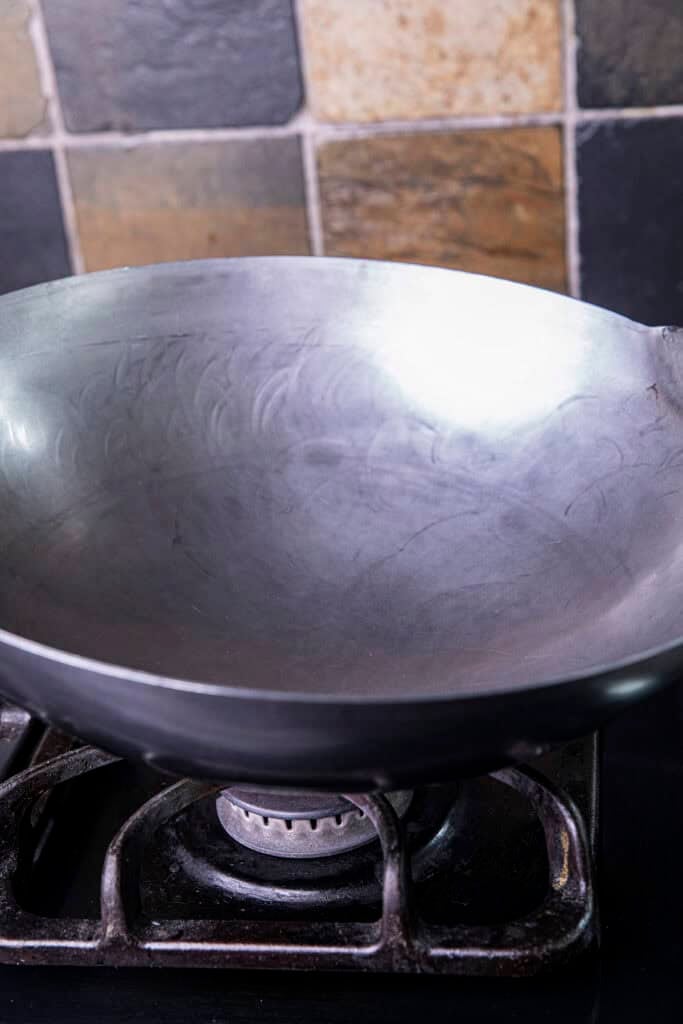
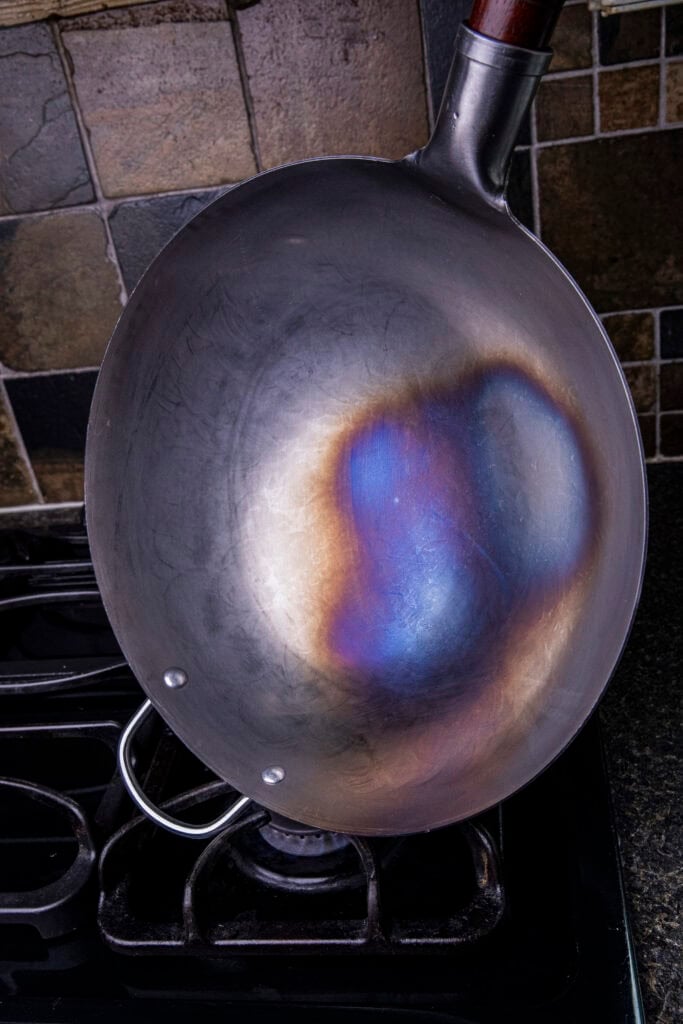
- Heat Until the Wok Changes Color. Keep the wok over medium high to high heat. Move and tilt the wok so the heat reaches the sides too. The metal may start turning yellow, brown, blue, or darker gray. This is the beginning of the seasoning layer. The wok may smoke a little, so turn on your fan and open a window if needed.
- Repeat the Oil Layer. Once the first layer is heated in, let the wok cool slightly. Wipe on another very thin layer of oil. Heat again until the oil bonds to the surface. You can repeat this process two or three times for a stronger first seasoning. The wok will not look perfectly black yet, and that is okay.
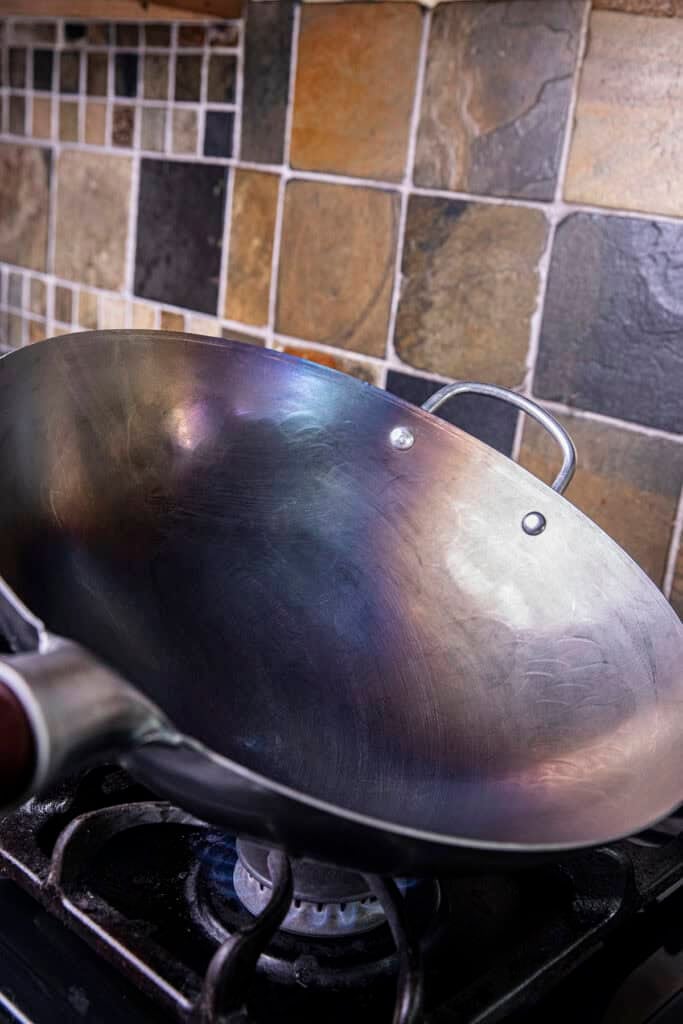
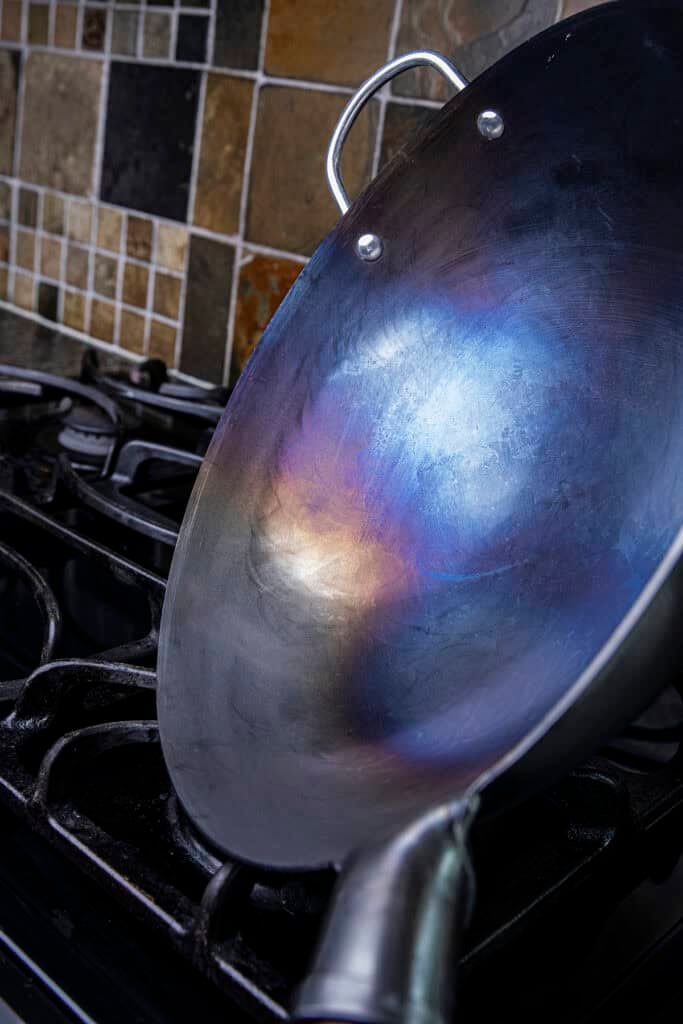
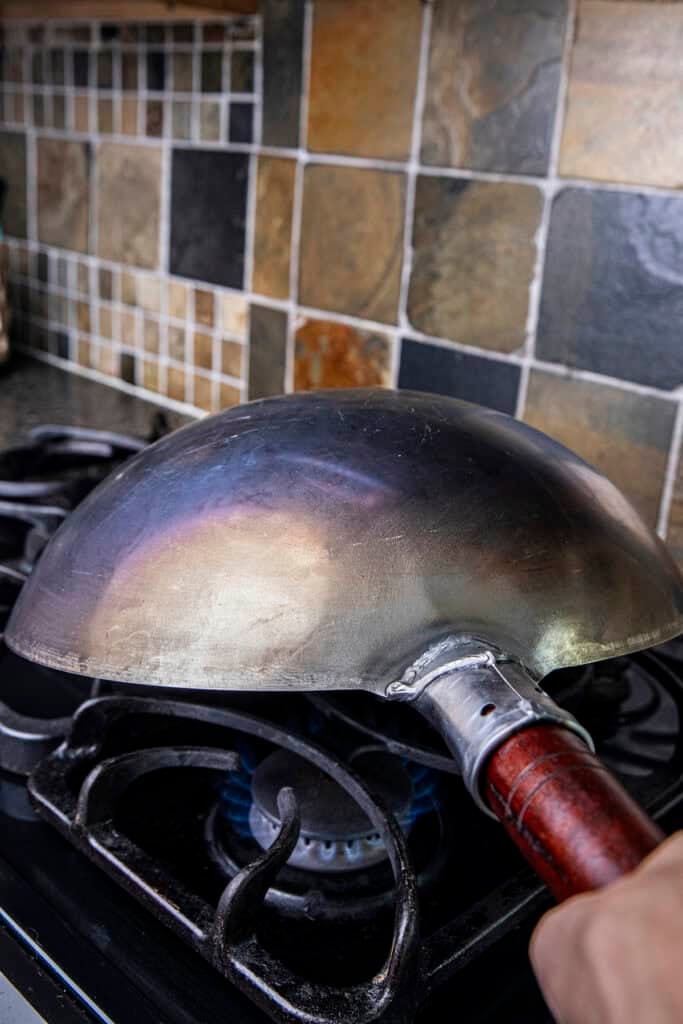
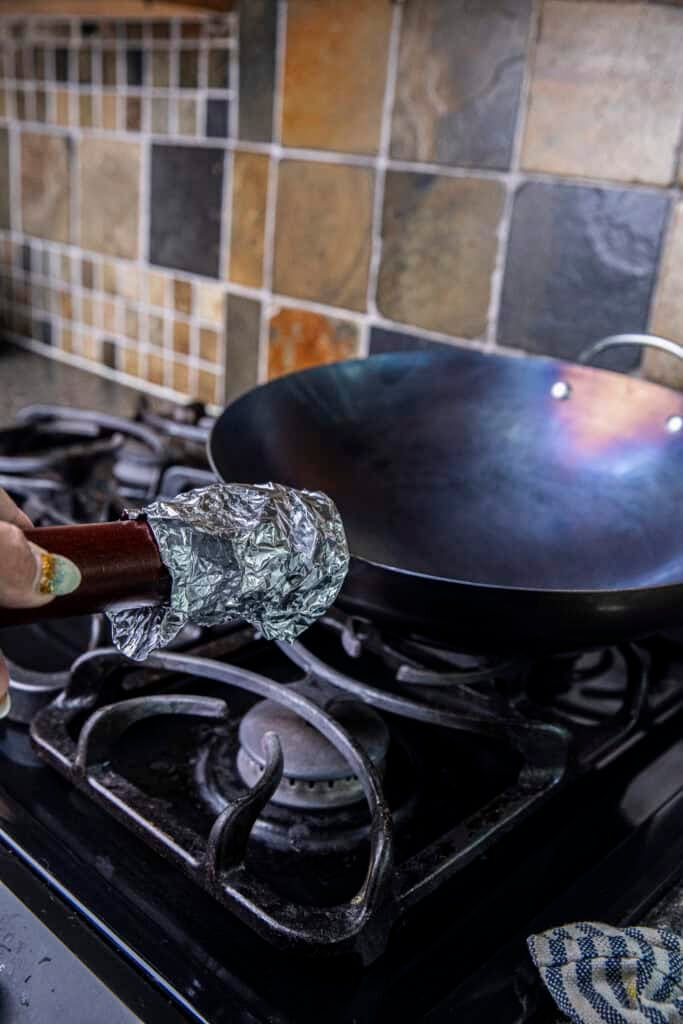
- Suwanee's Personal Tips! To help season the sides evenly, I like to carefully tilt and rotate the wok as it heats. Sometimes I'll even flip the wok upside down over the burner for a few seconds to reach areas that don't get direct heat. Be careful. The metal gets extremely hot, including parts of the handle. Some people use an oven mitt, but I prefer wrapping the expose metal near the handle portion with a few layers of heavy-duty aluminum foil. It gives me a better grip while still protecting my hand from the heat.
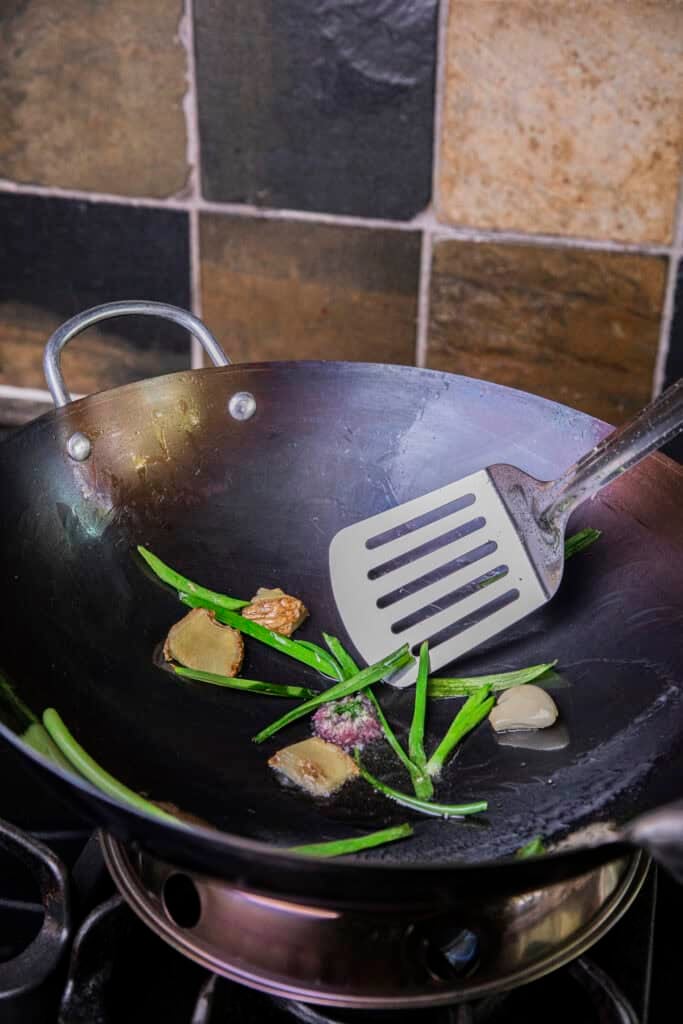
- Do a First Fry With Aromatics. This is my extra step and one I've used for years. After the wok has its first seasoning layer, add a little oil and a handful of aromatics such as lemongrass, shallots, garlic, ginger, galangal, green onions, or chilies. Stir fry for 2–3 minutes until fragrant and slightly wilted, then discard. This quick fry helps remove any lingering factory smell and gives the wok a cleaner start before cooking. Don't eat the aromatics, they're simply used to freshen the wok.
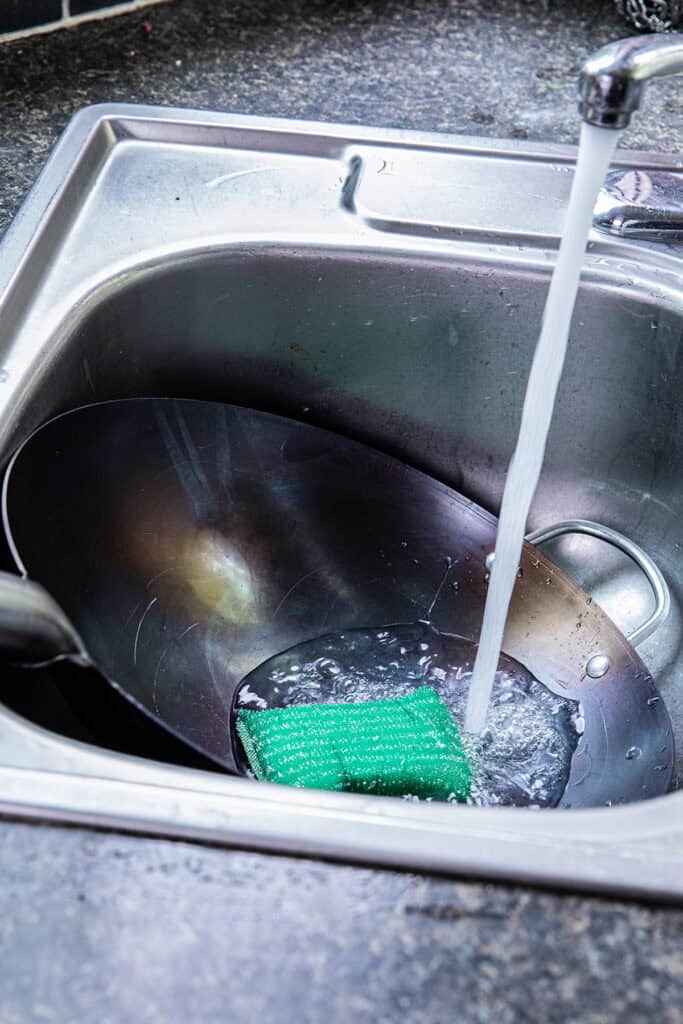
- Final Step. At this point, you can simply wipe the wok clean and you're done. If you'd like to remove the aroma from the herbs before cooking your first meal, give the wok one final rinse with hot water. Do not soak it and never put it in the dishwasher. Place the wok back over the stove until completely dry. Once cooled slightly, wipe on a very thin layer of oil inside and out before storing. That's it. Your wok is ready to cook!
My Personal Cleaning Routine
After cooking, I scrape out any food, rinse the wok with hot water, and give it a light scrub if needed.
If I use soap, I immediately dry the wok over heat and wipe on a thin layer of oil front and back before storing.
I've cleaned my woks this way for years and have never had a problem maintaining the seasoning.
What Should a Seasoned Wok Look Like?
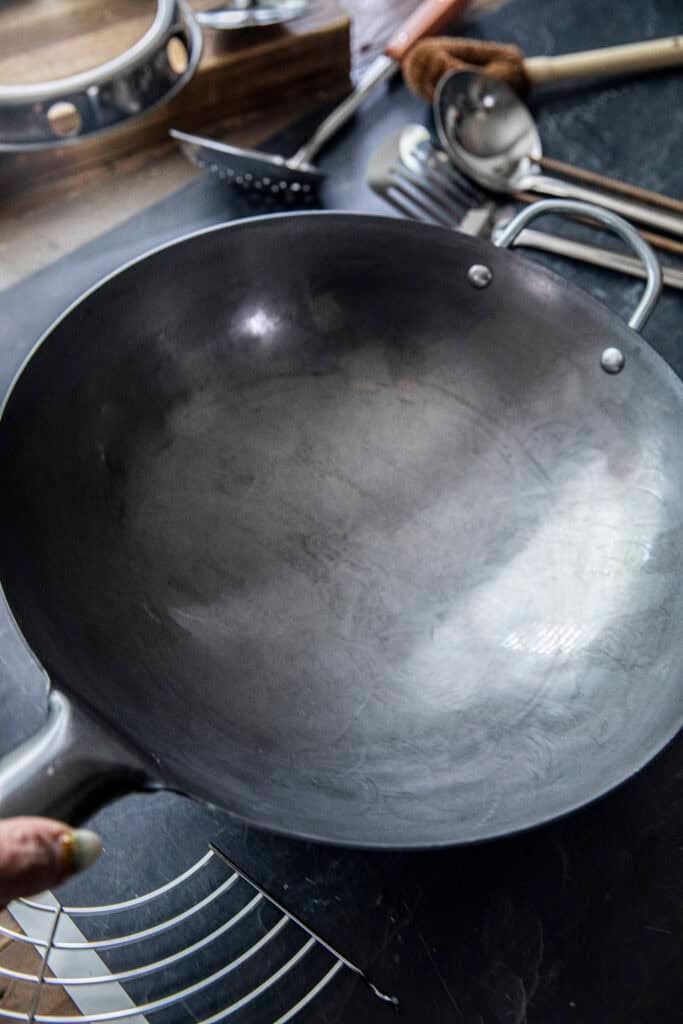
You may see bronze, blue, brown, and black areas across the surface. That's normal. The dark patina develops gradually with cooking, so don't expect a brand-new wok to look like one that's been used for years.
My Two Woks
I own several woks, but these two show what seasoning looks like over time. The wok in my left hand has years of cooking behind it and a deep dark patina. The hammered wok in my right hand is much newer. Both cook well. One is larger and simply had more meals cooked in it. The more you cook, the better the wok becomes!


What Is Wok Hei?
Wok hei is often called the "breath of the wok."
It's the smoky, slightly charred flavor created when food is cooked quickly over very high heat. A well-seasoned carbon steel wok helps create better wok hei, especially when making dishes like Pad Krapao, Pad See Ew, and Thai Fried Rice.
Why Is My Wok Not Black Yet?
Because a dark patina comes from repeated cooking, not a single seasoning session. Keep using your wok and the color will continue to develop naturally.
Why Is My Wok Sticky?
A sticky wok usually means too much oil was used during seasoning. Heat the wok again and wipe away any excess oil. Thin layers of oil season better than thick layers.
What If My Wok Gets Rust?
Don't panic. Surface rust is common and easy to fix. Most rust issues can be fixed in just a few minutes.
Wash the rusted area with soap and water, scrub away the rust, then dry the wok completely over heat. Once dry, apply a thin layer of oil and repeat the seasoning process.
How to Keep a Wok From Rusting
Always dry the wok completely after washing. The easiest way is to place it back on the stove for a minute or two until the water evaporates. Then wipe it lightly with oil before putting it away. If rust appears, scrub it off, wash the wok, dry it well, and season it again.
Can You Use Soap on a Wok?
This is one of the most debated topics in wok cooking. Some cooks never use soap. Others use a small amount occasionally.
I fall somewhere in the middle. If my wok needs a deeper cleaning, I'll use a little soap and a gentle scrub. Afterward, I heat the wok until completely dry and wipe on a thin layer of oil.
The key is not letting moisture sit on the wok.
Common Mistakes When Seasoning a Wok
- Using too much oil. A very thin layer works best.
- Not drying the wok completely before storing it.
- Storing the wok while it's still damp.
- Expecting a dark black patina after one seasoning session.
- Cooking acidic foods too soon after seasoning.
- Not using the wok regularly.
- Using soap immediately after seasoning.
- Not heating the wok long enough during the seasoning process.
Best Thai Recipes to Cook After Seasoning a Wok
Put Your Wok to Work! Once your wok is seasoned, use it often. Stir frying is one of the best ways to keep building the patina. Good Thai recipes to make in a wok include:
- Beef Pad Kra Pao
- Pad See Ew
- Thai fried rice
- Drunken noodles
- Thai basil chicken
- Thai garlic pork (Moo Pad Kratiem)
- Stir fried mixed vegetables, Pad Pak Ruam Mit
- Morning Glory, Pad Pak Boung
- Khua Kling
It usually takes several cooking sessions. The more you use it, the better the seasoning becomes.
A wok develops its dark patina over time. One seasoning session is usually not enough to turn it completely black.
This is normal. The brown color is part of the seasoning process and will gradually darken with use.
Most woks only need a full seasoning once. Regular cooking helps maintain the seasoning over time.
How to Season a Wok (Carbon Steel Wok)
Description
A well-seasoned carbon steel wok is one of the most important tools in Thai cooking. It helps create better stir fries, prevents rust, and develops more flavor with every meal.
Ingredients
- A carbon steel wok. This is the wok I used in this blog post. It's a round-bottom wok and comes with a set of spatulas, long chop sticks, scrubber, a wok ring and an oil drain rack. A great deal for a nice set!
- Dish soap
- Hot water
- A sponge or scrubber
- Paper towels or a clean towel
- High heat cooking oil
- Tongs- optional
- High heat cooking oil for seasoning include avocado oil, canola oil, vegetable oil, grapeseed oil, or peanut oil. Choose an oil with a high smoke point.
- A few aromatics or herbs for the first fry. (garlic, chives, green onion, ginger slices, lemongrass, chilies etc)
Instructions
- Wash the New Wok Well. Wash the wok with hot water and dish soap. Use a sponge or scrubber to clean the inside and outside of the wok. New carbon steel woks often have a factory coating, so this first wash is important. Rinse well with hot water. Dry the wok completely with a towel.
- Heat the Wok Until Dry. Place the wok on the stove over medium high heat. Let the wok heat until all moisture disappears. You may see the metal begin to change color. This is normal. The wok needs to be fully dry before adding oil. Water left on the surface can cause rust.
- Add a Thin Layer of Oil. Let the wok cool a bit first if it's too hot at this point. Add a small amount of high heat oil to the wok. Use a paper towel held with tongs to wipe the oil all over the inside surface of the wok. You only need a thin layer. The wok should look lightly glossy, not wet or greasy. Too much oil can leave sticky spots, so keep the layer very thin.
- Heat Until the Wok Changes Color. Keep the wok over medium high to high heat. Move and tilt the wok so the heat reaches the sides too. The metal may start turning yellow, brown, blue, or darker gray. This is the beginning of the seasoning layer. The wok may smoke a little, so turn on your fan and open a window if needed.
- Repeat the Oil Layer. Once the first layer is heated in, let the wok cool slightly. Wipe on another very thin layer of oil. Heat again until the oil bonds to the surface. You can repeat this process two or three times for a stronger first seasoning. The wok will not look perfectly black yet, and that is okay.
- Suwanee's Personal Tips! To help season the sides evenly, I like to carefully tilt and rotate the wok as it heats. Sometimes I'll even flip the wok upside down over the burner for a few seconds to reach areas that don't get direct heat. Be careful. The metal gets extremely hot, including parts of the handle. Some people use an oven mitt, but I prefer wrapping the expose metal near the handle portion with a few layers of heavy-duty aluminum foil. It gives me a better grip while still protecting my hand from the heat.
- Do a First Fry With Aromatics. This is my extra step and one I've used for years. After the wok has its first seasoning layer, add a little oil and a handful of aromatics such as lemongrass, shallots, garlic, ginger, galangal, green onions, or chilies. Stir fry for 2–3 minutes until fragrant and slightly wilted, then discard. This quick fry helps remove any lingering factory smell and gives the wok a cleaner start before cooking. Don't eat the aromatics, they're simply used to freshen the wok.
- Final Step. At this point, you can simply wipe the wok clean and you're done. If you'd like to remove the aroma from the herbs before cooking your first meal, give the wok one final rinse with hot water. Do not soak it and never put it in the dishwasher. Place the wok back over the stove until completely dry. Once cooled slightly, wipe on a very thin layer of oil inside and out before storing. That's it. Your wok is ready to cook!
- Category: Thai Kitchen resources
- Method: stove top
- Cuisine: Asian, Thai
Related and Pairing
Looking for other helpfu guide like this? Try these Thai kitchen resources with helpful tips and tricks to help with your Thai cooking at home!



Hi there, I’m Suwanee!
I’m the person behind this Thai food blog. I spent the first thirteen years of my childhood in Thailand, where I fell in love with the flavors of Thai cooking. What started as sharing recipes from my kitchen has grown into a journey from home cook to restaurant chef — and now one of just eight contestants chosen nationwide for PBS’s The Great American Recipe, Season 4. You’re in the right place if you love to cook Thai food. Come by often, and let’s get cooking!

Leave a Reply