Description
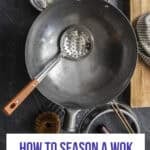
A well-seasoned carbon steel wok is one of the most important tools in Thai cooking. It helps create better stir fries, prevents rust, and develops more flavor with every meal.
Ingredients
- A carbon steel wok. This is the wok I used in this blog post. It's a round-bottom wok and comes with a set of spatulas, long chop sticks, scrubber, a wok ring and an oil drain rack. A great deal for a nice set!
- Dish soap
- Hot water
- A sponge or scrubber
- Paper towels or a clean towel
- High heat cooking oil
- Tongs- optional
- High heat cooking oil for seasoning include avocado oil, canola oil, vegetable oil, grapeseed oil, or peanut oil. Choose an oil with a high smoke point.
- A few aromatics or herbs for the first fry. (garlic, chives, green onion, ginger slices, lemongrass, chilies etc)
Instructions
- Wash the New Wok Well. Wash the wok with hot water and dish soap. Use a sponge or scrubber to clean the inside and outside of the wok. New carbon steel woks often have a factory coating, so this first wash is important. Rinse well with hot water. Dry the wok completely with a towel.
- Heat the Wok Until Dry. Place the wok on the stove over medium high heat. Let the wok heat until all moisture disappears. You may see the metal begin to change color. This is normal. The wok needs to be fully dry before adding oil. Water left on the surface can cause rust.
- Add a Thin Layer of Oil. Let the wok cool a bit first if it's too hot at this point. Add a small amount of high heat oil to the wok. Use a paper towel held with tongs to wipe the oil all over the inside surface of the wok. You only need a thin layer. The wok should look lightly glossy, not wet or greasy. Too much oil can leave sticky spots, so keep the layer very thin.
- Heat Until the Wok Changes Color. Keep the wok over medium high to high heat. Move and tilt the wok so the heat reaches the sides too. The metal may start turning yellow, brown, blue, or darker gray. This is the beginning of the seasoning layer. The wok may smoke a little, so turn on your fan and open a window if needed.
- Repeat the Oil Layer. Once the first layer is heated in, let the wok cool slightly. Wipe on another very thin layer of oil. Heat again until the oil bonds to the surface. You can repeat this process two or three times for a stronger first seasoning. The wok will not look perfectly black yet, and that is okay.
- Suwanee's Personal Tips! To help season the sides evenly, I like to carefully tilt and rotate the wok as it heats. Sometimes I'll even flip the wok upside down over the burner for a few seconds to reach areas that don't get direct heat. Be careful. The metal gets extremely hot, including parts of the handle. Some people use an oven mitt, but I prefer wrapping the expose metal near the handle portion with a few layers of heavy-duty aluminum foil. It gives me a better grip while still protecting my hand from the heat.
- Do a First Fry With Aromatics. This is my extra step and one I've used for years. After the wok has its first seasoning layer, add a little oil and a handful of aromatics such as lemongrass, shallots, garlic, ginger, galangal, green onions, or chilies. Stir fry for 2–3 minutes until fragrant and slightly wilted, then discard. This quick fry helps remove any lingering factory smell and gives the wok a cleaner start before cooking. Don't eat the aromatics, they're simply used to freshen the wok.
- Final Step. At this point, you can simply wipe the wok clean and you're done. If you'd like to remove the aroma from the herbs before cooking your first meal, give the wok one final rinse with hot water. Do not soak it and never put it in the dishwasher. Place the wok back over the stove until completely dry. Once cooled slightly, wipe on a very thin layer of oil inside and out before storing. That's it. Your wok is ready to cook!
- Category: Thai Kitchen resources
- Method: stove top
- Cuisine: Asian, Thai