
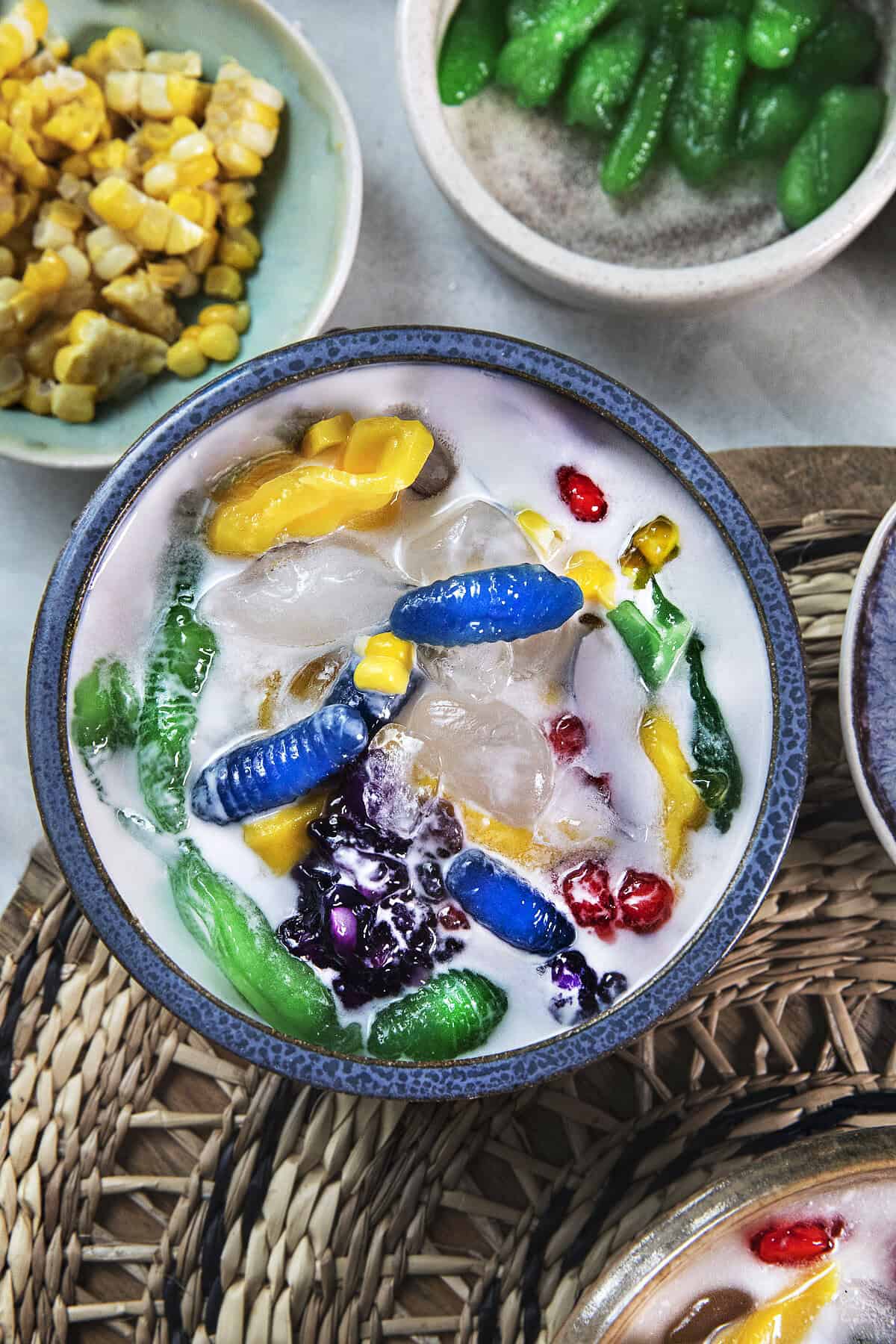
Ruam Mit (รวมมิตร) is a colorful Thai dessert made with an assortment of chewy noodles, jellies, fruit, sweet syrup, coconut milk, and crushed ice.
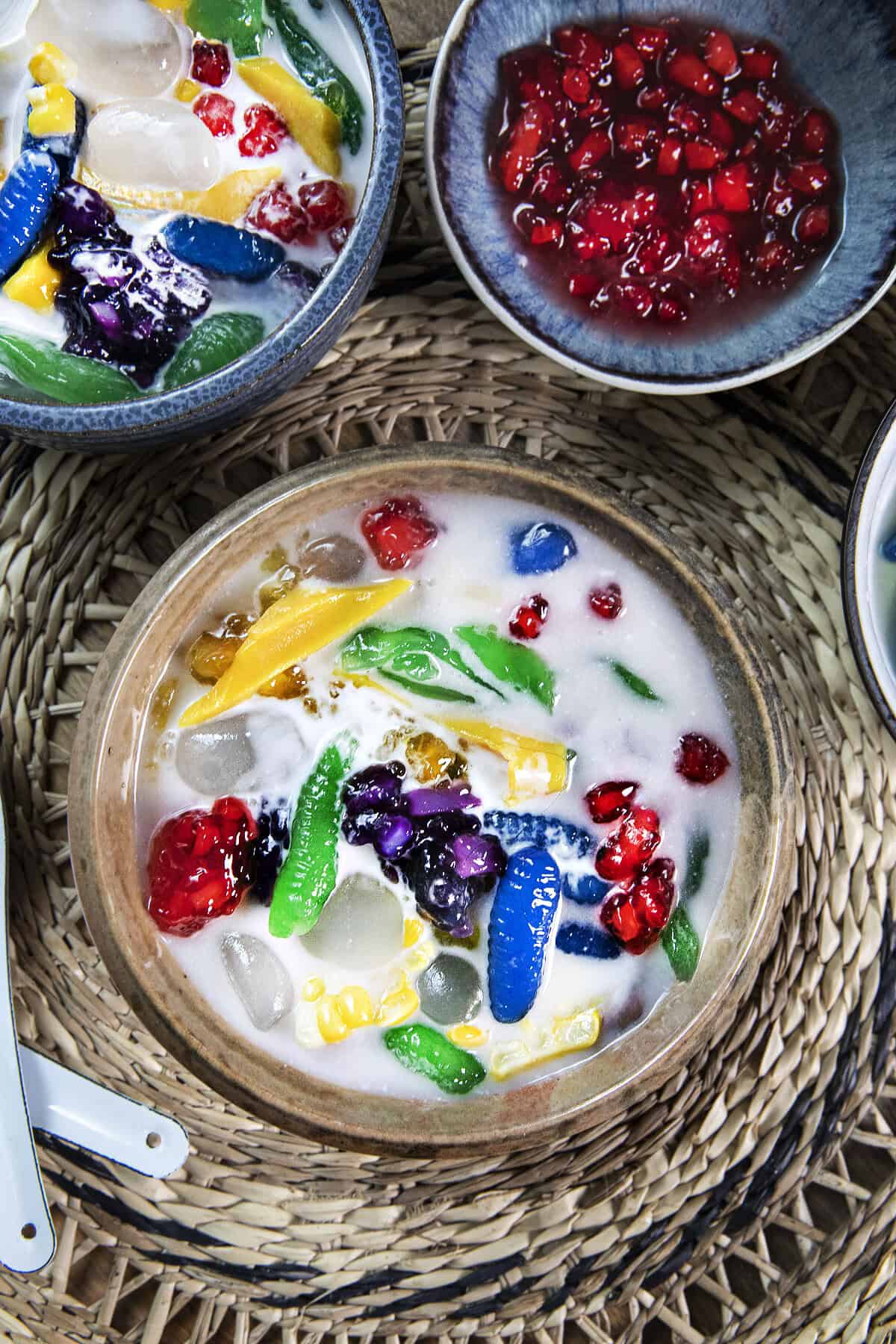
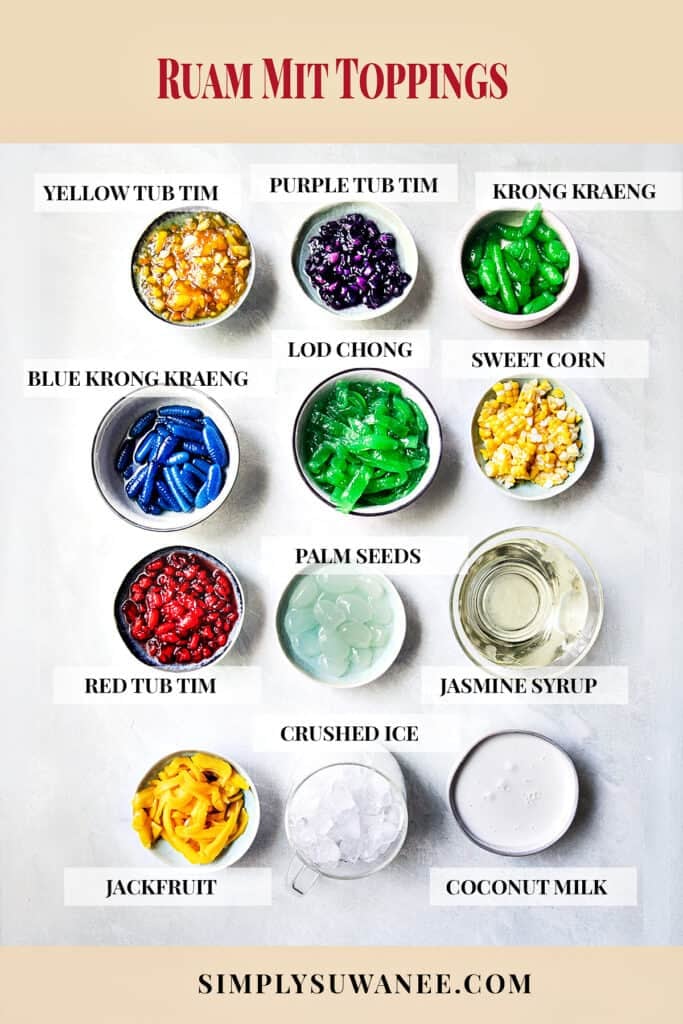
There isn't just one combination. My version includes three favorites, Tub Tim Grob (Thai Red Rubies), Lod Chong Singapore Noodles, and Krong Kraeng, along with jackfruit, palm fruit, sweet corn, Jasmine-pandan syrup, and salted coconut milk.
If you've seen my Nam Khaeng Sai (Thai Shaved Ice), the two desserts may look similar. I'll explain the difference below.
Jump to:
What Is Ruam Mit?
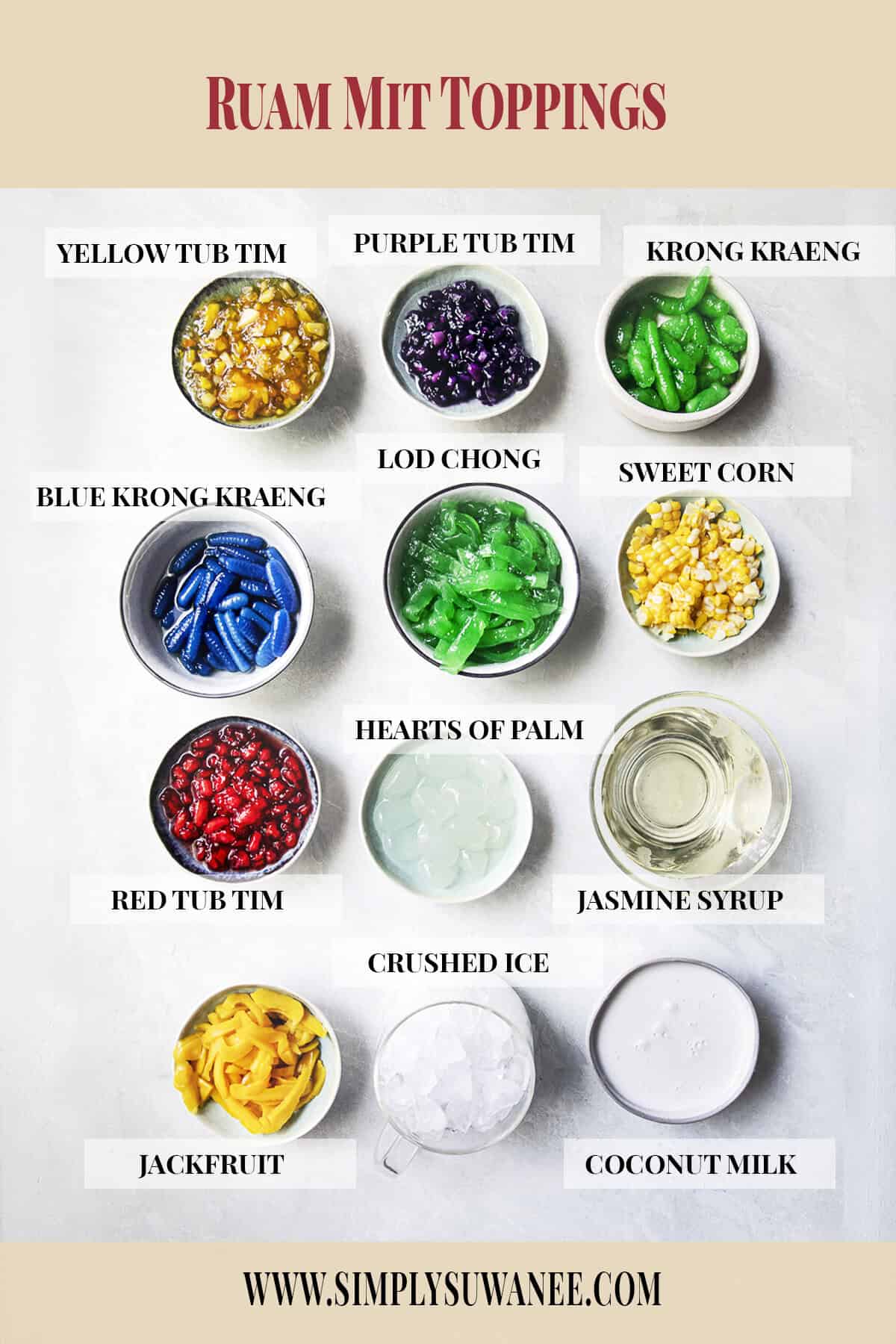
The name Ruam Mit means a mixture or assortment, which describes this dessert perfectly. Thai versions can include Lod Chong, Tub Tim Grob, Krong Kraeng, Salim, jackfruit, palm fruit, corn, grass jelly, and other toppings.
For this recipe, I'm showing you how to make three of the chewy components from scratch. You don't have to use every topping. Pick your favorites and make your bowl your own.
Ingredients
Don't let the number of components intimidate you. Make them one at a time and keep each in its own bowl until you're ready to serve.
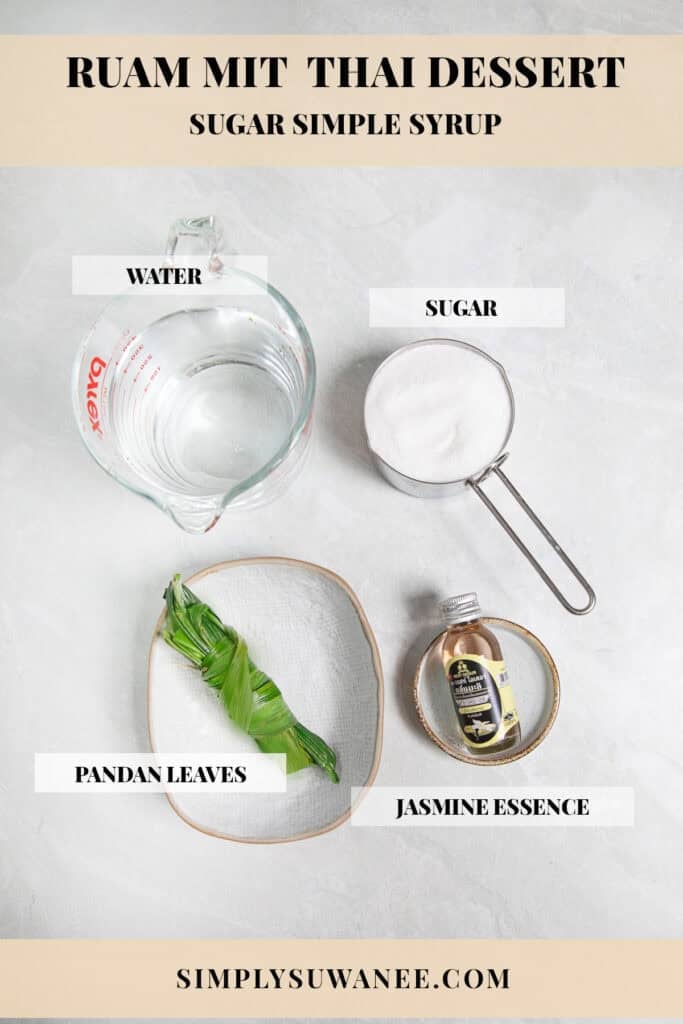
1. Jasmine-Pandan Syrup
- The syrup is made with white granulated sugar, pandan leaves, and a few drops of Jasmine essence (extract). I like the syrup lightly sweet since there are plenty of other sweet ingredients in the bowl. Add more sugar if you prefer.
- Tip: Stick with white sugar so the syrup stays clear and the colors of the Ruam Mit stay bright. You can learn more about pandan leaves and how I use them in Thai cooking
2. Salted Coconut Milk
- The coconut milk is lightly salted, not sweetened. It balances the sweet jasmine-pandan syrup and gives the dessert a creamy, slightly salty finish.
- This sweet and salty combination is common in Thai desserts. See my Thai coconut milk guide for more about choosing and cooking with coconut milk.
3. Tub Tim Grob (Red Rubies)
- Tub Tim Grob (Thai Red Rubies) are diced water chestnuts coated in tapioca flour and boiled until chewy on the outside but still crunchy in the center.
- Red is the traditional color, but I made several colors at my colorful daughter's request. (:
4. Lod Chong Singapore Noodles
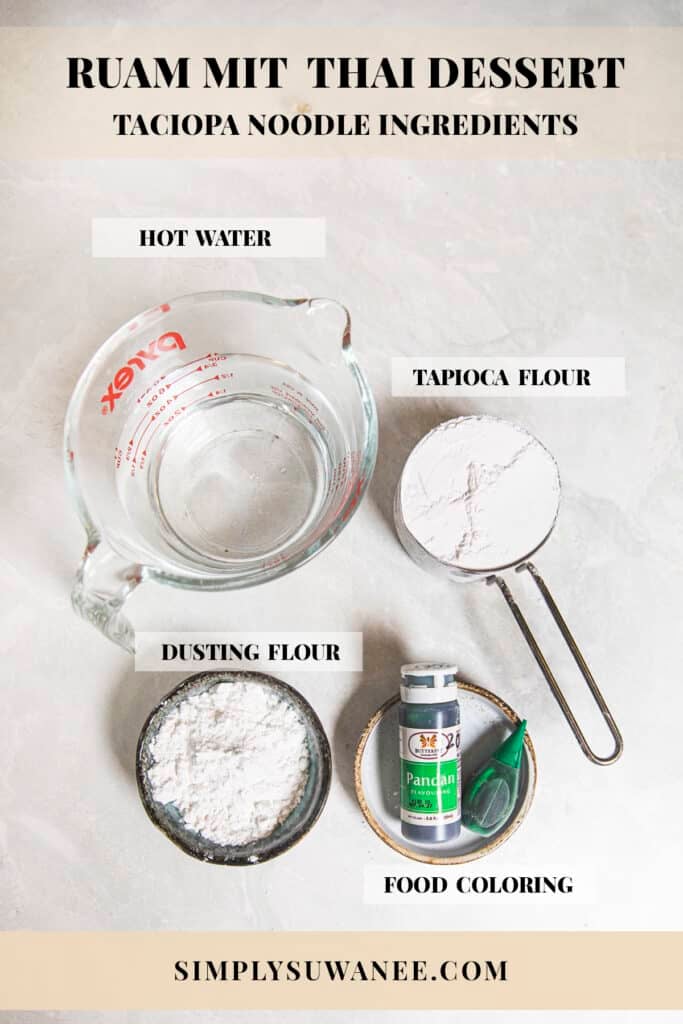
- Lod Chong Singapore are chewy tapioca noodles made with tapioca flour and boiling-hot water. Keep extra tapioca flour nearby for dusting while rolling and cutting the dough so the noodles don't stick together.
- Tip: For the green color, you can make your own pandan water, use pandan flavoring from an Asian market, or use green food coloring. I use pandan flavoring here because it's quick and easy.
5. Krong Kraeng
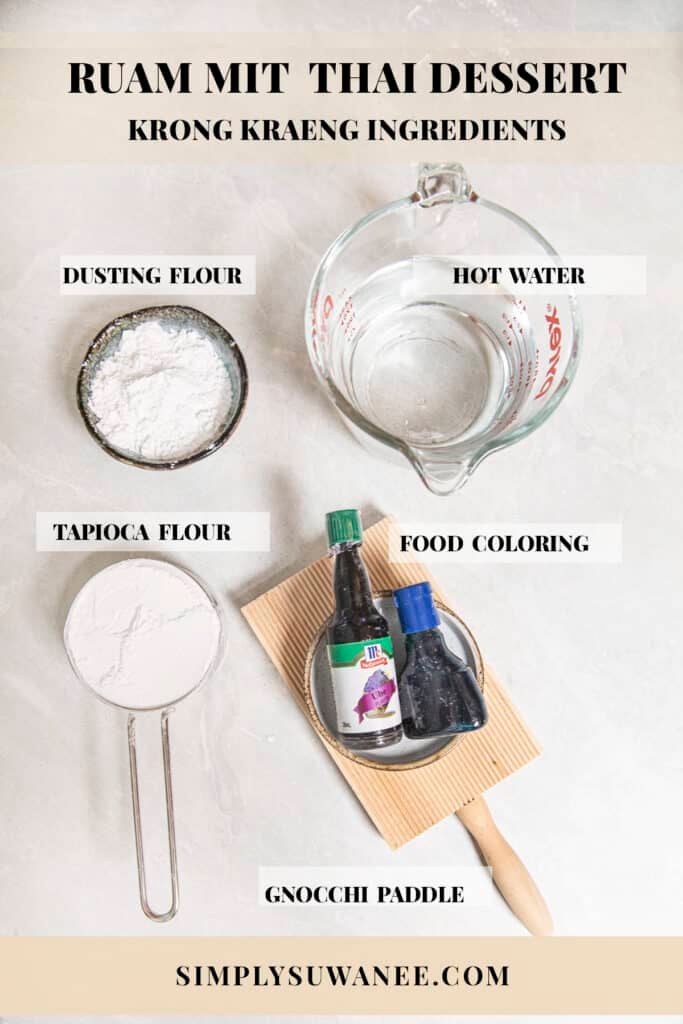
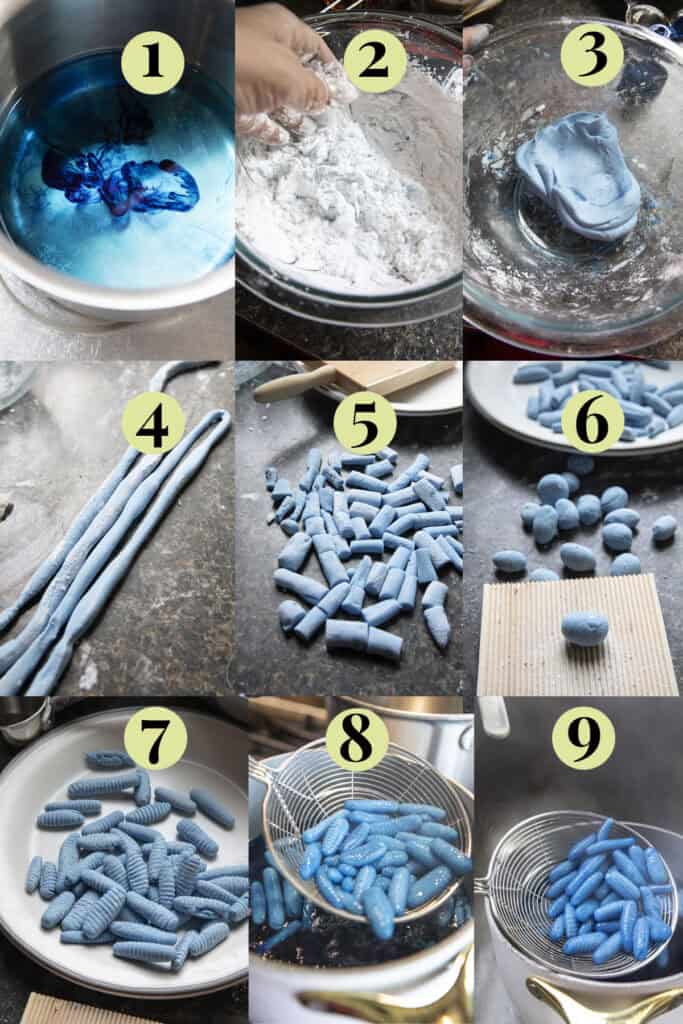
- Krong Kraeng are small, chewy tapioca dumplings with a pretty ridged shape. I use a gnocchi board to shape mine, which works well if you don't have a traditional Krong Kraeng mold.
- Tip: Butterfly pea water, butterfly pea flower powder or blue food coloring works for the blue color. I used a small amount of ube flavoring/coloring mixed in for an easy shortcut.
6. Toppings
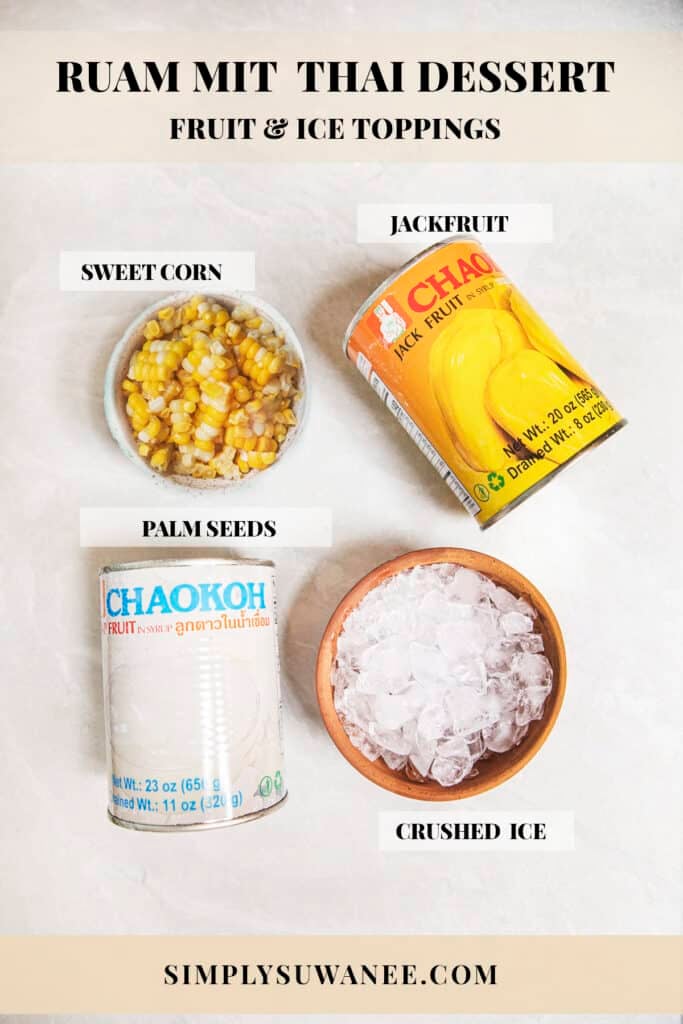
- I use sliced jackfruit, palm fruit, fresh sweet corn, and crushed ice. You can add more or less of each depending on what you like.
- For serving: Set everything out buffet-style and let everyone build their own bowl. About 1–2 tablespoons of each topping is a good place to start.
How to Make Ruam Mit
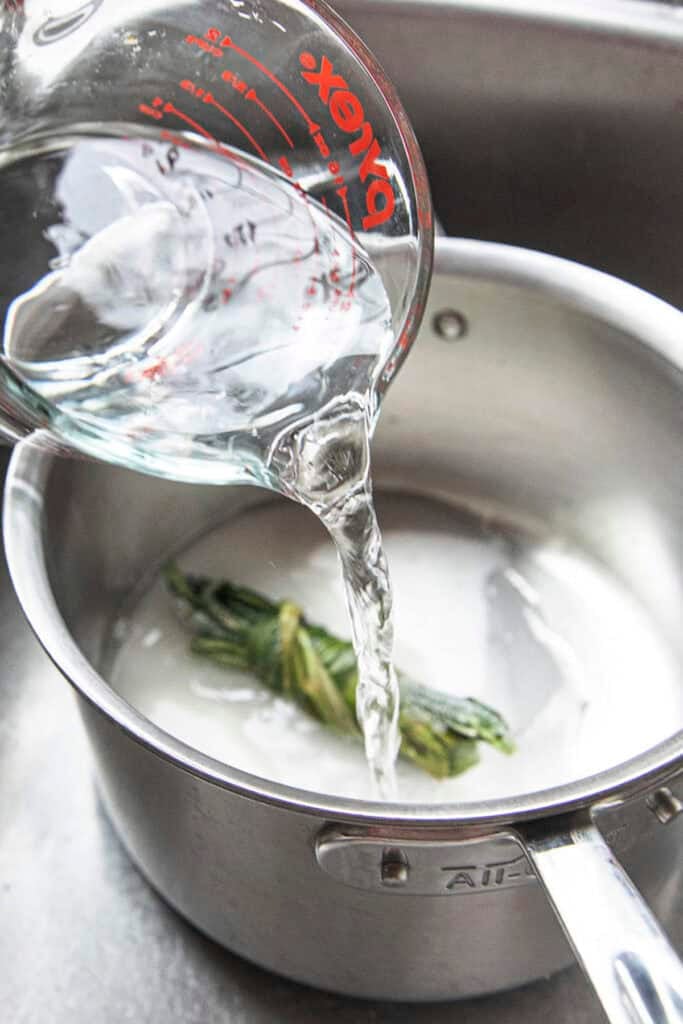
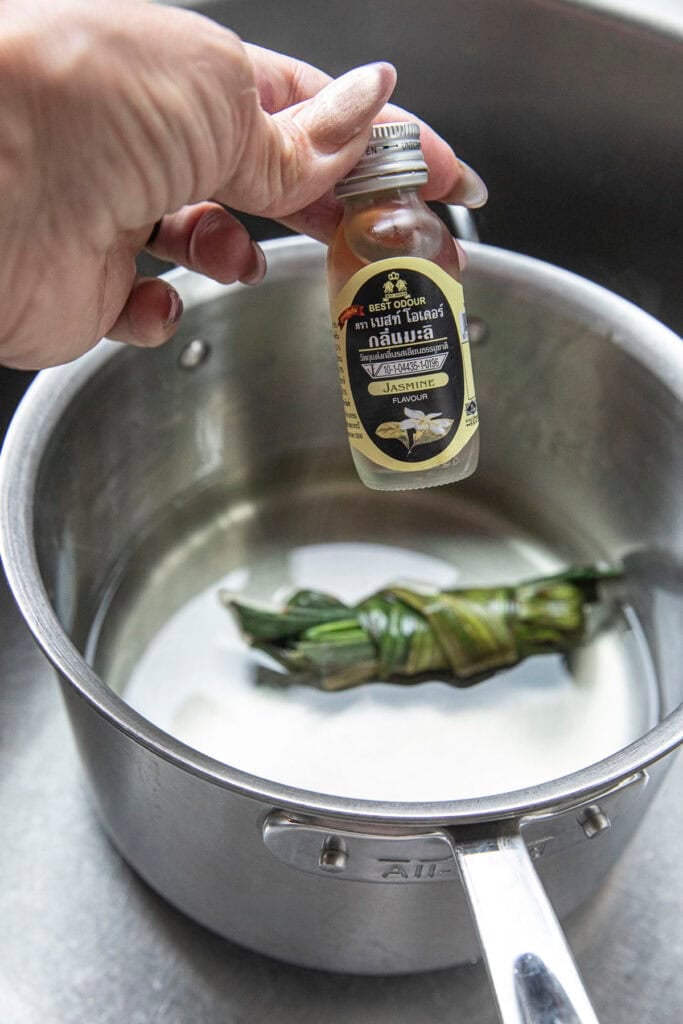
- Make the Jasmine-Pandan Syrup. Combine water, sugar, and pandan leaves in a saucepan. Bring to a gentle boil and stir until the sugar dissolves. Remove from the heat and cool completely. Discard the pandan and stir in 1–2 drops of jasmine essence. Go easy on the jasmine essence. You want a delicate floral fragrance, not an overpowering one.
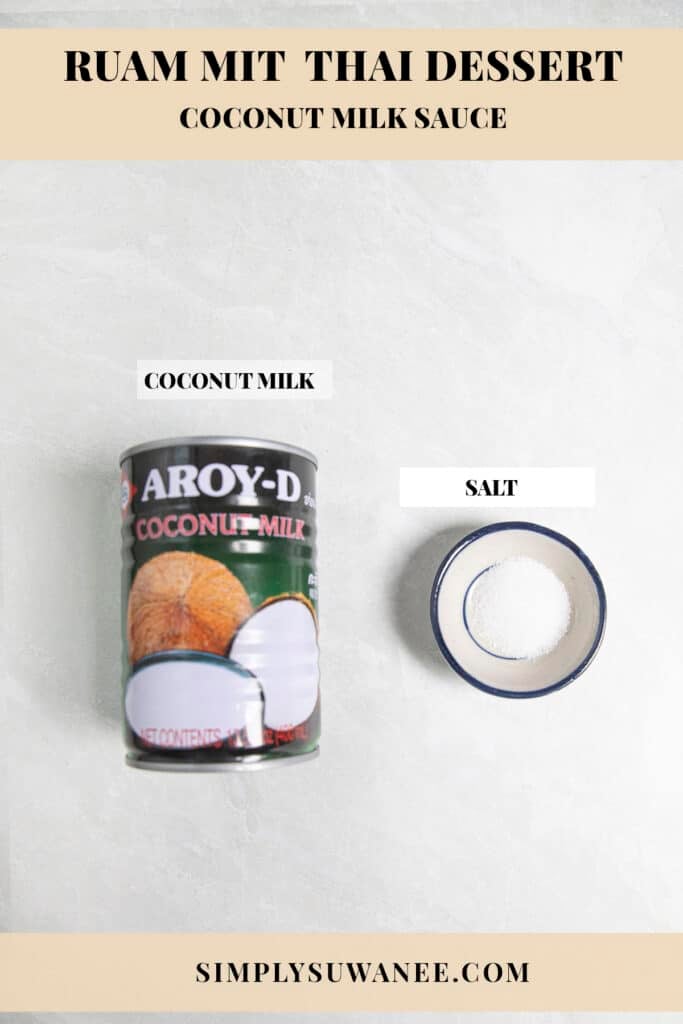
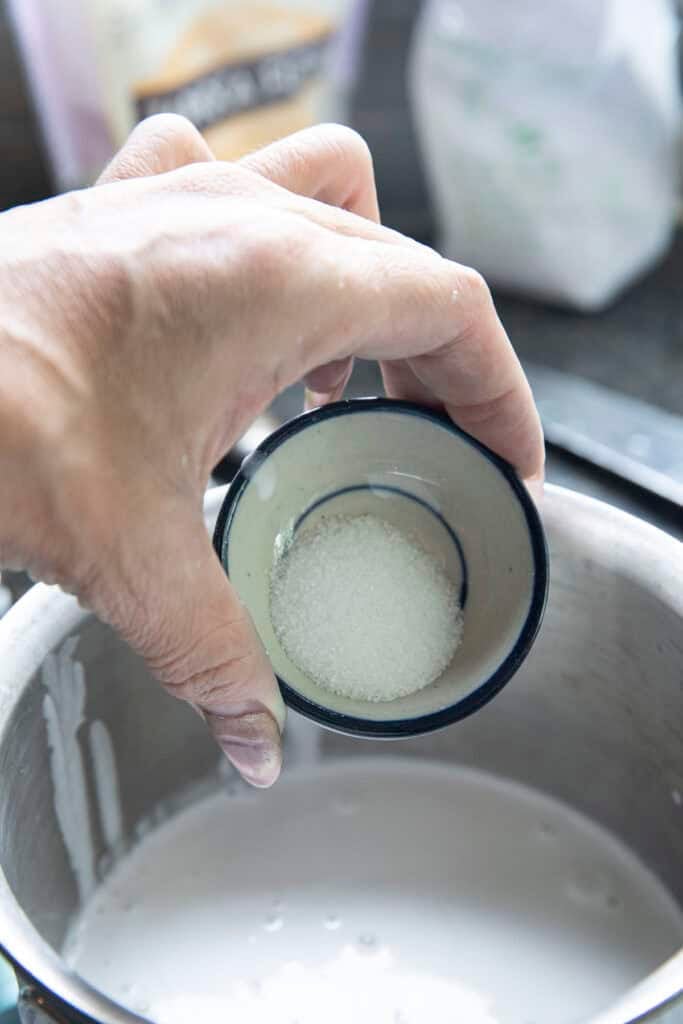
- Make the Salted Coconut Milk. Combine coconut milk and salt in a small saucepan. Warm gently over low heat just until the salt dissolves. Don't boil it. Remove from the heat and let cool.
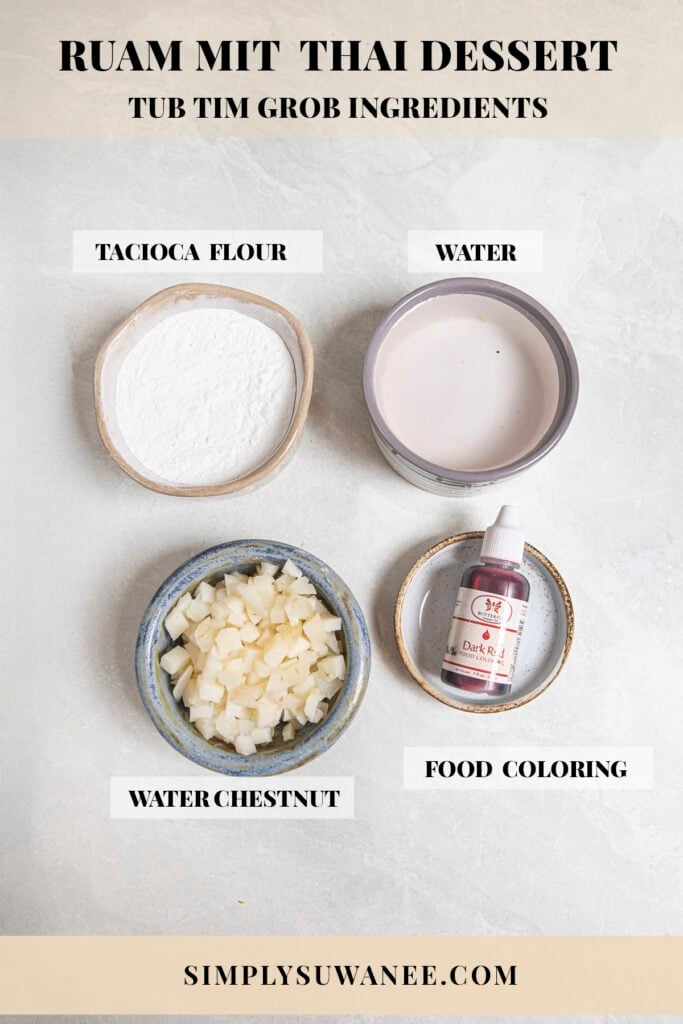
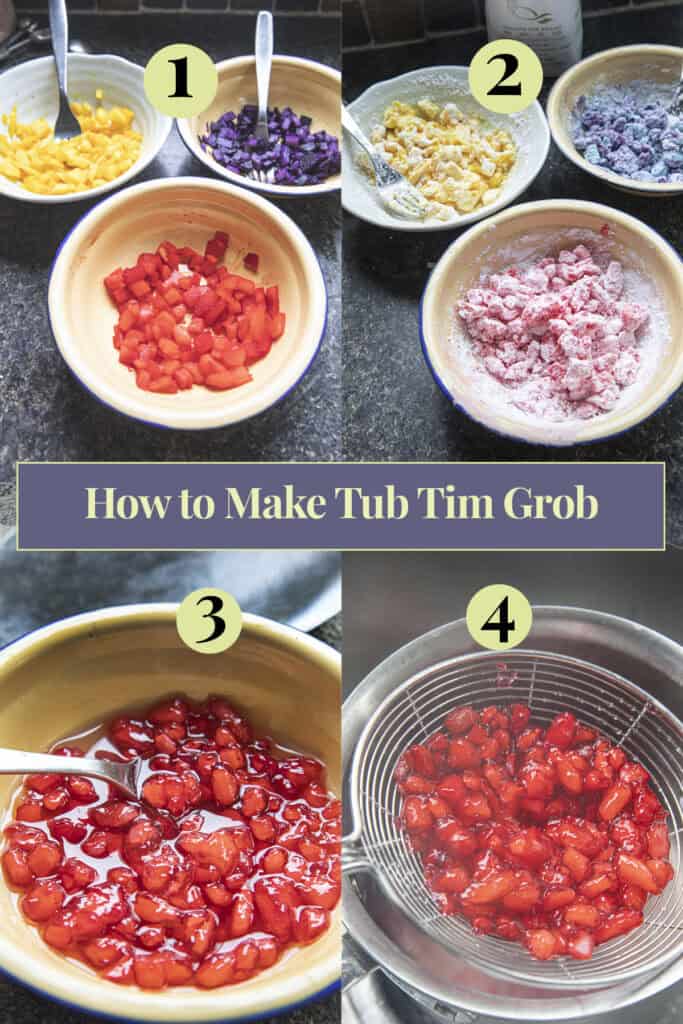
- Make the Tub Tim Grob. Toss the diced water chestnuts with food coloring, adding a little water if needed. Coat thoroughly with tapioca flour and shake off the excess. Boil until the pieces float and the tapioca coating turns translucent. Transfer to cold water, drain, then toss with a little prepared syrup to prevent sticking.
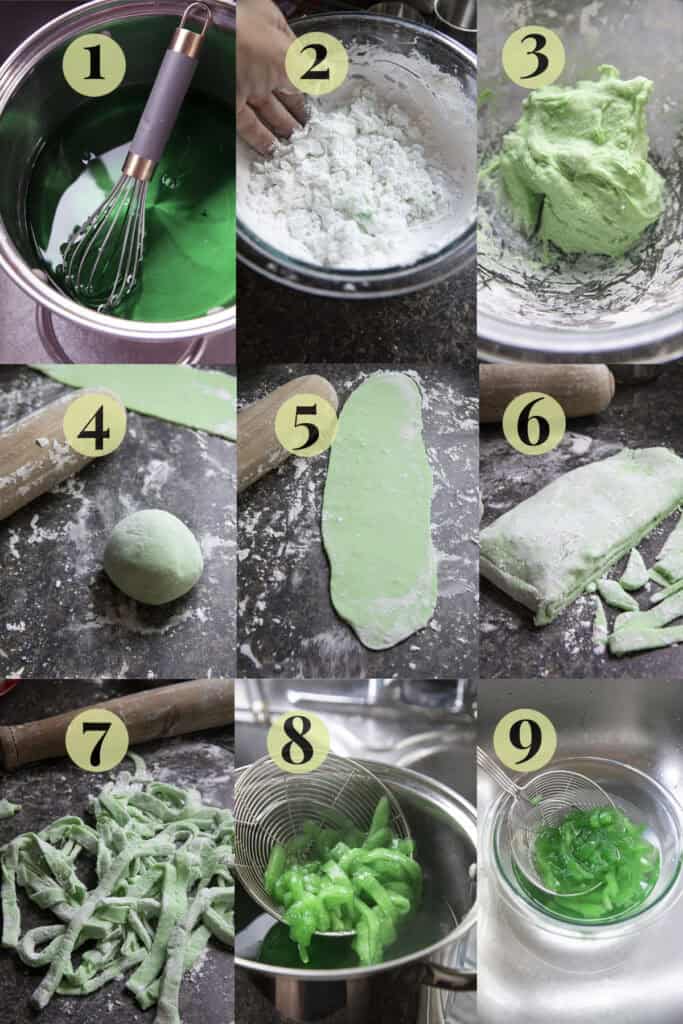
- Make the Lod Chong Singapore. Add your green color to water in a small pot, bring to a rolling boil. Gradually mix boiling-hot colored water into the tapioca flour until a soft, pliable dough forms. Divide the dough into 2–3 pieces. Dust with tapioca flour and roll each piece into a thin rectangle. Stack, trim, and slice into thin noodles. Boil for about 2–3 minutes, or until translucent and floating. Transfer to an ice bath, drain, and toss with a little syrup.
- Make the Krong Kraeng. Gradually add boiling-hot colored water to the tapioca flour until a soft dough forms. Roll into thin ropes and cut into roughly ½-inch pieces. Roll each into a small ball, then press and roll it across a Krong Kraeng mold or gnocchi board to create the ridges. Boil for 2–3 minutes, or until translucent and floating. Transfer to cold water, drain, and toss with a little syrup.
- Prepare the Toppings. Slice the jackfruit and palm fruit as needed. For fresh sweet corn, boil or steam until tender, then shave the kernels from the cob. Prepare the crushed ice just before serving.
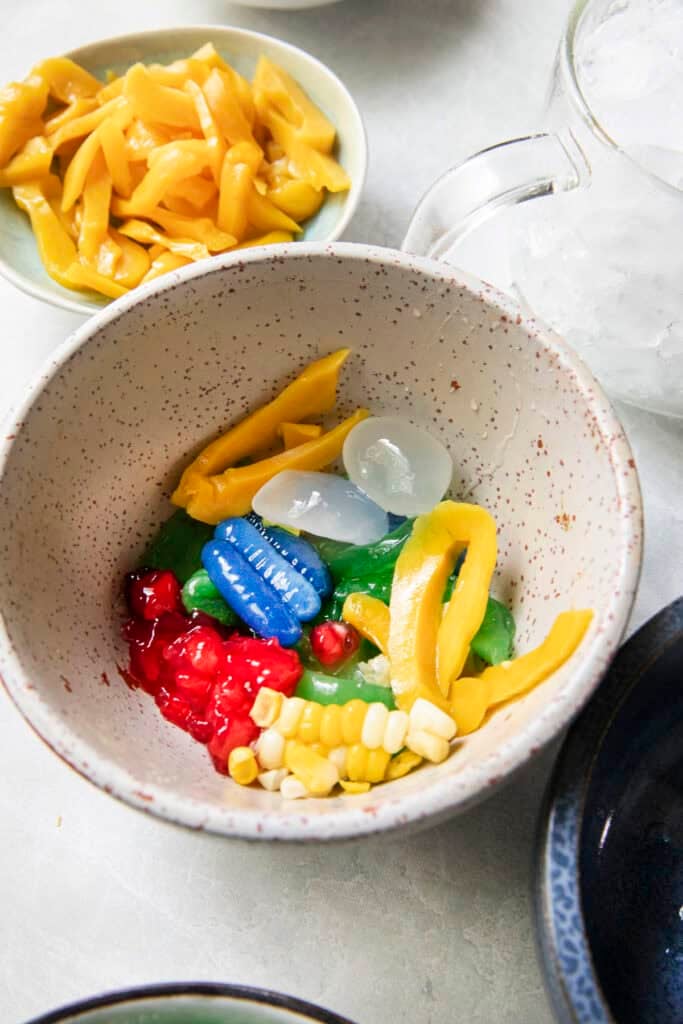
- Assemble. Fill a dessert bowl about halfway with your favorite Ruam Mit toppings. Add jasmine-pandan syrup and salted coconut milk, then top with plenty of crushed ice. Mix everything together with your spoon and enjoy immediately.
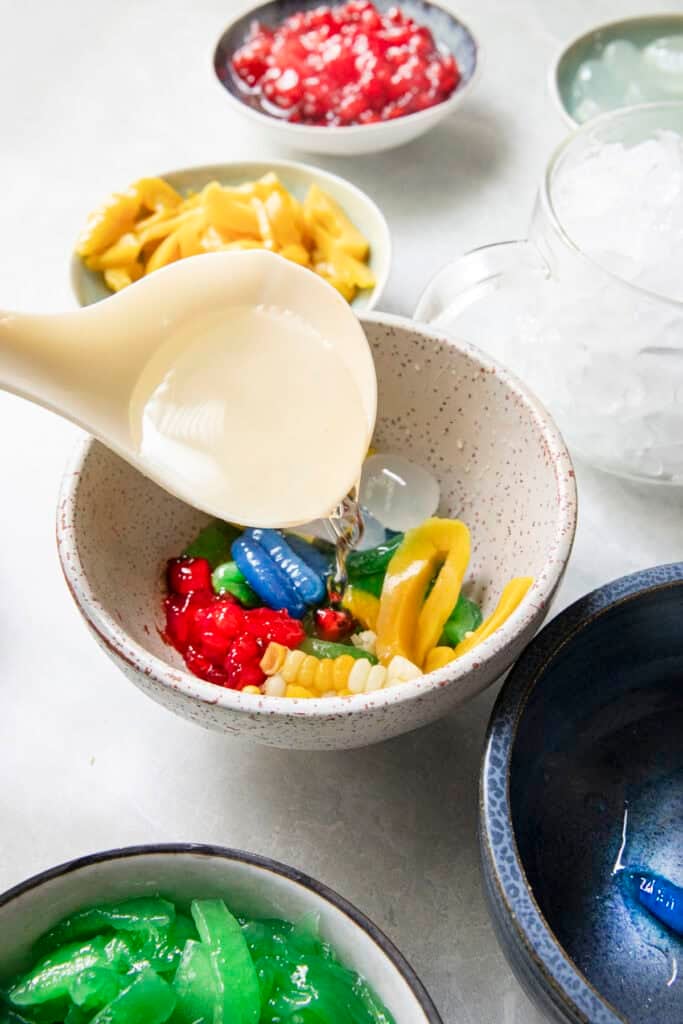
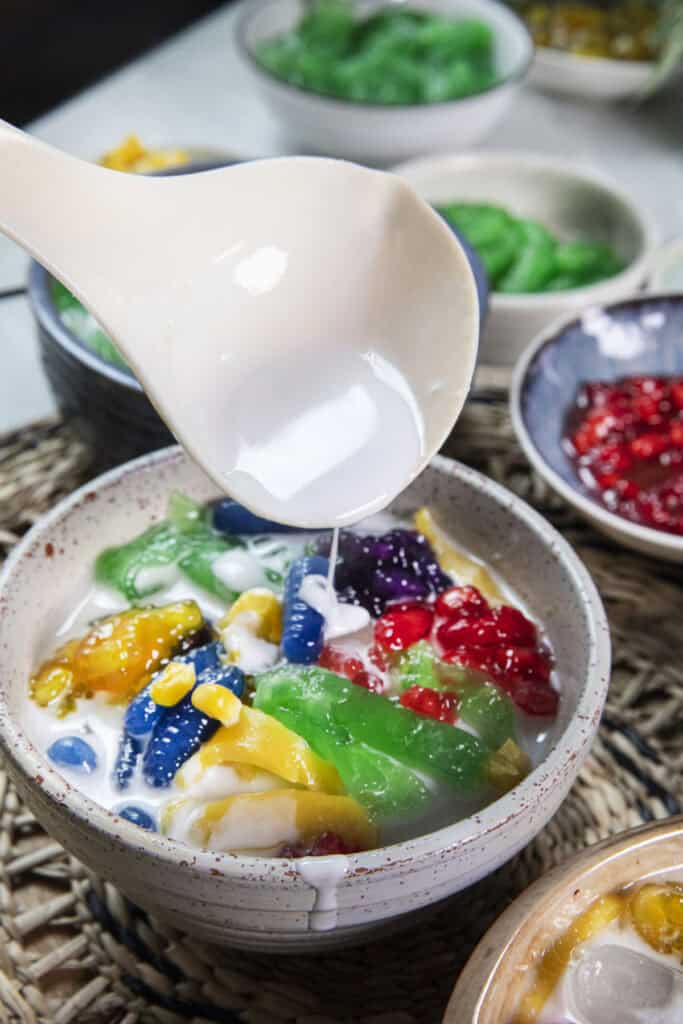
That's it! Let me know in the comments how your Ruam Mit turned out!
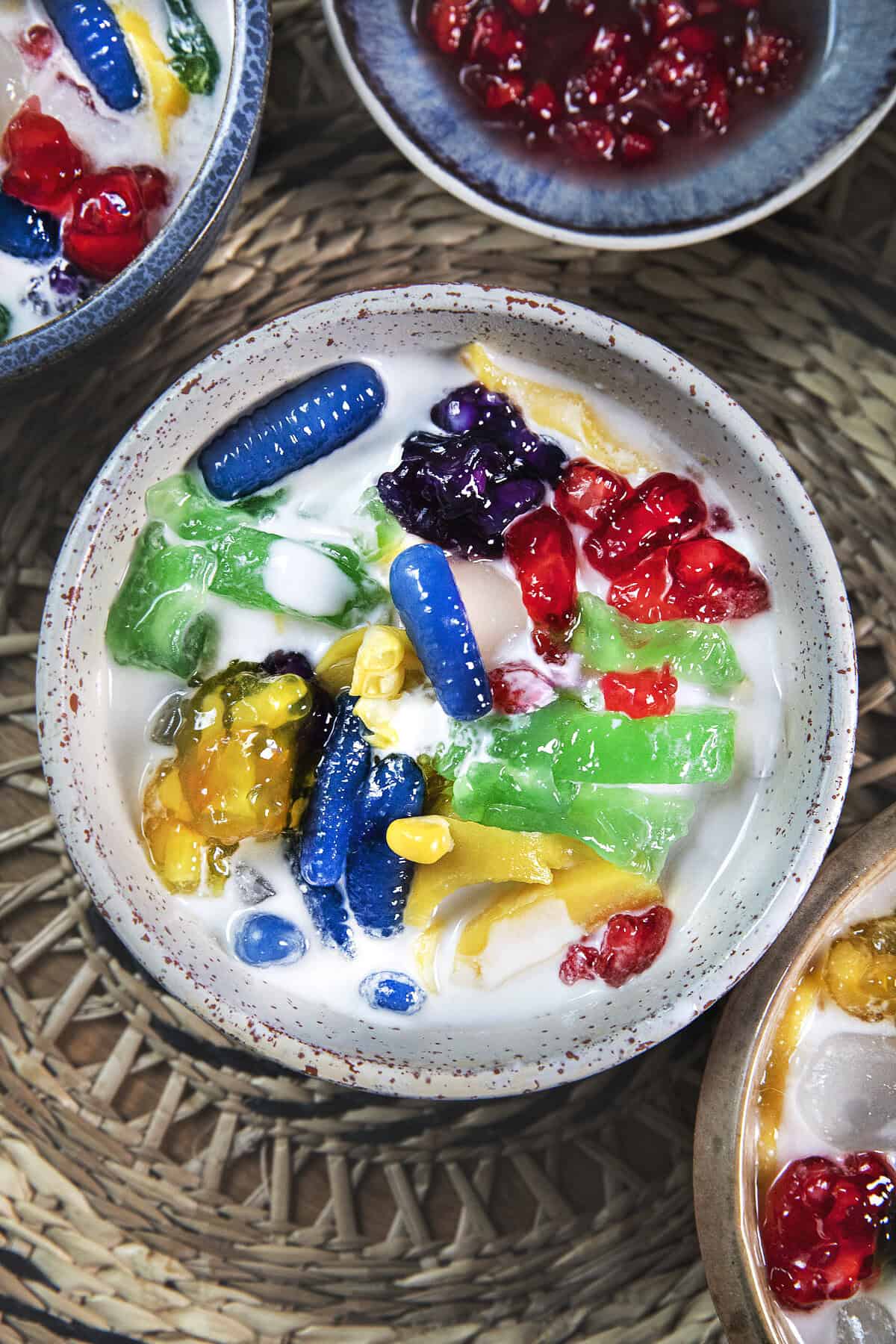
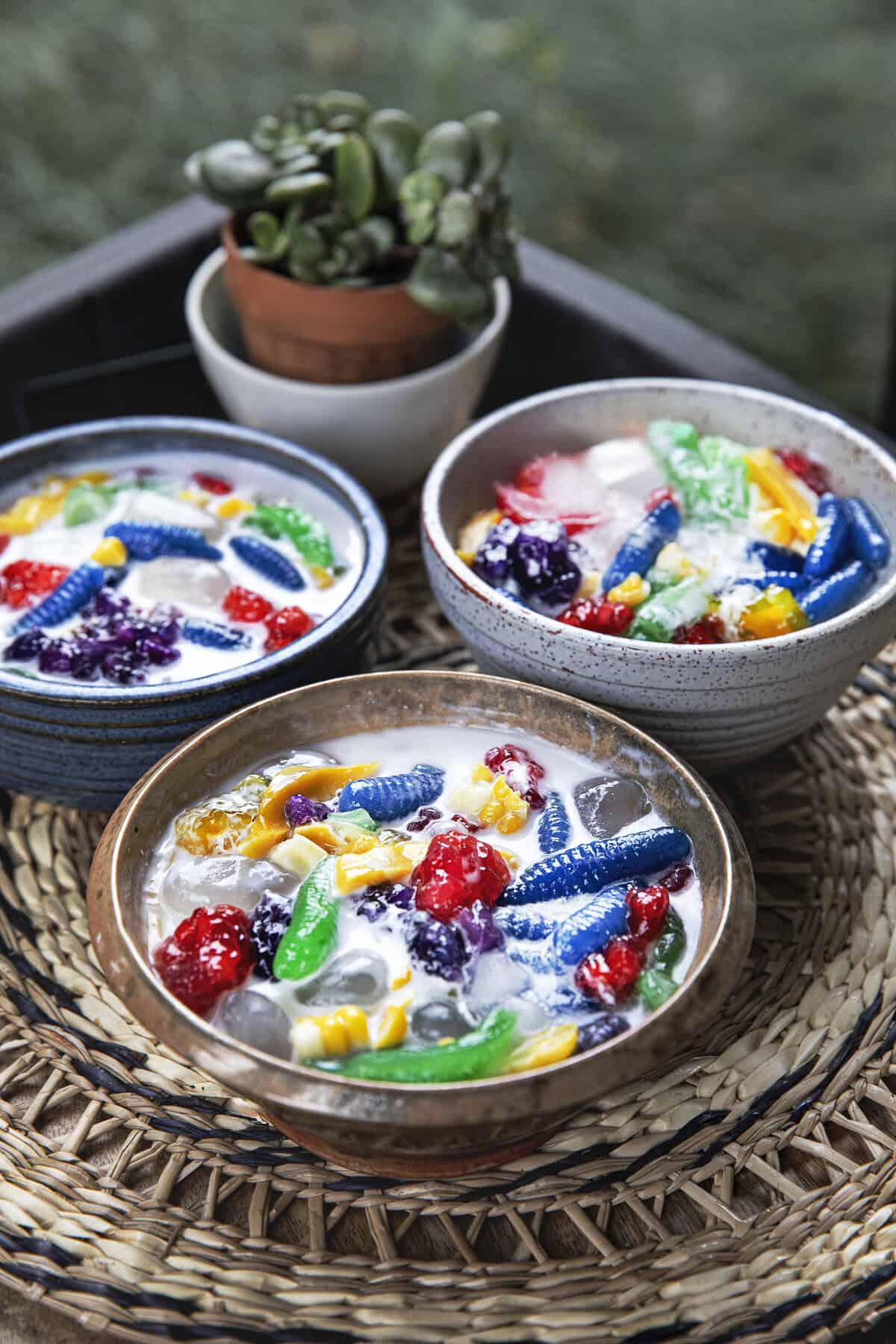
Suwanee's Top Tips
Tapioca flour needs very hot water. Add the boiling water gradually when making Lod Chong Singapore and Krong Kraeng. If the dough is crumbly, add a little more hot water. If it's sticky, dust with tapioca flour.
- Too dry or crumbly? Add a tiny amount of hot water.
- Too wet or sticky? Add a little tapioca flour.
- Keep extra tapioca flour nearby for dusting.
- Handle the dough lightly rather than overworking it.
Color the water first. I make a little extra colored water and use it both for the dough and for boiling the noodles. It's quicker and helps brighten the color.
For Krong Kraeng: I use a gnocchi board to make the ridges. It works well if you don't have a traditional Krong Kraeng mold.
Natural Colors vs. Food Coloring
Those bright colors are part of the fun of Ruam Mit. You can use regular food coloring, but you can also experiment with traditional Thai ingredients and natural colors:
- Butterfly pea for blue
- Pandan for green
- Ube or purple sweet potato for purple
- Pandan flavoring or essence
- Thai dessert flavoring syrups
Tub Tim Grob is traditionally ruby red, while blue is a beautiful choice for Krong Kraeng. And don't worry about making five different colors. Two or three are plenty.
Make Ahead and Storing
You can make the syrup and coconut milk ahead and refrigerate them separately. The tapioca noodles and dumplings are best fresh, so keep them in a little syrup until serving.
In Thailand, Ruam Mit is often served individually so everyone can choose their toppings. For parties, my big family likes to combine everything in one large bowl and ladle out individual servings. Keep the crushed ice separate and add it just before serving.
Ruam Mit is best eaten the day it's made. The tapioca noodles and dumplings change texture after sitting in syrup or coconut milk for too long.
More Thai Desserts You'll Love
- Klouy Kaek, Thai fried bananas
- Kanom Krok, Thai coconut milk pancakes
- Thai Bananas in coconut milk (Klouy Buat Chi)
- Thai mango sticky rice dessert
Ruam Mit Thai Mixed Dessert
- Total Time: 1 hour
- Yield: 6-8 of servings 1x
- Diet: Dairy-Free
Description
Ruam Mit (รวมมิตร) is a colorful Thai dessert made with an assortment of chewy noodles, jellies, fruit, sweet syrup, coconut milk, and crushed ice.
Ingredients
Jasmine-Pandan Syrup
- 2 cups water
- 1 cup granulated sugar (add more or less as preferred for sweetness)
- 3 pandan leaves, tied into a knot
- 1-2 drops jasmine essence or extract
Salted Coconut Milk
- 1 (13.5 ounce) can unsweetened coconut milk
- ½ teaspoon salt
Tub Tim Grob
- 1 (8-ounce) can water chestnuts, drained and diced small
- 1 cup tapioca flour
- Red food coloring, or colors of choice
- 1-2 tablespoons water, as needed
Lod Chong Singapore
- 1 cup tapioca flour
- Up to ⅓ cup plus 1 ½ tablespoons boiling-hot water
- Green food coloring or pandan flavoring
- 2 tablespoons tapioca flour for dusting, plus more as needed
Krong Kraeng
- ½ cup tapioca flour
- Up to 3 tablespoons boiling-hot water
- Blue food coloring or butterfly pea powder
- 2 tablespoons tapioca flour for dusting, plus more as needed
For Serving
- Jackfruit, drained and thinly sliced
- Toddy palm fruit, drained and sliced if large
- Cooked sweet corn
- Crushed ice
Instructions
- Make the syrup. Add the water, sugar, and pandan leaves to a saucepan. Bring to a gentle boil and stir until the sugar dissolves. Remove from heat and cool completely. Remove the pandan leaves and stir in 1-2 drops of jasmine essence.
- Make the coconut milk. Add the coconut milk and salt to a small saucepan. Warm over low heat just until the salt dissolves. Do not boil. Remove from heat and let cool.
- Make the Tub Tim Grob. Toss the diced water chestnuts with food coloring, adding 1-2 tablespoons water if needed. Coat well with tapioca flour and shake off the excess. Boil until the pieces float and the tapioca coating turns translucent. Transfer to cold water, drain, and toss with a little of the prepared syrup.
- Make the Lod Chong Singapore. Add the coloring to the water and bring it to a rolling boil. Gradually add the boiling water to the tapioca flour, mixing until a soft, workable dough forms. Divide into 2-3 pieces. Dust with tapioca flour and roll each piece thin. Stack the sheets, trim the edges, and cut into thin noodles. Boil for 2-3 minutes, or until translucent and floating. Transfer to an ice bath, drain, and toss with a little syrup.
- Make the Krong Kraeng. Add the coloring to the water and bring it to a rolling boil. Gradually add the boiling water to the tapioca flour until a soft dough forms. Roll into thin ropes and cut into about ½-inch pieces. Roll each piece into a small ball, then press and roll over a Krong Kraeng mold or gnocchi board. Boil for 2-3 minutes, or until translucent and floating. Transfer to cold water, drain, and toss with a little syrup.
- Prepare the toppings. Slice the jackfruit and palm fruit as needed. Boil or steam fresh corn until tender, then shave the kernels from the cob. Prepare the crushed ice.
- Assemble. Add your choice of Tub Tim Grob, Lod Chong Singapore, Krong Kraeng, jackfruit, palm fruit, and corn to each bowl. Spoon in some jasmine-pandan syrup and salted coconut milk. Top with crushed ice, mix together, and serve right away.
Notes
- Tapioca flour: Use boiling-hot water for the Lod Chong Singapore and Krong Kraeng. Add the water gradually. If the dough is too dry, add a little more hot water. If it's sticky, dust with more tapioca flour.
- Colored water: I like to color the water before boiling it. Make a little extra and use the remaining colored water to boil the noodles. It's quicker and helps brighten the color.
- Tub Tim Grob: Red is traditional, but you can divide the water chestnuts and make several colors.
- Krong Kraeng: A gnocchi board works well if you don't have a traditional Krong Kraeng mold.
- Jasmine essence: Start with one drop and taste the syrup after it cools. You want a light jasmine fragrance.
- Make ahead: The syrup and coconut milk can be made ahead and refrigerated separately. The tapioca toppings are best made fresh and kept in a little syrup until serving.
- Prep Time: 30 Minutes
- Cook Time: 30 Minutes
- Category: Dessert
- Method: stove top
- Cuisine: Thai

Hi there, I’m Suwanee!
I’m the person behind this Thai food blog. I spent the first thirteen years of my childhood in Thailand, where I fell in love with the flavors of Thai cooking. What started as sharing recipes from my kitchen has grown into a journey from home cook to restaurant chef — and now one of just eight contestants chosen nationwide for PBS’s The Great American Recipe, Season 4. You’re in the right place if you love to cook Thai food. Come by often, and let’s get cooking!


Leave a Reply