
Sticky rice, known in Thai as khao niew, is the foundation of Isaan cooking. It’s eaten by hand, shared at the table, and served alongside dishes like som tum, larb, grilled meats, and jeow dipping sauces. In northeastern Thailand, sticky rice isn’t a side dish. It’s the meal.
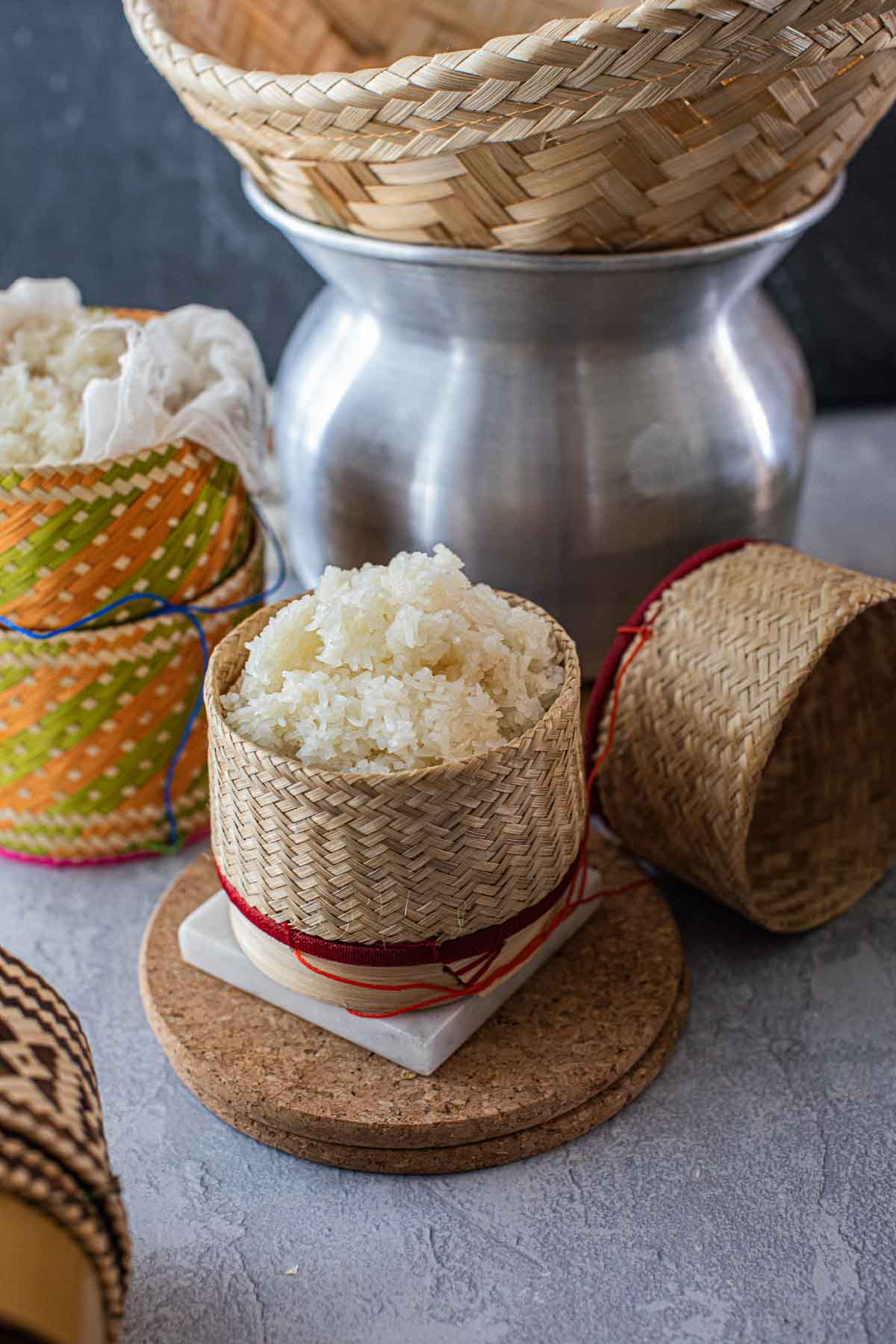
This guide walks through the traditional Isaan method for making Thai sticky rice using a bamboo basket, plus a few practical alternatives if you don’t have one. Once you learn this technique, you’ll understand how Isaan food is meant to be eaten and why sticky rice plays such a central role.
Jump to:
- What Is Thai Sticky Rice (Khao Niew)?
- Sticky Rice in Isaan Cooking
- Ingredients You’ll Need
- How to Make Sticky Rice
- How to Tell When Sticky Rice Is Done
- Why Flipping the Rice Matters
- No Bamboo Basket? Try These Methods
- Tips for Making Sticky Rice
- How Sticky Rice Is Traditionally Eaten
- Common Sticky Rice Mistakes
- Sticky Rice Variations
- How to Store and Reheat Sticky Rice
- Recipes That Pair Well with Sticky Rice
- Where to Buy Sticky Rice
- Frequently Asked Questions
- Thai Sticky Rice (Khao Niew)
What Is Thai Sticky Rice (Khao Niew)?
Thai sticky rice is made from glutinous rice, a long-grain rice that becomes soft, chewy, and naturally sticky when steamed. Despite the name, it does not contain gluten. The “sticky” texture comes from the rice’s starch composition, which allows the grains to cling together once cooked.
Sticky rice is different from jasmine rice in both texture and cooking method. It’s soaked first, then steamed, never boiled like regular rice.
Sticky Rice in Isaan Cooking
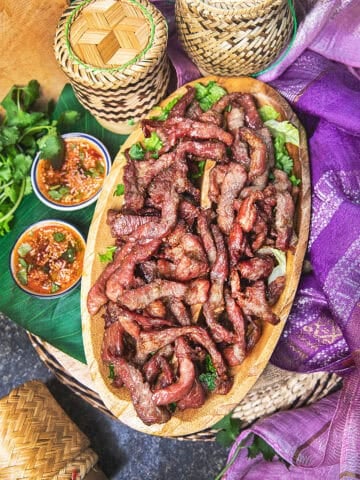
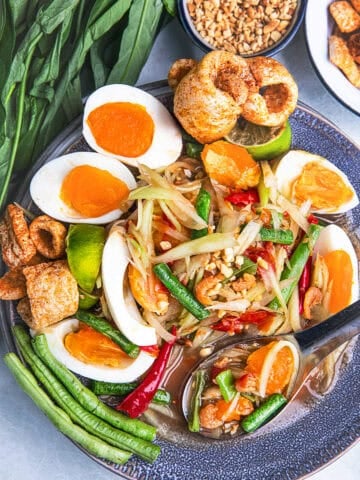
In Isaan food, sticky rice anchors the entire meal. It’s eaten with the hands, rolled into small balls, and used to scoop up food, dip into sauces, and balance spicy, sour, and savory dishes. You’ll almost always see sticky rice served with:
- Som Tum Isaan (green papaya salad)
- Laab Moo (Thai Pork Larb) or Laab Gai (Chicken Larb) or Beef Larb
- Fermented Isaan sausage
- Crying Tiger Steak with Nam Jim Jaew
- Grilled meats like Gai Yang or Kor Moo Yang (grilled pork neck)
- Soups traditionally eaten with sticky rice like Gaeng Om Gai
Isaan meals are built around sticky rice, not plated individually. Everything is shared and adjusted at the table.
Ingredients You’ll Need
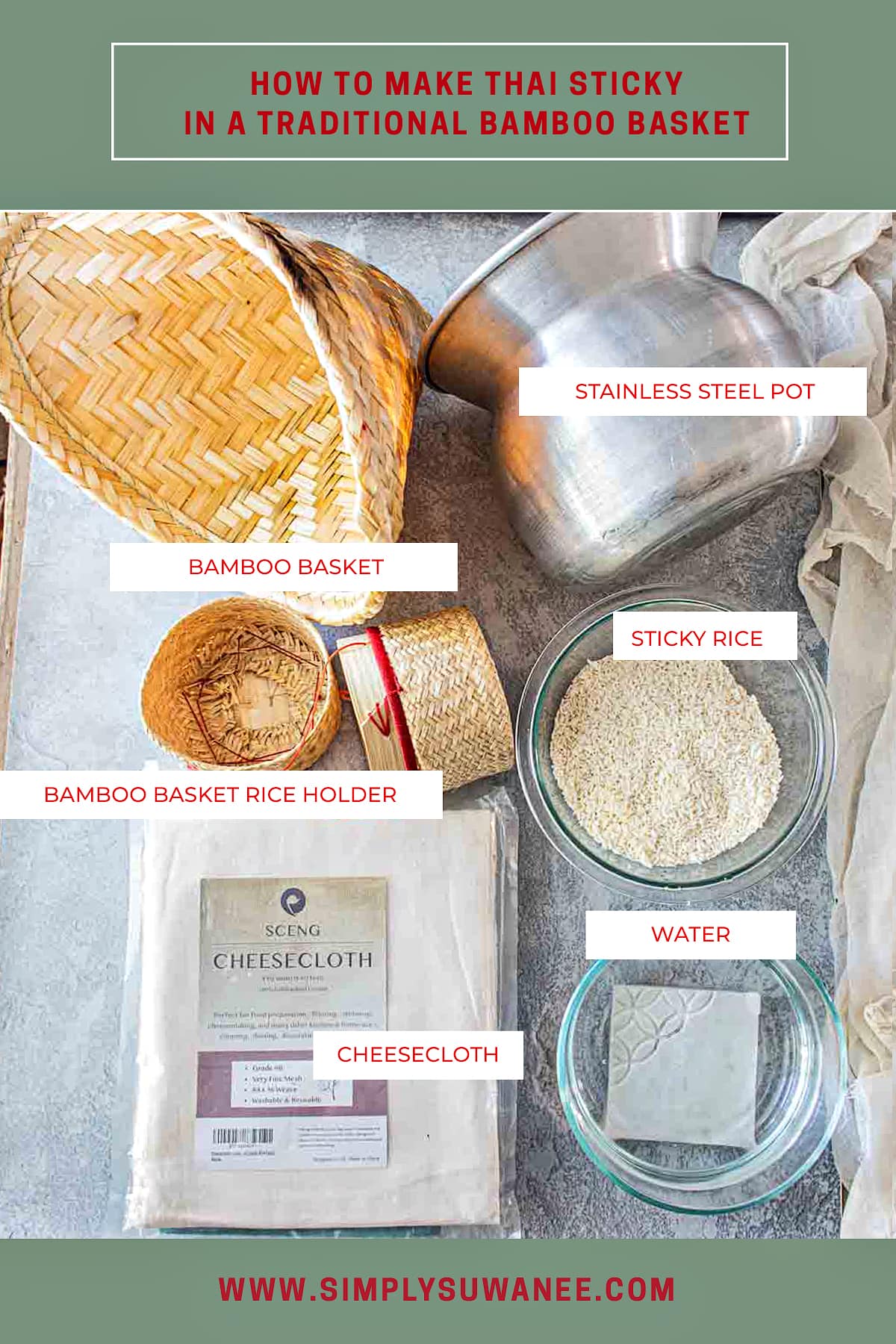
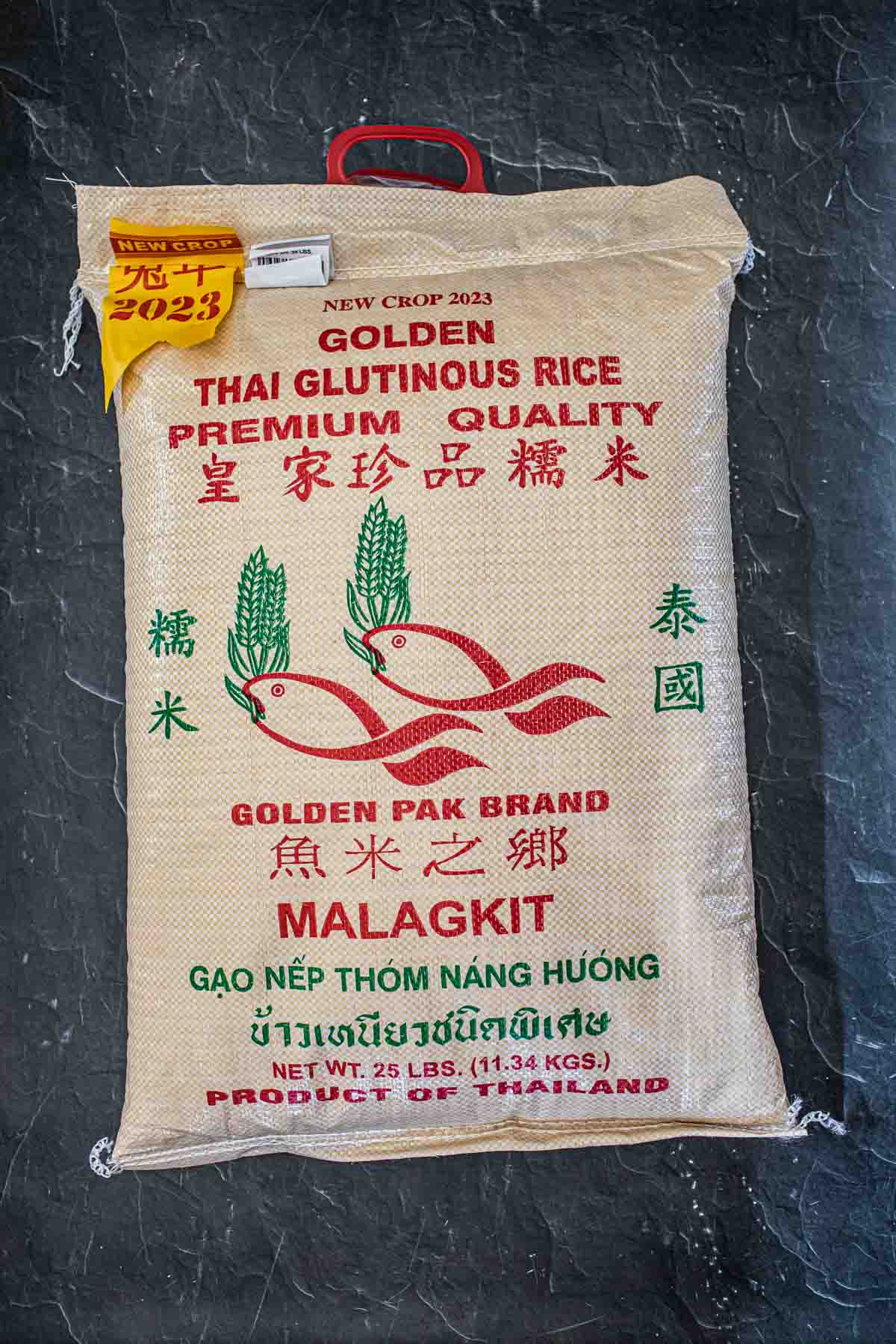
- Thai Glutinous Rice. This is the most important ingredient. Look for bags labeled sticky rice, sweet rice, or Thai glutinous rice. Do not substitute jasmine rice.
- Water. Used for rinsing, soaking, and steaming.
- Salt. Optional for sprinkling on the rice at the end when rice is finished cooking.
How to Make Sticky Rice
Traditional Isaan Method using a bamboo basket set, this is the method Thai families have used for generations. It produces the best texture and the most consistent results.
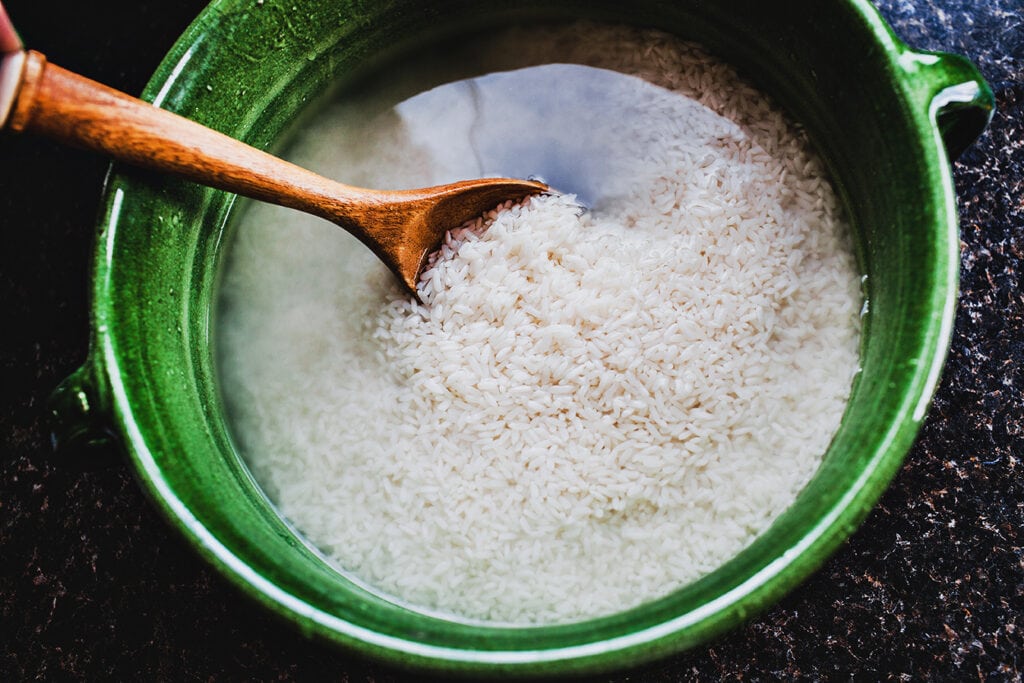
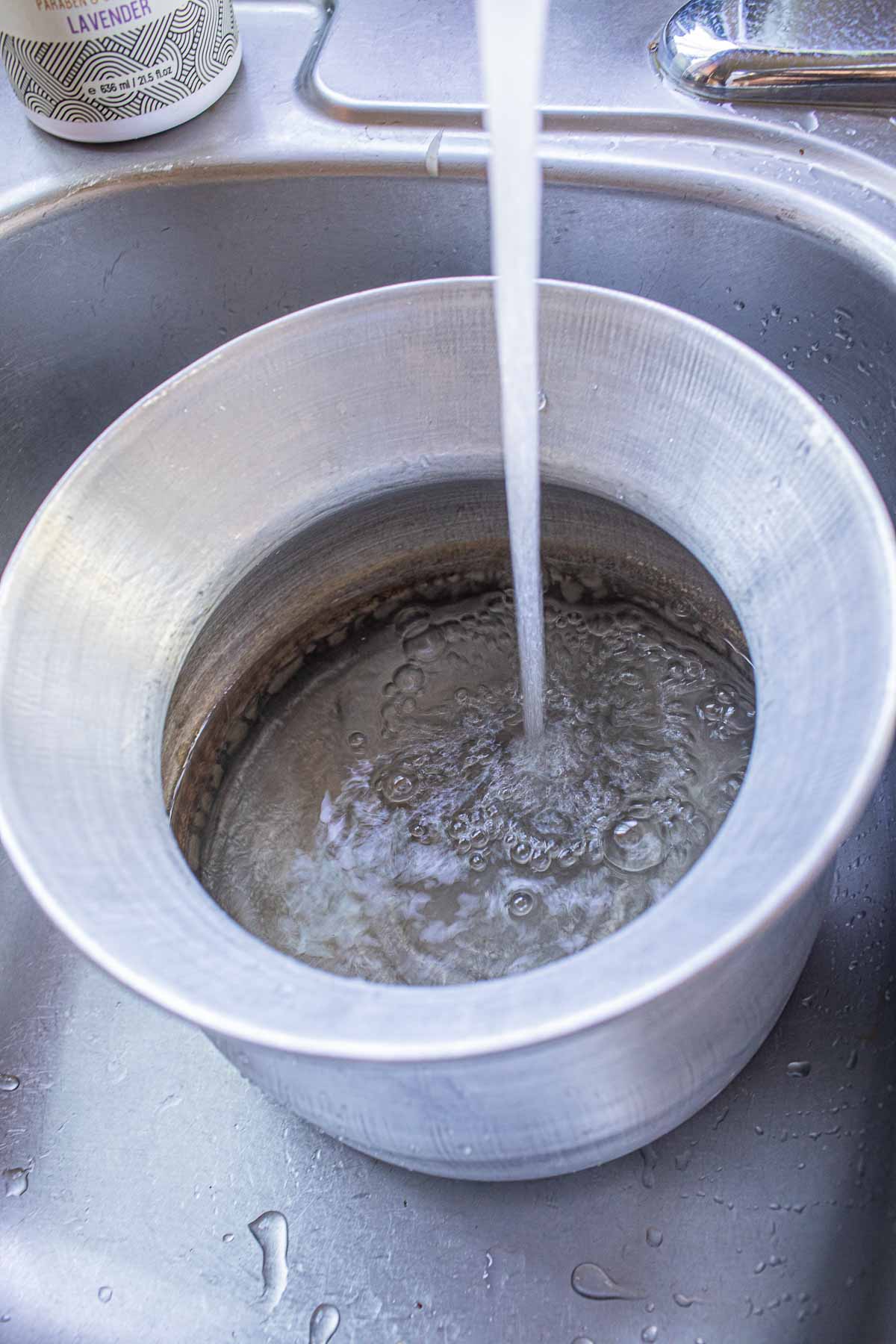
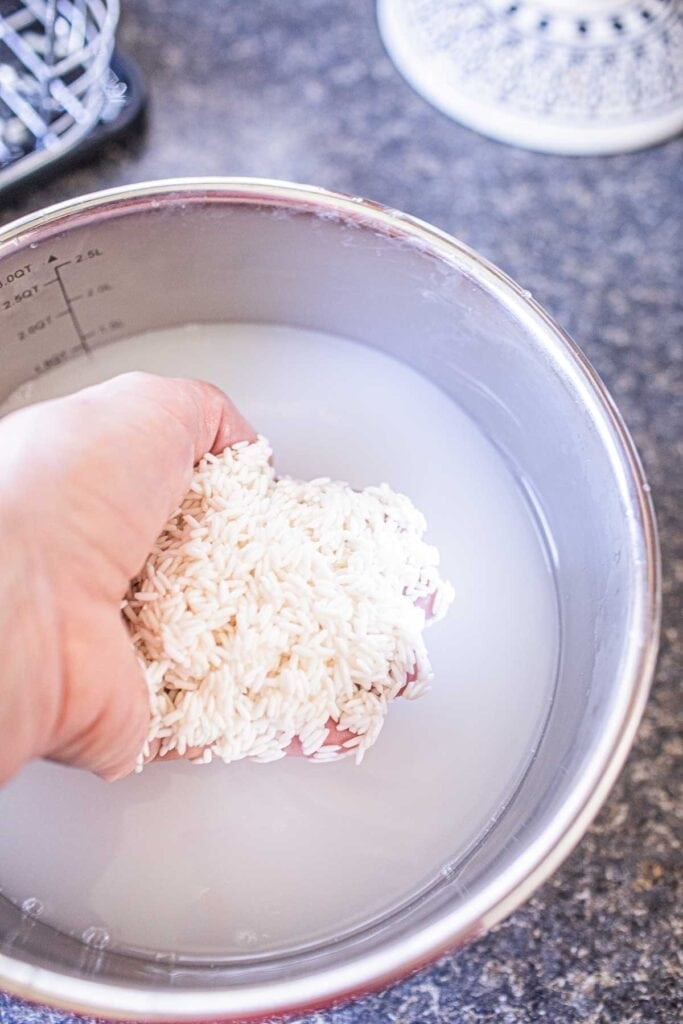
Step 1. Soaking the Rice. Rinse the sticky rice several times until the water runs mostly clear. Soak the rice in room-temperature water for at least 4 to 5 hours, or overnight for best results. Do not soak longer than 24 hours or the grains may break down.
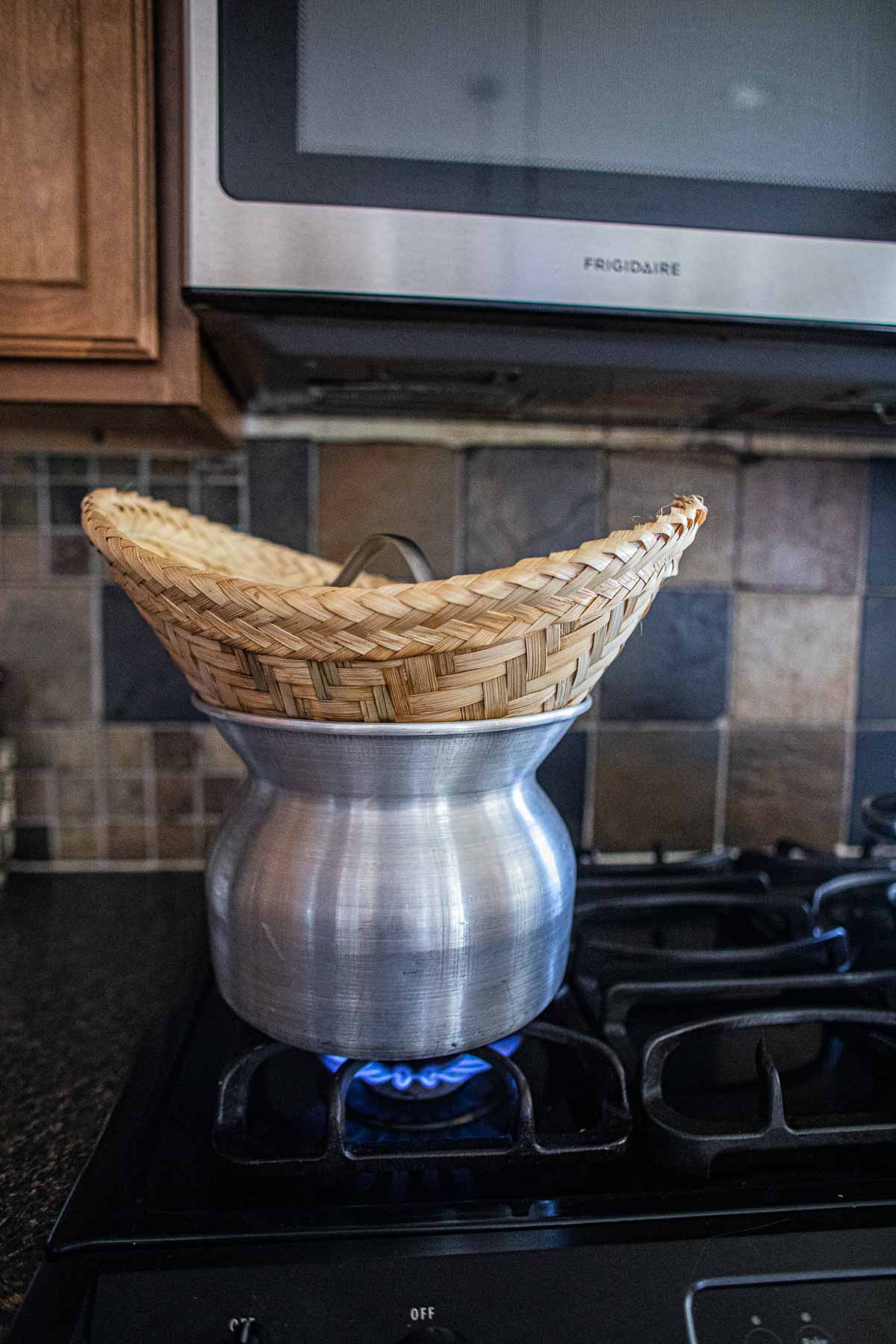
Step 2. Prepare the Stainless Steel Steamer Pot. Fill the bottom of your stainless steel steamer pot with enough water to generate steady steam for about 20 to 25 minutes without drying out. Depending on the size of your pot, this is usually about 10-12 cups of water. Larger pots will need more water and slightly longer steaming time.
This tip is important* The water level should sit well below the bamboo basket. When the basket is placed on top, it should never touch the water. Leave at least 2 inches of space between the water and the bottom of the basket so the rice steams properly rather than boiling.
This stainless steel pot and bamboo basket setup is the traditional way sticky rice has been made in Isaan kitchens for generations, and it’s what gives the rice its signature chewy, fluffy texture.
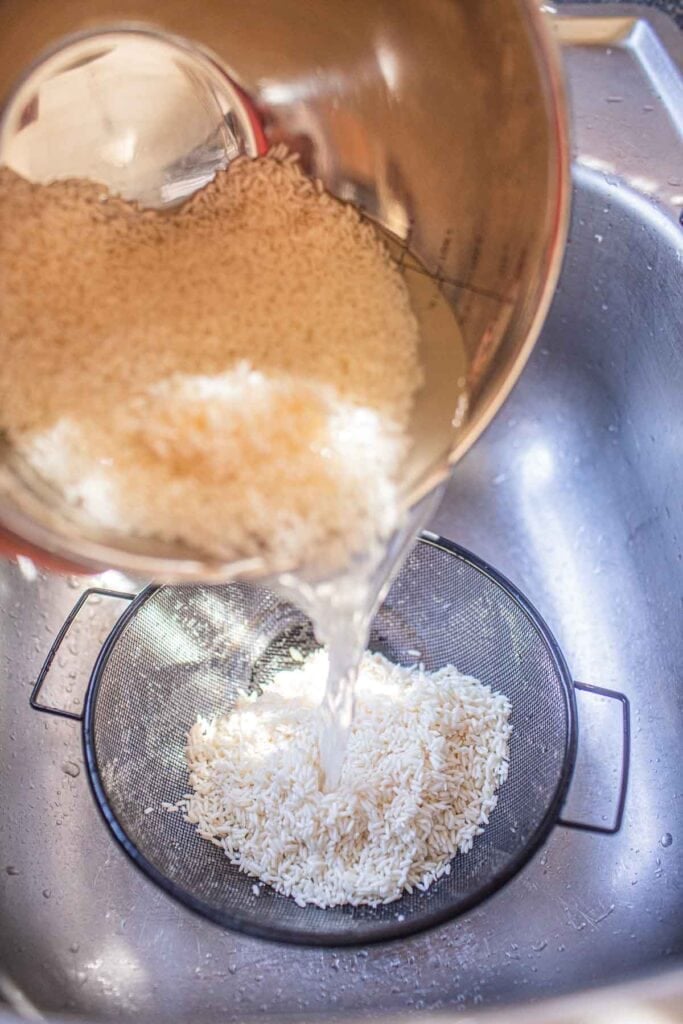
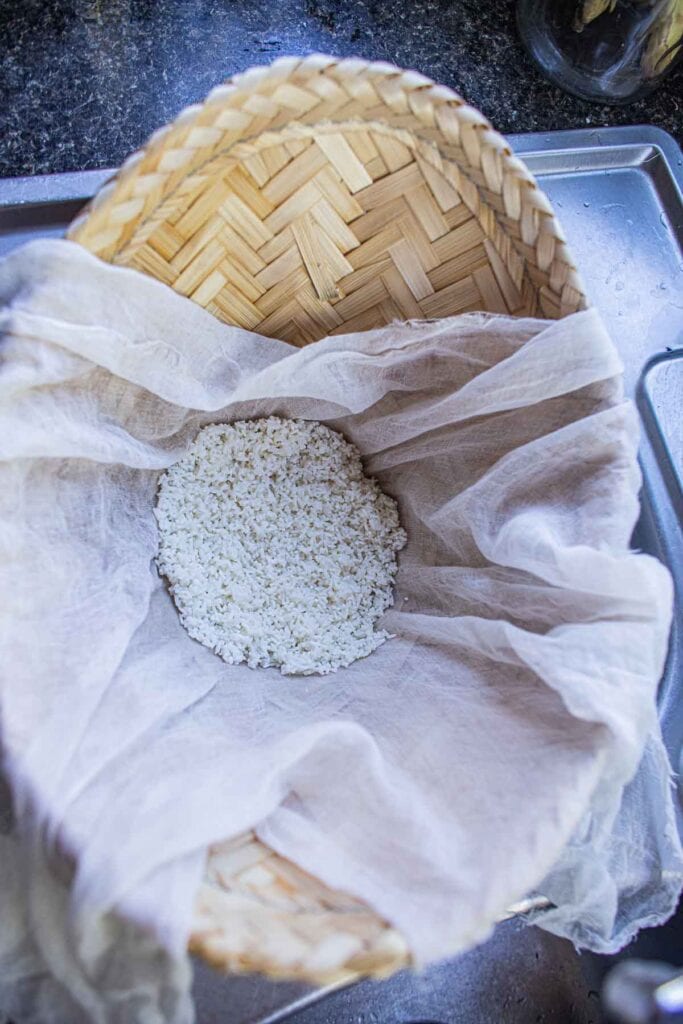
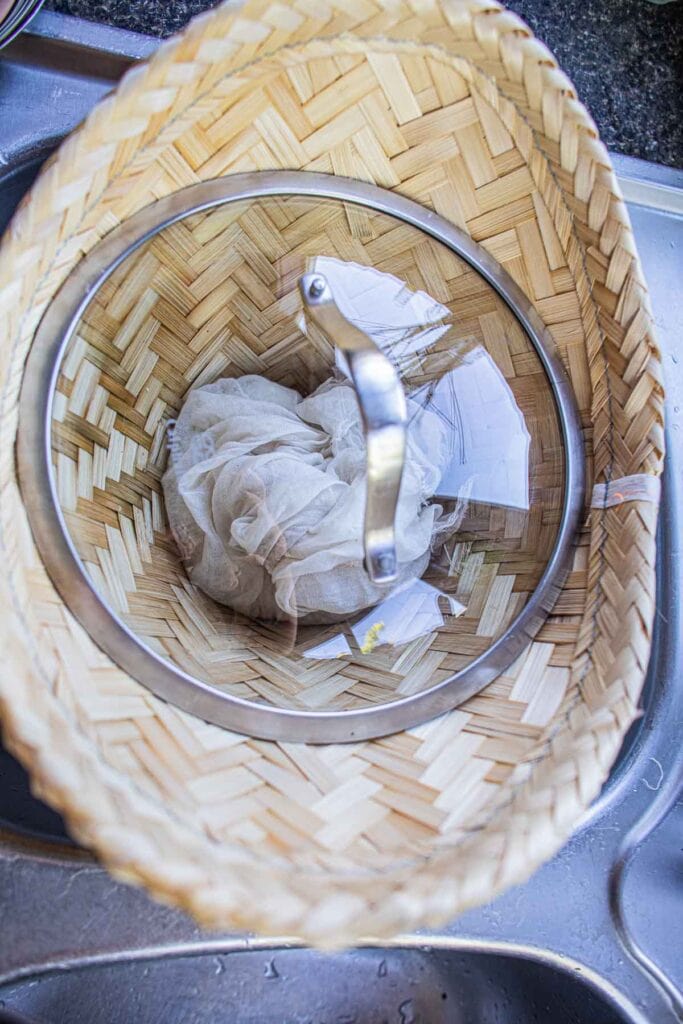
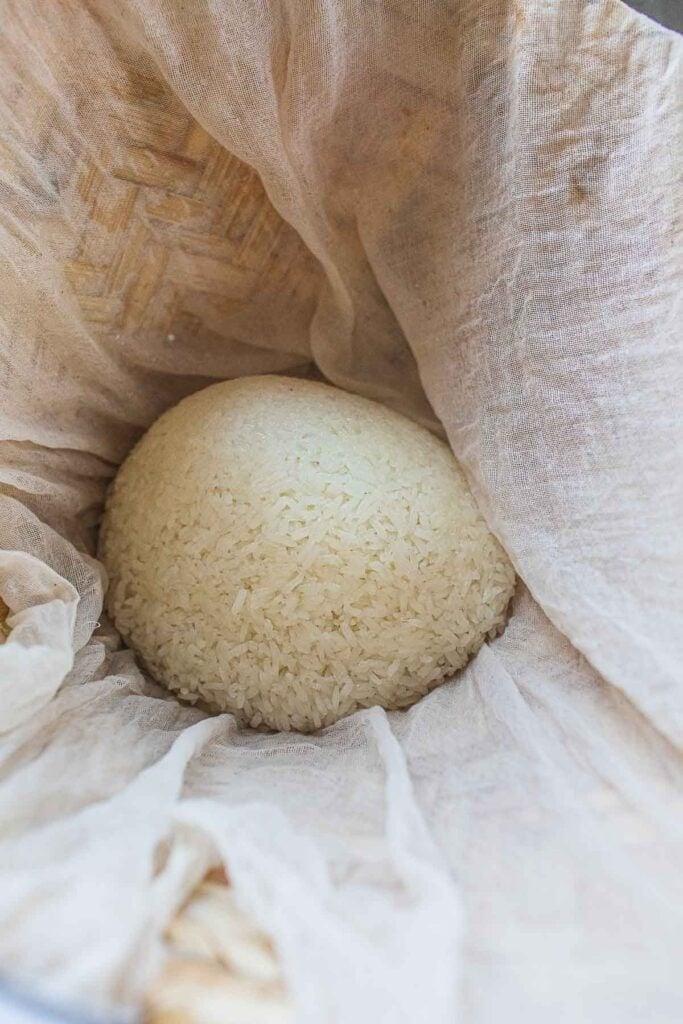
Step 3: Drain, Rinse, and Load the Rice. After soaking, drain the sticky rice and give it a quick rinse. Line the bamboo basket with cheesecloth, then add the rice, spreading it into an even layer. Fold the cheesecloth over the rice so it’s fully covered. Cover with a lid.
(See photo below for how the rice should sit in the basket.)
Step 4: Steam the Rice. Set the bamboo basket on top of the stainless steel pot before turning on the heat. Bring the water in the pot to a strong boil, then steam the rice over high heat for 20-30 minutes. Rice that soaked for less time may need closer to 30-40 minutes total steaming.
Keep the lid on during this stage so the steam stays trapped and cooks the rice evenly.
Step 5: Check for Doneness. At about the 15-minute mark, carefully lift the lid and check the rice. The grains should star to look translucent and shiny. Use a long fork or wooden spoon to taste a small piece. Be careful of the hot steam. If the rice still tastes chalky in the center, it needs more time.
Step 6: Flip the Rice (Important Step). This step is key to evenly cooked sticky rice. Carefully remove the bamboo basket from the pot and open the cheesecloth. Using a fork or wooden spoon, gently flip the rice, bringing the bottom portion to the top. Lightly fluff the rice to release excess steam and moisture so it doesn’t turn mushy.
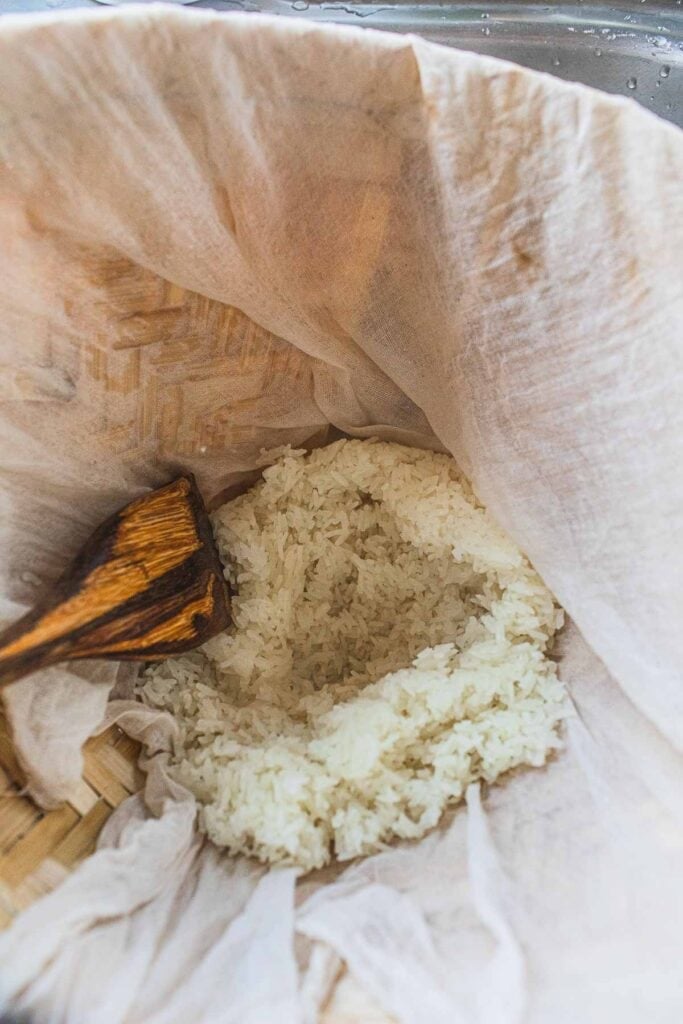
Step 7. Wrap the cheesecloth back over the rice, place the basket back onto the pot, and steam for another 10-15 minutes until the rice is fully cooked, soft, and chewy.
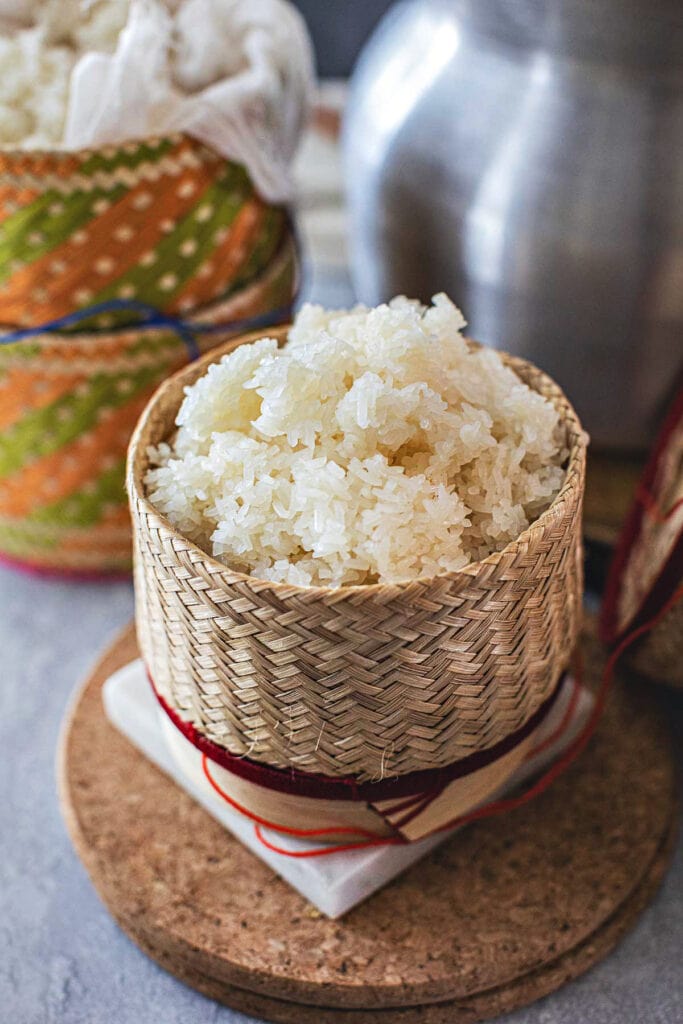
Once done, remove the basket from the pot, fluff the rice again, and let it rest uncovered for a few minutes before serving.
Step 8. Place the cooked rice in another sticky rice basket, the kind used for serving rice as you might sometimes see at your favorite Thai restaurant. Sprinkle salt on the rice if you prefer some.
How to Tell When Sticky Rice Is Done
Sticky rice should look translucent and glossy, with a chewy texture that’s tender but not mushy. Taste a small piece. If it’s still chalky in the center, steam a few minutes longer.
Once done, fluff the rice gently and let excess steam escape before serving.
Why Flipping the Rice Matters
Flipping sticky rice during steaming isn’t just a technique, it’s tradition. In Isaan kitchens, this step ensures every grain cooks evenly and releases excess moisture. Without flipping, the rice at the bottom can turn wet while the top stays firm.
This small motion is what gives sticky rice its signature texture: chewy, fluffy, and never mushy. It’s one of those quiet steps passed down through practice, not recipes.
No Bamboo Basket? Try These Methods
While the bamboo basket is traditional, there are workable alternatives.
Pot Method
Use a fine strainer or splatter guard set over a pot of boiling water, lined with cheesecloth. This mimics the steaming environment without special tools.
Instant Pot
Sticky rice can be made in an Instant Pot, but the texture will be softer and less chewy than traditional steaming. This method works in a pinch, but steaming produces better results.
Steamer + Cheesecloth
Place soaked rice in cheesecloth inside a steamer basket over boiling water. Steam and flip as you would with a bamboo basket. You can use whatever steamer you have.
Tips for Making Sticky Rice
Sticky rice is simple, but a few details make a big difference.
- Always soak Thai sticky rice before steaming. At least 4 to 5 hours is recommended, or overnight for best results.
- Do not soak longer than 24 hours, or the grains may break down and lose their structure.
- To shorten soaking time, you can soak the rice in hot (not boiling) water for about 3 to 3½ hours. This speeds things up but may cause some grains to split, so plan to steam slightly longer.
- The longer the rice soaks, the shorter the steaming time.
- Use a tight-fitting lid over the bamboo basket. Without a lid, the top of the rice may stay undercooked while the bottom turns mushy.
- When flipping the rice halfway through steaming, make sure there’s still enough water in the pot. Add more if needed so the pot doesn’t run dry.
- After steaming, gently fluff the rice and let excess steam escape for a few minutes before serving. This helps prevent soggy rice.
How Sticky Rice Is Traditionally Eaten
Sticky rice is eaten by hand. Pull off a small portion, roll it into a ball, and use it to scoop or dip into sauces and dishes. It’s meant to balance intense heat, acidity, and saltiness.
You’ll often see sticky rice eaten with raw vegetables, grilled meats, larb, and spicy jeow sauces.
Common Sticky Rice Mistakes
- Using jasmine rice instead of glutinous rice
- Skipping the soaking step
- Boiling instead of steaming
- Letting the rice sit covered too long after cooking
- Over-soaking past 24 hours
- Mistakingly using too much water in the pot and allowing the water to touch the rice grains.
Sticky Rice Variations
While Thai sticky rice (khao niew) is the most common, there are a few variations you’ll see in Isaan cooking and beyond.
- Purple Sticky Rice (Khao Niew Dam). Purple sticky rice is a whole-grain variation commonly eaten in Isaan. It follows the same method but has a nuttier flavor and firmer texture.
- Sweet Sticky Rice is used in desserts like mango sticky rice. It’s cooked the same way, then mixed with sweetened coconut milk after steaming.
- Japanese sweet rice is another type of glutinous rice. It has shorter grains and isn’t the same as Thai sticky rice, but it can be cooked to a similar sticky consistency if needed.
- There’s no true substitute for Thai sticky rice, but in a pinch, Japanese sweet rice or black (purple) sticky rice can work, with slight differences in texture and flavor.
How to Store and Reheat Sticky Rice
Fresh sticky rice is best eaten the day it’s made. Traditionally, it’s kept at room temperature in a woven basket for up to 2 days in warmer climates.
To reheat, steam briefly until soft again. Microwaving is not recommended, as it dries out the rice and ruins the texture.
Recipes That Pair Well with Sticky Rice
- Som Tum Isaan
- Laab Moo (Thai Pork Larb)
- Som Tum Pu Pla Ra
- Beef Larb
- Crying Tiger Steak with Nam Jim Jaew
- Gaeng Nor Mai, Isaan Bamboo soup
Where to Buy Sticky Rice
Find your sticky rice at your local Asian markets. Most stores will have them.
Grab them online at Amazon. Here are the brands I recommend. Three Rings brand, Cock on the mountain top brand, and Three Ladies Santapong brand.
Frequently Asked Questions
Sticky rice contains very little amylose and a high amount of amylopectin, the starch that causes the grains to cling together once cooked.
Yes. Rinsing removes excess surface starch so the rice steams evenly and tastes cleaner.
No. Jasmine rice is not sticky rice. Sticky rice must be soaked and steamed, while jasmine rice is cooked directly in water.
No. Sushi rice is a Japanese short-grain rice used for sushi. It’s cooked differently and has a different texture and purpose.
Thai Sticky Rice (Khao Niew)
- Total Time: 0 hours
- Yield: 6 1x
- Diet: Vegan
Description
Sticky rice, known in Thai as khao niew, is the foundation of Isaan cooking. It’s eaten by hand, shared at the table, and served alongside dishes like som tum, larb, grilled meats, and jeow dipping sauces. In northeastern Thailand, sticky rice isn’t a side dish. It’s the meal.
Ingredients
- 2 cups sticky rice, uncooked
- 8-10 cups water. If your pot is larger, you may need more water.
- Salt. Optional. For added to cooked rice
Instructions
-
Soaking the Rice. Rinse the sticky rice several times until the water runs mostly clear. Soak the rice in room-temperature water for at least 4 to 5 hours, or overnight for best results. Do not soak longer than 24 hours or the grains may break down.
-
Prepare the Stainless Steel Steamer Pot. Fill the bottom of your stainless steel steamer pot with enough water to generate steady steam for about 20 to 25 minutes without drying out. Depending on the size of your pot, this is usually about 10-12 cups of water. Larger pots will need more water and slightly longer steaming time. This tip is important* The water level should sit well below the bamboo basket. When the basket is placed on top, it should never touch the water. Leave at least 2 inches of space between the water and the bottom of the basket so the rice steams properly rather than boiling.
-
Drain, Rinse, and Load the Rice. After soaking, drain the sticky rice and give it a quick rinse. Line the bamboo basket with cheesecloth, then add the rice, spreading it into an even layer. Fold the cheesecloth over the rice so it’s fully covered. Cover with a lid. (See photo in the post above for how the rice should sit in the basket.)
-
Steam the Rice. Set the bamboo basket on top of the stainless steel pot before turning on the heat. Bring the water in the pot to a strong boil, then steam the rice over high heat for 20-30 minutes. Rice that soaked for less time may need closer to 30-40 minutes total steaming. Keep the lid on during this stage so the steam stays trapped and cooks the rice evenly.
-
Check for Doneness. At about the 15-minute mark, carefully lift the lid and check the rice. The grains should star to look translucent and shiny. Use a long fork or wooden spoon to taste a small piece. Be careful of the hot steam. If the rice still tastes chalky in the center, it needs more time.
-
Flip the Rice (Important Step). This step is key to evenly cooked sticky rice. Carefully remove the bamboo basket from the pot and open the cheesecloth. Using a fork or wooden spoon, gently flip the rice, bringing the bottom portion to the top. Lightly fluff the rice to release excess steam and moisture so it doesn’t turn mushy.
-
Wrap the cheesecloth back over the rice, place the basket back onto the pot, and steam for another 10-15 minutes until the rice is fully cooked, soft, and chewy. Once done, remove the basket from the pot, fluff the rice again, and let it rest uncovered for a few minutes before serving.
-
Place the cooked rice in another sticky rice basket, the kind used for serving rice as you might sometimes see at your favorite Thai restaurant. Sprinkle salt on the rice if you prefer so
Notes
- Do not soak longer than 24 hours, or the grains may break down and lose their structure.
- To shorten soaking time, you can soak the rice in hot (not boiling) water for about 3 to 3½ hours. This speeds things up but may cause some grains to split, so plan to steam slightly longer.
- The longer the rice soaks, the shorter the steaming time.Do not soak longer than 24 hours, or the grains may break down and lose their structure.
- To shorten soaking time, you can soak the rice in hot (not boiling) water for about 3 to 3½ hours. This speeds things up but may cause some grains to split, so plan to steam slightly longer.
- The longer the rice soaks, the shorter the steaming time.
- Use a tight-fitting lid over the bamboo basket. Without a lid, the top of the rice may stay undercooked while the bottom turns mushy.
- When flipping the rice halfway through steaming, make sure there’s still enough water in the pot. Add more if needed so the pot doesn’t run dry.
- After steaming, gently fluff the rice and let excess steam escape for a few minutes before serving. This helps prevent soggy rice.
- Use a tight-fitting lid over the bamboo basket. Without a lid, the top of the rice may stay undercooked while the bottom turns mushy.
- When flipping the rice halfway through steaming, make sure there’s still enough water in the pot. Add more if needed so the pot doesn’t run dry.
- After steaming, gently fluff the rice and let excess steam escape for a few minutes before serving. This helps prevent soggy rice.
- Always soak Thai sticky rice before steaming. At least 4 to 5 hours is recommended, or overnight for best results.
- Prep Time: 5 Hours
- Cook Time: 25-30 Minutes
- Category: Isaan food
- Method: Boiling, steamed, stovetop
- Cuisine: Thai
Cassie says
Love learning new ways to make more authentic food! Thank you!!
Anne says
Perfect instructions!
Lizie says
Thai sticky rice is amaZing!
Suwanee says
Detailed information on how to make Thai sticky rice the traditional way.