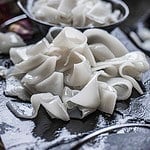
Description
Learn how to make Sen Yai Noodles (Thai wide rice noodles) at home with simple ingredients and easy steps to elevate your noodle game! Enjoy your fresh noodles in soups and stir-fries at a whole new level you won't forget!
Ingredients
- 1 cup jasmine rice flour, a Thai brand.
- 1/2 cup tapioca flour
- 1 1/2 cup water
- 1/4 teaspoon salt
- Oil for brushing. As needed.
Instructions
-
Set up your steaming pot with the trivet in the bottom for the pan to sit on. Add water and heat on medium-high heat, and wait until the water boils. While waiting, let's get the batter ready.
-
Combine rice flour, tapioca flour, warm water, and a dash of salt in a medium mixing bowl. Slowly pour the warm water into the flour mixture and whisk to avoid lumps. Mix until you have a creamy milky mixture that looks much like milk and has the consistency of milk.
-
Grease the bottom and side of your baking pans well with oil and a cooking brush. Use a non-stick pan with a completely flat bottom. I find pans with decals or brand logos embedded in the bottom of the pan difficult to work with. The edging can sometimes tear the noodle sheets. You want smooth-bottomed pans.
-
Before scooping the batter into the greased pan, ALWAYS do a quick whisk or stir to wake up the flour that's been settled to the bottom to make sure you have a smooth and consistent batter. Scoop a small amount into your pan. I used about 1/4 cup for my pans. Gently roll the batter around to have all the surfaces covered. You might have some patchy spots, but it's ok. Try lightly moving the batter around if the pan is not too hot.
-
Place the pan with the batter in the steamer. Make sure the bottom is flat or you will get uneven-sized and partially over and undercooked noodles. Steam the batter until it forms a thin, milky sheet. Mine took almost exactly 2.5 minutes for each batch. Cover with lid and wait. Setting a timer helps so much!
-
Once your timer goes off, carefully remove the hot pans from the steamer, place them on a heat-safe surface, and wait for them to cool off a little.
-
Grease the second pan, repeat steps #3-5, and keep going until your batter is gone.
-
While the 2nd pan is steaming, remove your cooked noodles from the 1st pan. Have a cutting board, platter, or counter space ready to place your noodles flat for cutting. Rub a thin layer of oil on those surfaces to prevent the noodles from sticking. * save all your ripped sheets (Image below), and don't throw them! They are still usable. Save them for stir-frying, or spread chili oil and enjoy them fresh!
-
Before peeling off the noodles sheets from the pan, brush a light oil coating on top of the cooked noodles still in the pan to help remove the sheets. Then, use a small spatula (dip the edge with a little oil if you'd like) and sweep it around the entire outer edge of the pan to loosen up the sheet. Then, carefully lift the sides of the sheet of noodles from the pan until it comes off fully. Place it on a greased cutting board or cooking surface.
-
Cut the noodles into any size you prefer! That's it! You did it! Your homemade fresh flat noodles are ready for your recipes. See below for ideas for rice noodle recipes. That's it!
Notes
- Use only Thai brand jasmine e rice flour from the Asian market. (In red lettering). Rice flour from regular grocery stores will give you very different results since the texture of the flour is not the same. Rice flour is this recipe's base and main component, so use the right ingredients. See the ingredient shot above for reference.
- Use warm, not hot, water to add to the flour mixture. It helps with blending the flour ingredients into a smooth consistency.
- Always stir the batter before adding to the steaming pan to ensure all the flour mixture at the bottom has been waking up.
- Find the right balance between rice and tapioca flour for the perfect rice noodles. Adjust to your liking for that ideal consistency.
- Skip the oil in the batter! Adding oil to the flour mixture can cause some problems. Since oil does not mix with water, so when you add it to the pan, it creates bubbles in the batter. These bubbles won't cook evenly and can result in tears and holes in your noodle sheets. So, it is best to leave the extra oil out of the batter and enjoy smooth and perfect noodles! (Do use it for greasing the pan and after the noodles are cooked!
- Greasing your pans with oil will have enough grease to separate the sheets from the pan. Adding any amount to the mixture before cooking is too much. It's pretty frustrating when your sheets don't turn out.
- Prep Time: 5 minutes
- Cook Time: 25 minutes
- Category: Noodles
- Method: Steaming
- Cuisine: Thai